
NeuroAI
Transforming Brain Health Management
Objective, actionable neurological insights across 26+ disorders — powered by AI, designed for the clinic of tomorrow.
Platform Overview
An Integrated Ecosystem for Precision Neurological Care
NeuroAI is not a single device — it is a fully integrated clinical ecosystem that combines hardware, software, and AI-powered analytics into one seamless platform. From in-clinic diagnostics to at-home monitoring, every component is engineered to deliver objective, reproducible, and actionable neurological data.
800 Test Variables
26 Clinical Tests
30+ Patents
60+ Publications
NeuroAI Cloud Platform
At the heart of the NeuroAI ecosystem lies a secure, HIPAA-compliant cloud infrastructure purpose-built for neurological diagnostics. The platform aggregates data from all connected devices, applies real-time AI processing, and delivers clinically actionable insights directly to the care team.
Designed for scalability across multi-site health systems and independent practices alike, the NeuroAI Cloud enables seamless data sharing, longitudinal patient tracking, and continuous algorithmic improvement — ensuring that every patient assessment benefits from the latest advances in AI-driven neurology.
Real-Time AI Insights
Secure & Compliant
Longitudinal Tracking
Multi-Site Ready
Core Hardware
The NeuroAI Device Suite
Every hardware component in the NeuroAI portfolio is engineered to capture neurological data with unparalleled fidelity. Together, they form a comprehensive diagnostic toolkit — from in-clinic gold-standard testing to pioneering at-home remote monitoring.
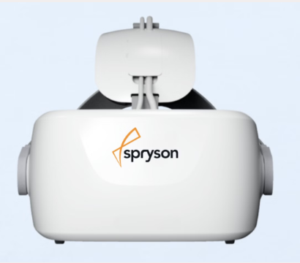
DX200 VNG Goggles
Virtual 3D eye-tracking diagnostics detecting subtle neurological impairments
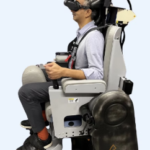
NOTC Pro+ Rotary Chair
Gold-standard vestibular assessment with six degrees of motion
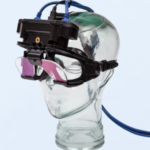
Falcon vHIT Goggles
Ultra-sensitive vestibulo-ocular reflex measurement in minutes
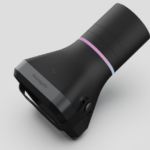
CX100 At-Home Devices
Continuous remote neurological monitoring between clinical visits
DX200 Virtual 3D VNG Goggles
The DX200 represents a quantum leap in videonystagmography. Its proprietary 3D eye-tracking sensors capture micro-saccades, nystagmus patterns, and gaze deviations with submillisecond precision. By detecting subtle oculomotor impairments that conventional systems routinely miss, the DX200 enables earlier, more accurate diagnosis across a broad spectrum of neurological and vestibular conditions.
- Sub-millimeter gaze tracking accuracy
- Real-time AI interpretation of oculomotor data
- Non-invasive, rapid patient setup
- Integrated with NeuroAI Cloud for instant reporting


NOTC Pro+ Rotary Chair
Widely recognized as the gold standard in vestibular function assessment, the NOTC Pro+ delivers comprehensive rotational testing across six degrees of motion. Its precisely calibrated mechanics challenge the vestibular system in ways no other platform can replicate, generating rich datasets that NeuroAI’s algorithms transform into clinically actionable insights.
- Six-degree rotational freedom for complete vestibular mapping
- Automatic, over-the-air software upgrades
- Normative database integration for immediate benchmarking
- Ergonomic design for diverse patient populations
Falcon vHIT Goggles
The Falcon vHIT Goggles set a new benchmark for video Head Impulse Testing. Ultra-high-speed cameras and motion sensors track vestibulo-ocular reflexes (VOR) with unmatched resolution, identifying even the most subtle compensatory saccades and semicircular canal dysfunction. Clinicians can complete a full vHIT assessment and receive interpreted results within minutes — dramatically streamlining the diagnostic workflow.
- High-speed camera capture for precise VOR quantification
- Identifies canal-specific dysfunction with high sensitivity
- Rapid assessment: full protocol completed in under 10 minutes
- Seamless cloud synchronization for longitudinal comparison

CX100 At-Home Monitoring
The CX100 extends the clinical reach of NeuroAI into the patient’s home, enabling continuous neurological monitoring between scheduled visits. Designed exclusively for forward-thinking clinicians, this remote assessment solution captures key neurological biomarkers in the patient’s natural environment — providing data that clinic-bound assessments simply cannot replicate.
- Passive and active remote neurological data collection
- Early detection of deterioration triggers clinician alerts
- Reduces care gaps between in-person appointments
- Patient-friendly interface requiring no technical expertise
NeuroAI Precision Analytics
The intelligence that powers every NeuroAI device. Our advanced AI-driven algorithms continuously ingest multi-modal neurological data, refine diagnostic accuracy through machine learning, predict patient outcomes based on longitudinal trends, and personalize care pathways in real time.
Continuous Learning
Algorithms trained on millions of assessments, constantly improving with every new data point
Outcome Prediction
Prognostic modeling identifies at-risk patients before symptoms escalate
Actionable Reporting
Clinician-ready reports delivered immediately, integrating seamlessly into clinical workflow
By the Numbers
NeuroAI at a Glance
800
Test Variables - The most granular neurological measurement framework available in clinical practice
26
Clinical Tests - A complete assessment suite validated against extensive normative databases
30+
Patents - Robust proprietary IP protecting NeuroAI's technological advantage
60+
Peer-Reviewed Publications - Clinical evidence underpinning every diagnostic protocol
30+
Years of Expertise - Years of Expertise
Assessment Protocols
Precisely Designed Assessment Montages
NeuroCheck: Comprehensive Neurological Screening
NeuroCheck
How NeuroCheck Works
- Step 1: Multi-modal Assessment
- Step 2: AI Analysis
- Step 3: Actionable Report
Clinical Impact
Why NeuroCheck Matters
Earlier Diagnosis
Detects subclinical neurological changes invisible to conventional assessments
Targeted Interventions
Report-driven recommendations guide individualized treatment planning
Reduced Disease Burden
Early intervention shortens treatment timelines and improves long-term prognosis
Fall Prevention: Targeted, Data-Driven Risk Reduction
Falls represent one of the most significant preventable health crises in neurological and aging medicine — leading to serious injury, loss of independence, prolonged hospitalizations, and escalating healthcare costs. NeuroAI’s Fall Prevention protocol uses advanced vestibular, ocular, and motion-based assessments to identify functional impairments before they result in a catastrophic fall event.
Fall Prevention Protocol
Assessment, Analysis & Action
How It Works
The protocol combines a series of non-invasive evaluations — including eye tracking, vestibular function tests, and motion-based balance analysis. NeuroAI’s proprietary algorithms analyze coordination, movement patterns, and postural control to detect hidden vulnerabilities in balance and gait. Clinicians receive a comprehensive fall risk profile and targeted clinical recommendations.
- Vestibular function and oculomotor evaluation
- Dynamic postural control and gait analysis
- AI-generated fall risk stratification
- Individualized intervention recommendations
Clinical Impact
By addressing fall risk proactively, the protocol helps reduce injuries, hospitalizations, and long-term disability. Clinicians are empowered to implement individualized treatment plans — including physical therapy, balance training, and home safety modifications — all grounded in objective neurological data.
📝Early detection of Parkinson’s disease enables neuroprotective interventions that significantly slow motor and cognitive decline — making PD-Check a critical clinical tool.
TBI Check: Advanced Traumatic Brain Injury Assessment
Traumatic brain injuries present one of the most diagnostically challenging scenarios in clinical neurology. Often invisible to standard imaging, subtle TBI-related dysfunction can have profound and lasting consequences. TBI Check delivers a comprehensive, objective evaluation of cognitive, vestibular, and oculomotor functions to support early diagnosis, precise injury characterization, and effective clinical management.
TBI Check Protocol
From Impact to Individualized Recovery
TBI Check ensures that no subtle neurological deficit goes undetected — enabling timely, precise interventions that elevate the clinical standard for TBI management and support optimal long-term patient recovery.
1. Multi-Domain Assessment
Non-invasive evaluations measure balance, cognitive performance, and eye movement control — all systems commonly disrupted by head trauma
2. AI-Powered Detection
NeuroAI's algorithms detect subtle changes in brain function not visible through traditional assessments or standard neuroimaging
3. Actionable Clinical Reports
Detailed reports identify injury severity, affected neurological systems, and guide targeted rehabilitation strategies
4. Long-Term Monitoring
Longitudinal tracking prevents long-term complications including cognitive decline, vestibular dysfunction, and post-concussion syndrome
NeuroElite Protocol
Peak Neurological Performance Optimization
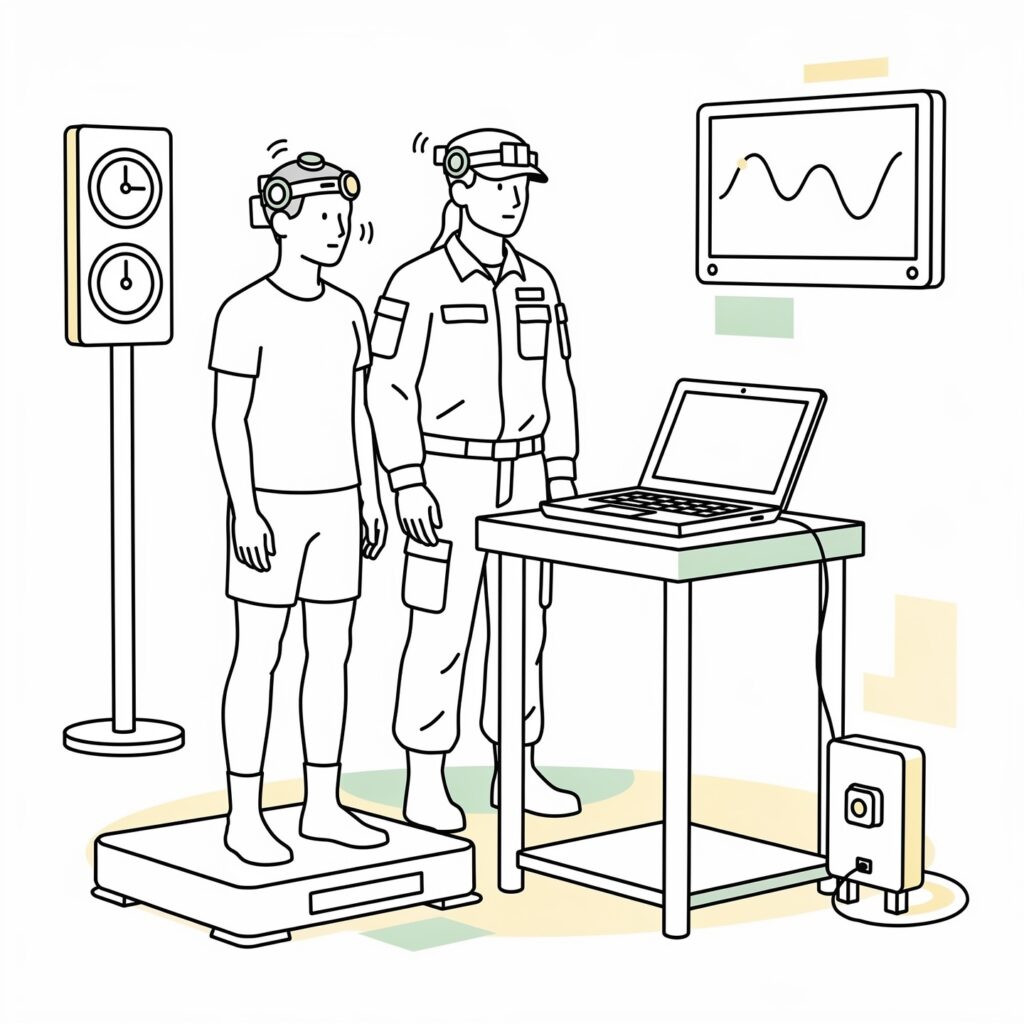
NeuroElite is a specialized NeuroAI protocol engineered for athletes, military personnel, and high-performing professionals who demand more than a standard clinical assessment. Traditional neurological evaluations are simply not designed to quantify and optimize performance at the elite level. NeuroElite bridges this gap with high-precision, objective assessments of cognitive speed, motor coordination, visual tracking, and decision-making ability.
- Cognitive processing speed and reaction time profiling
- High-speed oculomotor and visual tracking analysis
- Balance and motor coordination under performance conditions
- Personalized performance enhancement plans
NeuroElite: Clinical Impact
A New Standard for Elite Neurological Care
Following comprehensive assessment, NeuroElite generates a personalized performance enhancement plan combining cognitive exercises, motor training, and strategic lifestyle recommendations. The protocol supports peak performance sustainability, injury prevention, and long-term cognitive resilience — providing a category-defining standard of neurological care for those who operate at the highest levels of mental and physical demand.
Identify Strengths
Objective profiling of peak neurological performance capabilities
Detect Vulnerabilities
Uncover subtle neurological imbalances before they impair performance or cause injury
Optimize Performance
Individualized neurocognitive and motor training plans maximize performance potential
Sustain Resilience
Ongoing monitoring protects long-term brain health and career longevity
The Parkinson's Protocol: Early Detection & Personalized Management
Parkinson’s disease presents its greatest management opportunity at the earliest stages — yet conventional clinical assessments frequently miss the subtle motor and cognitive changes that precede significant symptom onset. The NeuroAI Parkinson’s Protocol (PD-Check) shifts the diagnostic window earlier, enabling more effective intervention strategies that preserve patient quality of life and slow disease progression.
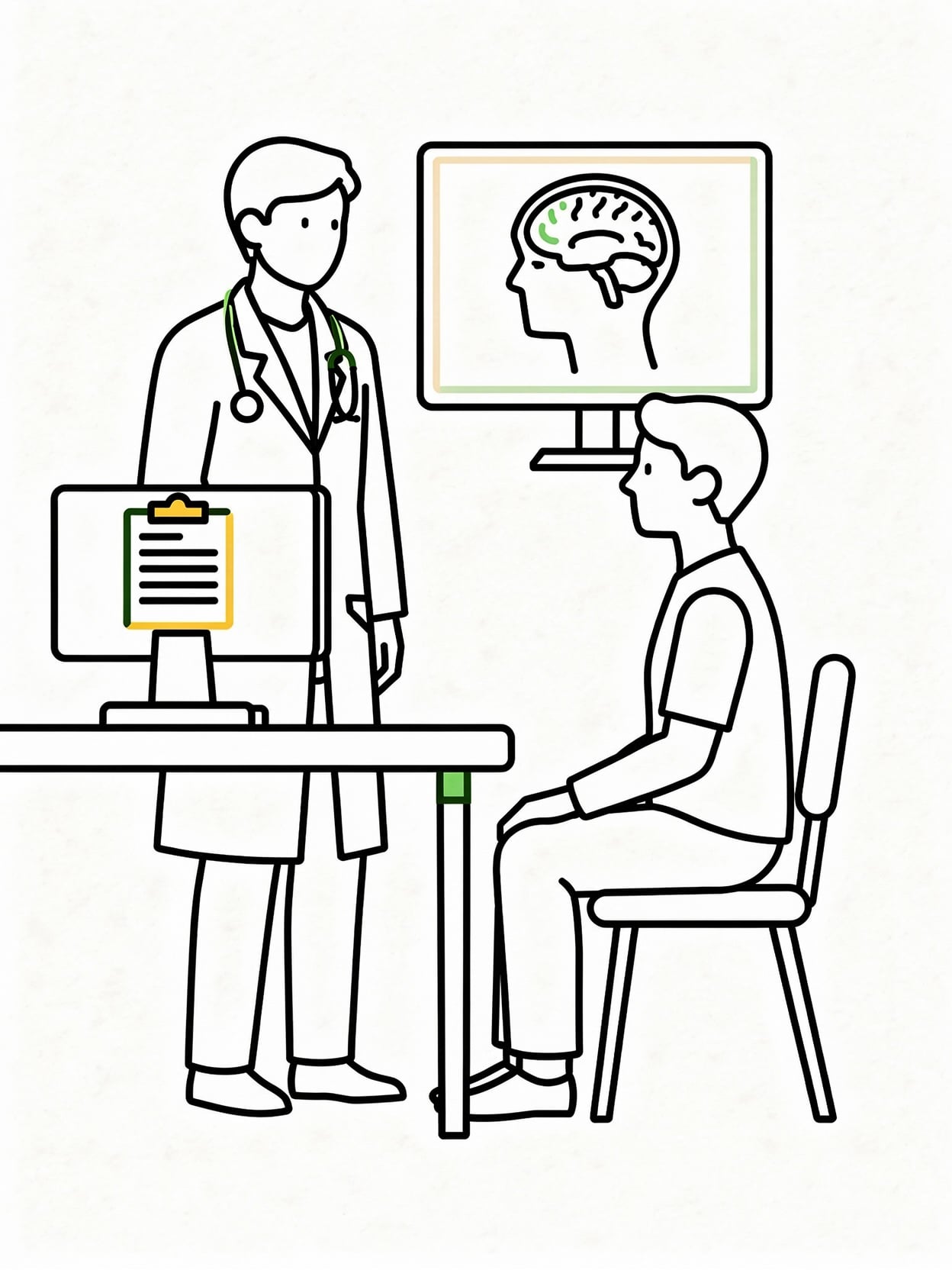
PD-Check Protocol
Precision Detection Across Every Stage of Parkinson's
How It Works
Patients complete targeted assessments evaluating gait, balance, fine motor skills, and neurological stability. High-speed motion tracking and advanced AI algorithms analyze subtle patterns of dysfunction — including micro-tremors, bradykinesia signals, and postural instability — that are characteristic of early Parkinson’s disease but routinely missed by conventional examination.
- Gait and postural stability analysis
- Fine motor function quantification
- Oculomotor dysfunction screening specific to PD
- Longitudinal disease progression tracking
Clinical Impact
The Parkinson’s Protocol addresses a critical gap in neurological care by shifting detection to the earliest possible stages — often before significant motor symptoms emerge. Objective, actionable data enables proactive intervention, slowing disease progression, enhancing functional outcomes, and maintaining patient independence longer than the standard of care allows.📝 Early detection of Parkinson’s disease enables neuroprotective interventions that significantly slow motor and cognitive decline — making PD-Check a critical clinical tool.
The Dementia Protocol: AI-Powered Early Detection of Cognitive Decline
Dementia and related cognitive disorders represent a mounting global health crisis — yet the critical window for effective intervention lies years before clinical symptoms become apparent. The NeuroAI Dementia Protocol leverages advanced neurological assessment and AI-enhanced analysis to identify subtle cognitive impairments at the earliest possible stage, enabling timely interventions that can meaningfully slow disease progression and preserve patient independence.
Dementia Protocol
Comprehensive Cognitive Assessment & Management
Multi-Domain Cognitive Testing
Non-invasive assessments measure memory, attention, executive function, and language — capturing a complete picture of cognitive health across all key domains
Integrated Eye Tracking & Neurological Evaluation
Oculomotor and neurological assessments detect early cortical dysfunction patterns associated with dementia that cognitive tests alone may miss
AI Pattern Detection
NeuroAI's proprietary algorithms analyze collected data, identifying early cognitive decline signatures not visible through conventional clinical evaluation
Clinician-Ready Diagnostic Reports
Detailed reports inform diagnosis, therapeutic planning, and ongoing disease progression monitoring — empowering earlier, more confident clinical decisions
Dementia Protocol: Clinical Impact
Earlier Clarity. Better Outcomes.
The Dementia Protocol enables clinicians to initiate treatment during the critical early stages of cognitive decline, significantly improving patient outcomes and prolonging functional independence. Its objective, AI-driven analysis enhances diagnostic accuracy, supports dynamic treatment planning, and facilitates close longitudinal tracking of disease progression.
By offering patients and families earlier clarity — and structured, ongoing clinical support — the Dementia Protocol represents a major advancement in the management of cognitive disorders. It also helps healthcare systems reduce the disproportionate burden of late-stage dementia management.

Equilibrium: Precision Diagnostics for Balance & Vestibular Disorders
Balance impairments and vestibular dysfunction have profound effects on patient safety, independence, and quality of life — leading to chronic dizziness, recurrent falls, and progressive functional decline. Yet accurate diagnosis of vestibular disorders remains one of the most challenging areas of clinical practice. Equilibrium changes that, delivering objective, AI-enhanced vestibular and balance diagnostics with a precision that traditional methods cannot achieve.
Equilibrium Protocol
Precision Vestibular Assessment from Every Angle
Assessment Modalities
- Vestibular Head Impulse Testing (vHIT) for canal-specific function
- Computerized Dynamic Posturography for postural stability
- Advanced eye tracking and oculomotor evaluation
- Rotational chair vestibular testing
- AI-integrated multi-modal data synthesis
Clinical Impact
Equilibrium advances the clinical management of balance disorders by delivering objective, detailed diagnostic insights that lead to more effective, targeted interventions. Early and accurate identification of vestibular and balance dysfunction reduces fall risk, enhances patient mobility, and supports significantly higher quality of life — particularly in complex or chronic cases where traditional diagnostic methods are insufficient.
Cogni-Check: Proactive Cognitive Wellness for Aging Populations
Cognitive decline rarely announces itself dramatically — it begins with subtle changes in memory, processing speed, and executive function that can go undetected for years. Cogni-Check is NeuroAI’s evidence-based protocol for cognitive wellness screening in aging populations, offering a structured, objective method to identify risks early, implement preventative strategies, and sustain cognitive function over time.
Cogni-Check Protocol
From Reactive Treatment to Proactive Brain Health
How Cogni-Check Works
Patients complete comprehensive non-invasive cognitive and neuro-ocular assessments targeting memory, executive function, attention, and processing speed. NeuroAI's AI algorithms detect early cognitive changes that may signal risk for Mild Cognitive Impairment (MCI) or dementia — generating detailed clinician reports that support targeted lifestyle recommendations, cognitive training plans, and referral pathways for further neurological evaluation when indicated.
Clinical Impact
Cogni-Check enables clinicians to shift from reactive treatment to proactive brain health management, helping aging patients preserve independence and quality of life. By identifying early cognitive vulnerabilities and supporting structured brain health interventions, Cogni-Check empowers individuals to actively engage in cognitive resilience. For healthcare systems, it meaningfully reduces the clinical and economic burden of late-stage cognitive disease management.
Early Risk Detection
Identifies subtle cognitive changes years before functional impairment becomes apparent
Preventative Strategies
Evidence-based recommendations delay onset of MCI and dementia
Preserved Independence
Supports aging individuals in maintaining cognitive resilience and quality of life
System-Level Impact
Reduces the disproportionate burden of late-stage cognitive disease on healthcare resources
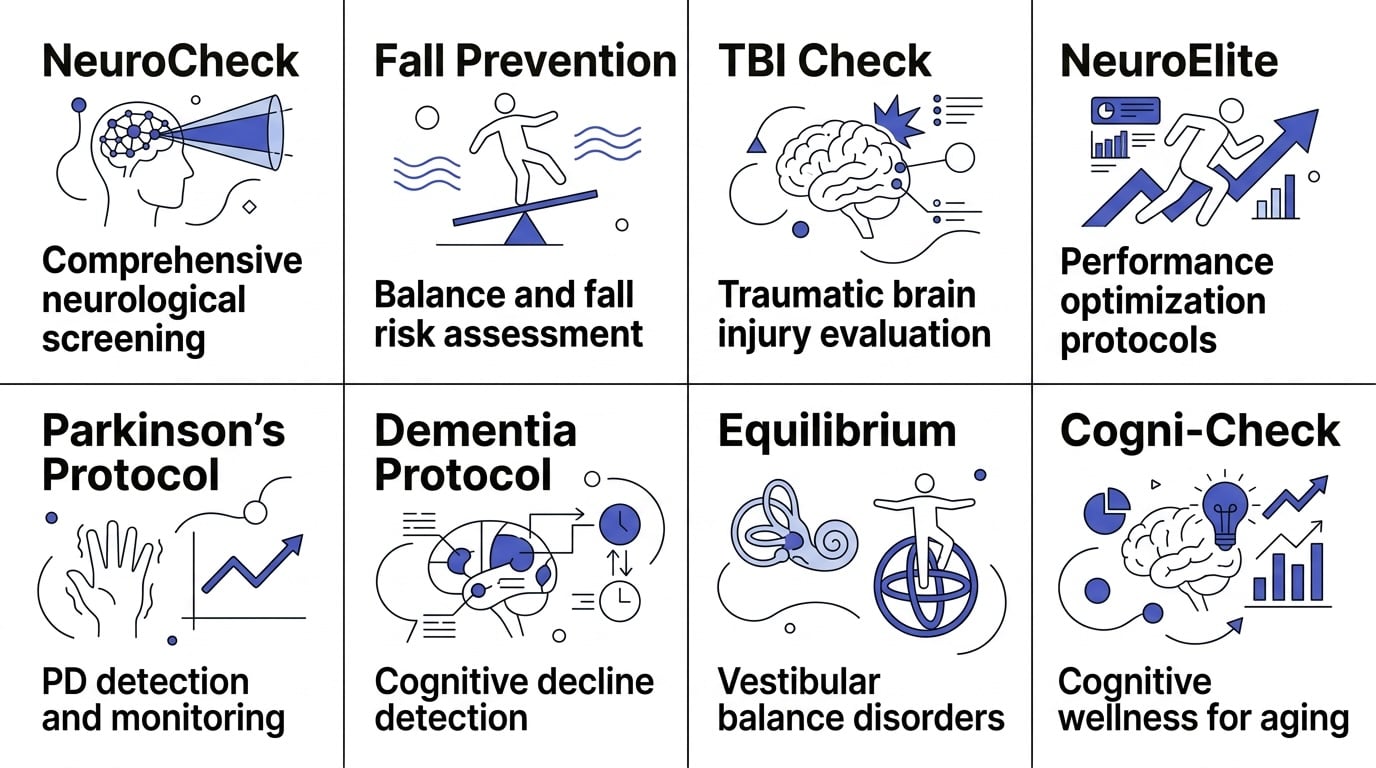
The Complete NeuroAI Protocol Suite
Eight specialized assessment montages. One integrated platform. Unlimited clinical potential. NeuroAI delivers the most comprehensive, AI-powered neurological diagnostic ecosystem in clinical practice today — empowering neurologists, vestibular specialists, and clinical directors to diagnose earlier, treat more precisely, and monitor more continuously than ever before.
NeuroCheck
Full-spectrum neurological screening
Fall Prevention
Targeted balance and fall risk assessment
TBI Check
Traumatic brain injury evaluation and recovery
NeuroElite
Elite performance neurological optimization
Parkinson's Protocol
Early PD detection and longitudinal monitoring
Dementia Protocol
AI-powered cognitive decline detection
Equilibrium
Vestibular and balance disorder diagnostics
Cogni-Check
Proactive cognitive wellness for aging populations