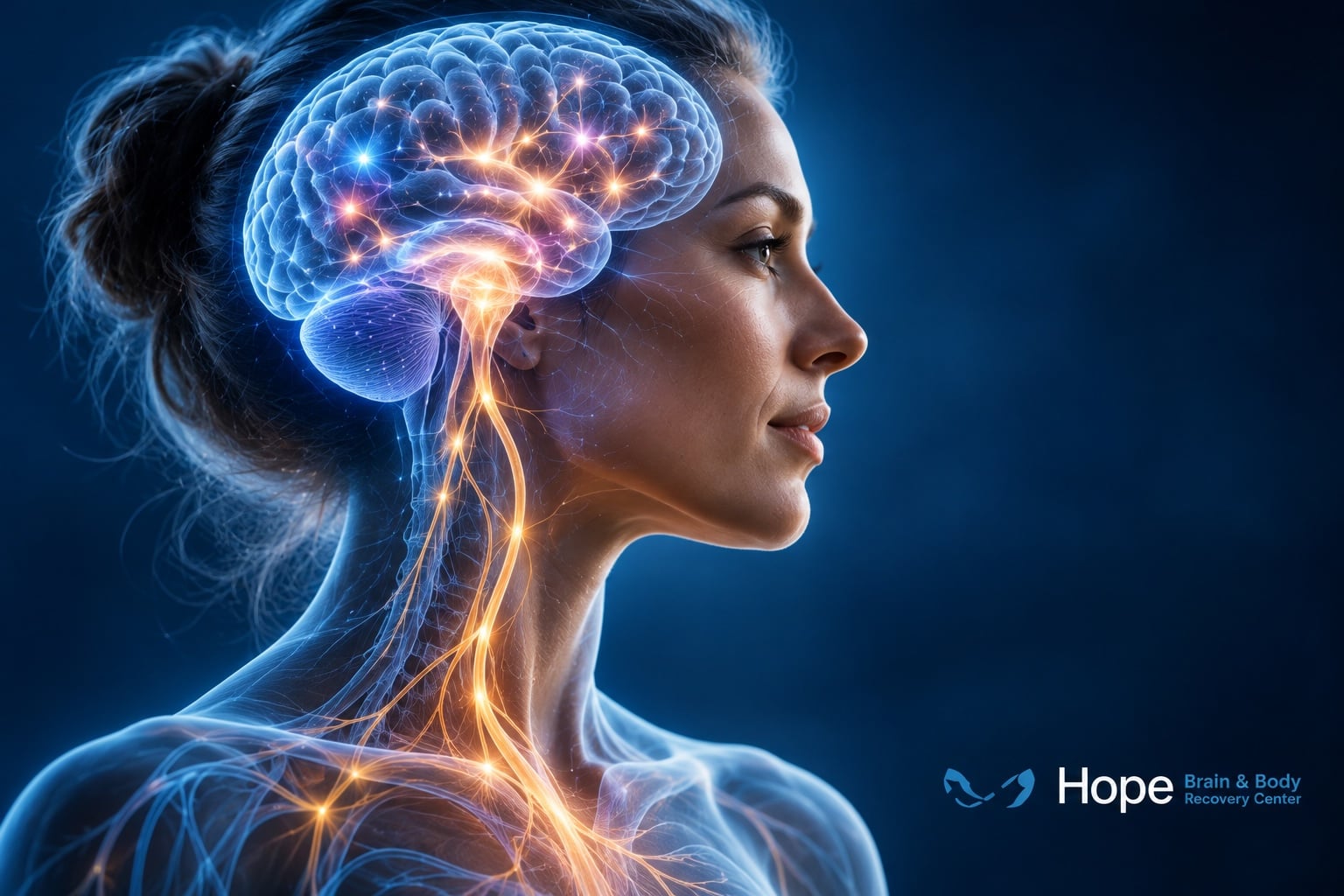
The vagus nerve is one of the body’s most important communication pathways.
It connects the brain with the heart, lungs, digestive system, and other organs while helping regulate autonomic activity, inflammation, pain processing, mood, and numerous other physiological functions.
That extraordinary reach has made vagus nerve stimulation (VNS) an important area of neurological research.
In this webinar, Dr. Adam Klotzek explores the science of transcutaneous vagus nerve stimulation (tVNS) and explains how the Stimpod NMS 460 combines two distinct technologies—DC galvanic stimulation and transcutaneous pulsed radiofrequency (tPRF)—to influence nerve activity through complementary mechanisms.
What Is Transcutaneous Vagus Nerve Stimulation?
Vagus nerve stimulation involves applying targeted stimulation intended to influence vagal signaling.
Traditional forms of VNS can involve surgically implanted devices.
Transcutaneous vagus nerve stimulation, or tVNS, provides a non-surgical approach by targeting areas accessible through the skin.
One particularly important area is the ear.
Branches associated with the vagus nerve can be accessed through specific auricular regions, allowing clinicians to stimulate vagal pathways without an implanted device.
This provides a practical pathway for investigating how changes in vagal signaling may affect neurological and autonomic function.
Why the Vagus Nerve Has Such Widespread Effects
Approximately 80% of vagus nerve fibers are afferent, meaning much of the information carried by the vagus nerve travels toward the brain.
These signals project heavily toward an important brainstem region known as the nucleus tractus solitarius (NTS).
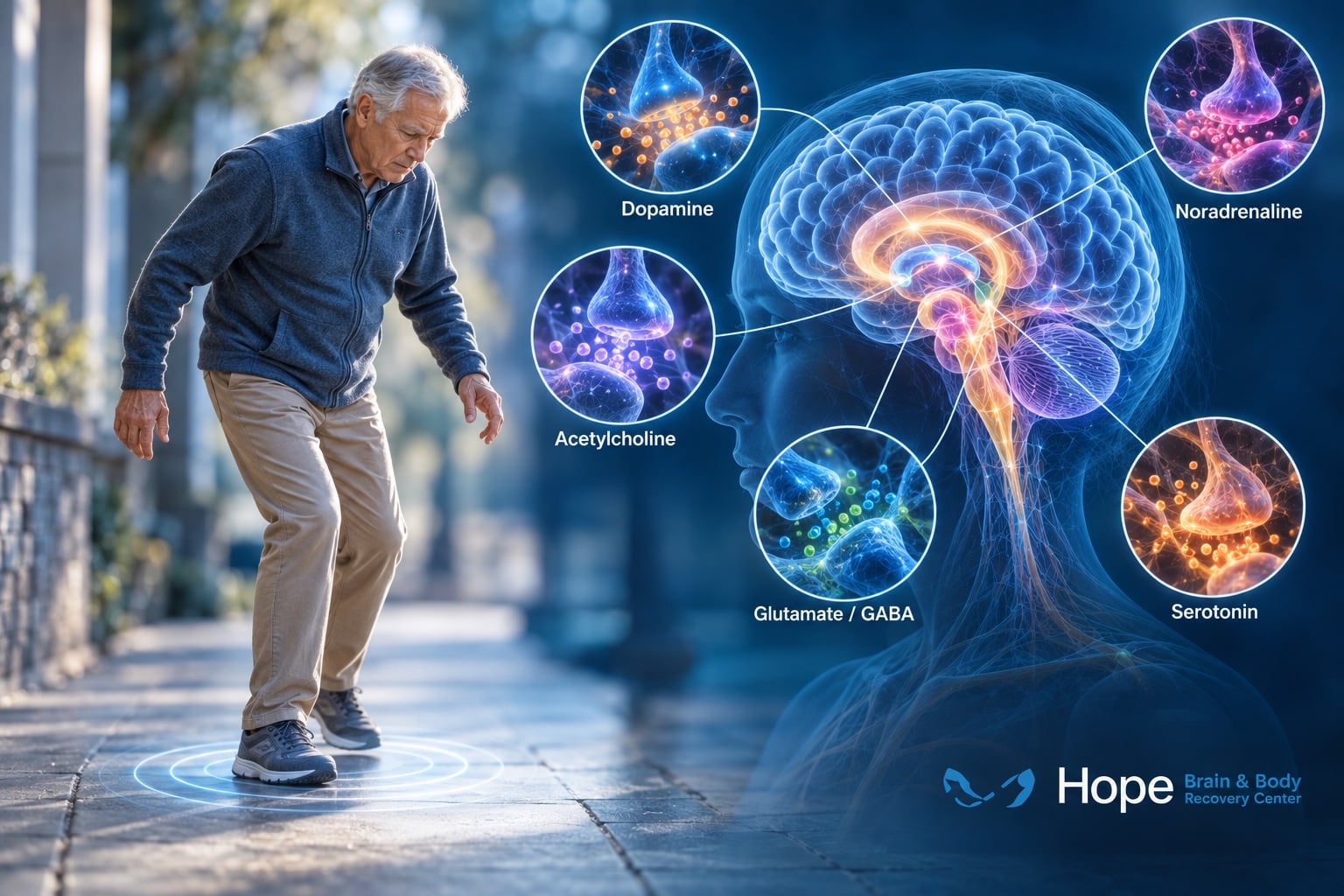
From there, vagal signals interact with other neurological centers, including systems associated with the locus coeruleus and raphe nuclei.
These networks can influence:
- Attention
- Mood
- Pain processing
- Autonomic regulation
- Cardiovascular activity
- Respiratory function
- Visceral function
The remaining efferent pathways allow the brain to communicate back toward organs throughout the body.
This two-way communication helps explain why stimulating one nerve can potentially influence such a broad range of physiological systems.
The Vagus Nerve and Inflammation
One of the most fascinating areas of vagus nerve research involves inflammation.
The nervous system and immune system are constantly communicating.
Vagal signaling participates in what is often called the cholinergic anti-inflammatory pathway, a neurological mechanism involved in regulating inflammatory responses.
The webinar discusses several systems through which vagal activity may influence inflammation, including:
- Cholinergic pathways
- Cytokine signaling
- Hypothalamic-pituitary pathways
- Splenic sympathetic pathways
- Central pain-modulating systems
This neuroimmune relationship is one reason researchers continue investigating vagus nerve stimulation across inflammatory, neurological, cardiovascular, and autonomic conditions.
Vagus Nerve Stimulation and Pain
Pain is another major area of interest.
Vagus nerve stimulation can interact with descending neurological pathways involved in pain inhibition.
The webinar discusses acetylcholine release within the spinal cord and its potential influence on the transmission of pain signals.
Rather than simply masking discomfort, neuromodulation attempts to influence how the nervous system processes those signals.
This becomes especially interesting in chronic pain, where the nervous system itself may become sensitized.
What Makes the Stimpod NMS 460 Different?
A central focus of Dr. Klotzek’s webinar is the Stimpod NMS 460.
The device combines two forms of stimulation:
DC Galvanic Stimulation
DC galvanic stimulation is used primarily for neuromodulation—changing how nerves function and communicate.
Transcutaneous Pulsed Radiofrequency
Pulsed radiofrequency introduces another mechanism that is being investigated for its potential effects on cellular signaling, nerve biology, mitochondria, axonal health, and myelin.
The webinar’s central idea is that these two approaches may complement one another.
One influences nerve function, while the other may influence biological processes involved in longer-term neural adaptation and remodeling.
Neuromodulation vs. Neural Remodeling
Understanding this distinction is important.
Neuromodulation changes how a nerve behaves.
The effect can involve alterations in:
- Firing patterns
- Sensory signaling
- Motor signaling
- Autonomic activity
- Pain pathways
Neural remodeling involves structural and cellular adaptation.
Research discussed during the webinar explores whether pulsed radiofrequency can influence biological processes associated with:
- Axonal development
- Myelin
- Mitochondrial activity
- Cellular repair
- Neuroplasticity
These potential mechanisms remain an important area for continued research.
The Mitochondrial Connection
One of the most interesting concepts presented by Dr. Klotzek involves mitochondria.
Nerves require substantial amounts of energy.
Every electrical signal and cellular repair process requires ATP.
When a nerve is injured, inflamed, or metabolically compromised, its ability to generate and use energy may also become impaired.
The webinar explores research involving M2 macrophages and the transfer of mitochondria to neurons.
This proposed mechanism may help explain some of the biological effects being investigated with pulsed radiofrequency.
It also raises an important clinical question:
What happens when you stimulate a nerve that doesn’t have enough metabolic energy to respond effectively?
Understanding the relationship between nerve stimulation and cellular energy could become increasingly important in neurological rehabilitation.
From Radiofrequency Ablation to Pulsed Radiofrequency
Radiofrequency has been used medically for decades.
Traditional radiofrequency ablation intentionally heats targeted nerve tissue to interrupt pain transmission.
Pulsed radiofrequency is different.
Instead of continuously applying thermal energy, RF energy is delivered intermittently.
The objective is to influence nerve activity while avoiding the destructive temperatures associated with conventional radiofrequency ablation.
Research eventually expanded into transcutaneous pulsed radiofrequency, allowing RF energy to be applied non-invasively through the skin.
Why Auricular Vagus Nerve Stimulation?
There are different potential locations for transcutaneous vagus nerve stimulation.
The webinar compares cervical stimulation with auricular stimulation through the ear.
Dr. Klotzek discusses auricular sites such as the:
- Cymba conchae
- Concha
- Tragus
These areas can provide relatively accessible targets for stimulation.
Importantly, there may not be one perfect stimulation point for every patient.
If a patient does not respond as expected, clinicians may need to adjust the stimulation site and evaluate the response.
This reinforces a recurring principle in functional neurology:
Treatment should be guided by the patient’s neurological response rather than by a rigid protocol.
Measuring the Patient’s Response
The webinar also explores the potential use of physiological markers to guide treatment.
These can include changes in:
- Heart rate
- Pupil response
- Autonomic activity
- Patient symptoms
- Treatment tolerance
Rather than simply turning on a device for a predetermined amount of time, clinicians can observe how the nervous system responds and adjust accordingly.
This creates a more individualized approach to neuromodulation.
Vagus Nerve Stimulation and Heart Rate
The vagus nerve is deeply involved in cardiovascular regulation.
Research discussed during the webinar examines how low-level transauricular vagus nerve stimulation may influence the balance between sympathetic and parasympathetic activity.
This has led investigators to explore tVNS in areas such as heart-rate regulation and atrial fibrillation.
For clinicians working with autonomic disorders, this relationship is particularly significant.
What About POTS and Dysautonomia?
POTS and dysautonomia involve abnormalities in autonomic nervous system regulation.
Because the vagus nerve is an important component of parasympathetic regulation, vagal stimulation has attracted interest as a potential therapeutic avenue.
The webinar discusses the possibility that vagus nerve stimulation may influence:
- Sympathetic activity
- Parasympathetic tone
- Heart-rate regulation
- Inflammatory signaling
These mechanisms may be relevant to future research involving POTS and other forms of dysautonomia.
It is important, however, to distinguish promising physiological mechanisms and emerging research from guaranteed clinical outcomes.
Vagus Nerve Stimulation and Neurological Conditions
Researchers have investigated VNS in several areas of neurological medicine.
The webinar discusses research and potential applications involving:
- Epilepsy
- Chronic pain
- Headaches and migraine
- Mood disorders
- Post-stroke rehabilitation
- POTS and dysautonomia
- Inflammatory conditions
- Cardiovascular regulation
It also discusses emerging questions surrounding neuroinflammatory conditions such as multiple sclerosis.
The breadth of these areas reflects the vagus nerve’s extensive connections throughout the brain and body rather than establishing tVNS as a proven treatment for every condition discussed.
Could Vagus Nerve Stimulation Influence Multiple Sclerosis?
Multiple sclerosis involves immune-mediated damage to myelin within the central nervous system.
The webinar explores whether vagal modulation of inflammatory pathways could eventually have relevance for patients with MS.
Dr. Klotzek also discusses PRF research involving mitochondrial activity, axonal biology, and myelin.
These are intriguing areas of investigation, but more research is needed before drawing conclusions about the clinical effectiveness of combined tVNS and PRF for MS.
Vagus Nerve Stimulation and Post-Stroke Rehabilitation
Neuroplasticity is essential following stroke and other forms of neurological injury.
Vagus nerve stimulation has attracted considerable scientific interest because pairing neuromodulation with rehabilitation may influence the brain’s response to training.
The concept is important:
The stimulation itself isn’t necessarily the entire rehabilitation.
Instead, neurological stimulation may potentially help create conditions in which targeted rehabilitation can produce stronger adaptive responses.
Safety and Contraindications
Although transcutaneous vagus nerve stimulation is non-invasive, that does not mean it is appropriate for everyone.
The webinar discusses possible temporary effects such as:
- Local discomfort
- Dizziness
- Cough response
- Gag response
- Tearing
- Tingling or paresthesia
- Changes in heart rate
- Vasovagal responses
The presentation also identifies situations requiring additional caution, including implanted electronic devices such as pacemakers, certain skin conditions at the stimulation site, vagal hypersensitivity, and bleeding disorders.
Patients should therefore be appropriately screened before treatment and monitored for their individual response.
Why Patient Communication Matters
Neuromodulation can sound intimidating.
Terms like “radiofrequency,” “nerve stimulation,” and “electrical current” can easily create anxiety when patients don’t understand what they mean.
Education is therefore an important part of treatment.
Patients should understand:
- Why stimulation is being considered
- Where it will be applied
- What they may feel
- What clinicians are monitoring
- When they should report discomfort
- What the treatment is intended to accomplish
Better understanding helps patients participate actively in their neurological rehabilitation.
There Is Still More to Learn
One of the most important messages from this webinar is that tVNS continues to evolve.
Researchers and clinicians still need better answers regarding:
- Optimal frequency
- Treatment intensity
- Session duration
- Pulse width
- Auricular vs. cervical stimulation
- Electrode placement
- Long-term outcomes
- Patient selection
These aren’t weaknesses in the field.
They are precisely the questions that ongoing research needs to answer.
Dr. Klotzek emphasizes combining scientific evidence, neurological examination, physiological feedback, and clinical experience rather than relying on a one-size-fits-all protocol.
Advanced Neurological Care at Hope Brain Center
At Hope Brain Center, neurological rehabilitation is built around understanding how each patient’s nervous system is functioning—not simply treating a diagnostic label.
Dr. Joseph Schneider, Dr. Adam Klotzek, and the Hope Brain Center team combine comprehensive neurological assessment with advanced rehabilitation technologies and individualized treatment strategies for patients dealing with complex neurological and autonomic conditions.
If you’re struggling with POTS, dysautonomia, neuropathy, chronic pain, brain injury, post-stroke symptoms, balance problems, or other neurological challenges, the first step is understanding what is happening within your nervous system.
Ready to Take the Next Step?
Discover whether Hope Brain Center’s comprehensive neurological approach may be appropriate for you.
Ready to Take the Next Step?
Living with neuropathy, chronic nerve pain, brain injury, or complex neurological symptoms can be frustrating—especially when the treatments you’ve already tried haven’t delivered the progress you hoped for.
At Hope Brain Center, Dr. Joseph Schneider and his team take a comprehensive approach to neurological rehabilitation, including tPRF, combining advanced diagnostics with individualized therapies designed around how your nervous system is actually functioning.
Your first step is a conversation.
Book Your Consultation Today
Discover whether Hope Brain Center’s personalized neurological approach may be right for you.
👉 BOOK NOW: https://hopebraincenter.com/book/
Don’t settle for simply managing symptoms. Start exploring what’s possible when your brain and nervous system are evaluated as a whole.