The human body continuously works to maintain a stable internal environment. One of the most essential biological processes involved in this balance is thermogenesis, the production of heat that allows the body to regulate temperature and maintain metabolic function.
Thermogenesis is not simply about staying warm—it is a fundamental part of how the body controls energy balance, metabolic rate, and cellular activity. This process is closely regulated by the autonomic nervous system (ANS), a network responsible for controlling involuntary processes such as heart rate, digestion, blood pressure, and body temperature.
When this regulatory system becomes disrupted, a condition called dysautonomia can occur. Dysautonomia interferes with the body’s ability to regulate multiple physiological processes, including thermoregulation and metabolism. Understanding this relationship is crucial for improving treatment approaches for metabolic disorders and nervous system dysfunction. Thermogenesis-and-Dysautonomia-…
At clinics like Hope Brain & Body Center, clinicians often focus on restoring nervous system balance as part of improving metabolic and neurological health.
What Is Thermogenesis?
Thermogenesis refers to the biological process through which the body generates heat by converting stored energy into thermal energy.
This process is essential for:
- Maintaining core body temperature
- Supporting metabolic reactions
- Regulating energy expenditure
- Protecting the body from environmental temperature changes
At the cellular level, thermogenesis occurs through complex metabolic pathways inside mitochondria. These pathways convert stored nutrients—such as fats and carbohydrates—into heat.
The ability to regulate thermogenesis effectively is critical for maintaining metabolic health and overall physiological stability.
Dysautonomia: When the Autonomic Nervous System Becomes Dysregulated
Dysautonomia refers to a range of disorders characterized by malfunction of the autonomic nervous system. Because the ANS regulates so many bodily processes, dysautonomia can affect multiple organ systems simultaneously. Thermogenesis-and-Dysautonomia-…
Common symptoms associated with dysautonomia may include:
- Difficulty regulating body temperature
- Chronic fatigue
- Dizziness or fainting
- Digestive problems
- Heart rate irregularities
- Blood pressure instability
Some cases are linked to genetic conditions, while others may arise from infections, metabolic disease, or nutritional deficiencies.
Research has shown that deficiencies in nutrients such as thiamine (vitamin B1) can contribute to autonomic dysfunction in certain cases.
Clinicians working in functional neurology and integrative medicine often examine nervous system regulation as part of comprehensive care. At Hope Brain & Body Center, therapies aimed at improving nervous system function are used to support patients experiencing autonomic disorders.
You can learn more about their approach to neurological care here:
https://hopebraincenter.com/

The Autonomic Nervous System and Thermogenesis
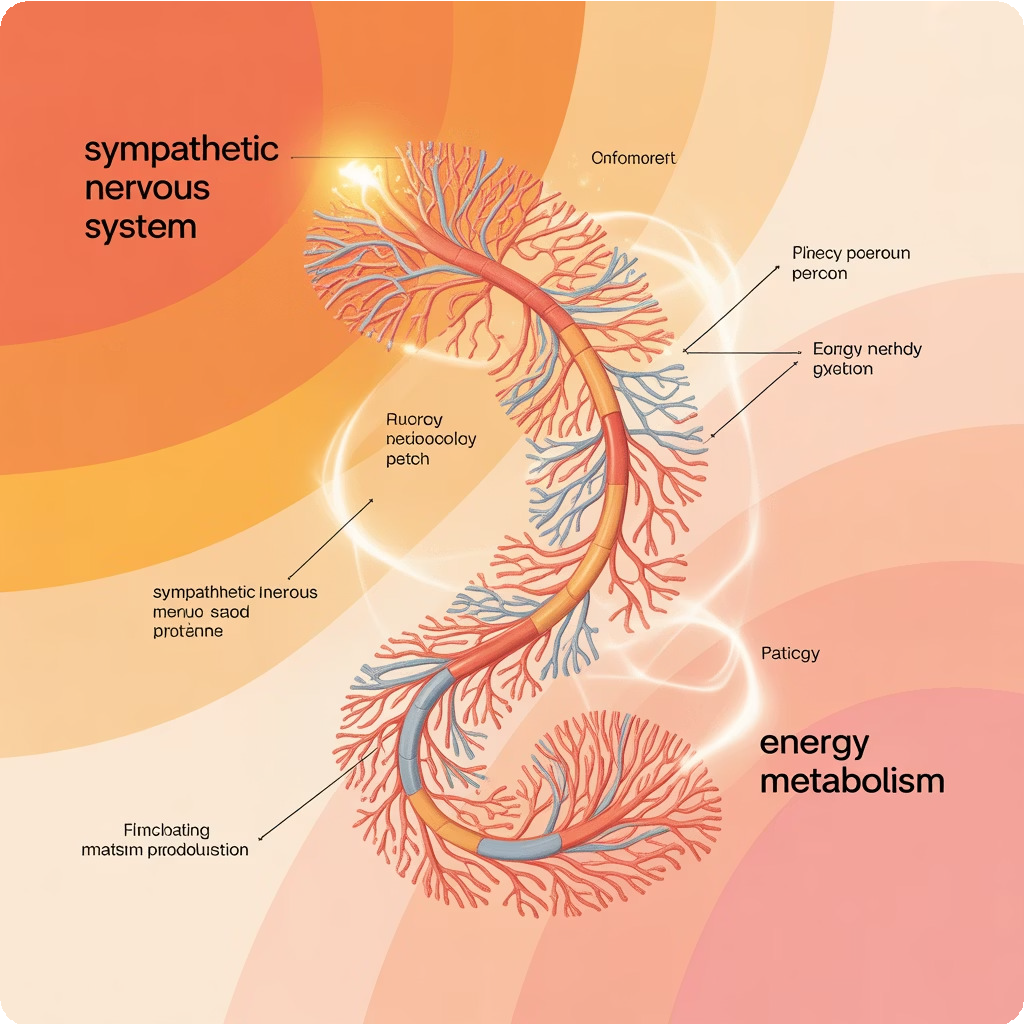
The autonomic nervous system regulates thermogenesis through two primary branches: the sympathetic nervous system and the parasympathetic nervous system.
Sympathetic Nervous System
The sympathetic nervous system activates heat production when the body is exposed to cold or increased metabolic demand.
This occurs when norepinephrine stimulates receptors on specialized fat cells known as brown adipose tissue, triggering heat generation.
Research from the National Institutes of Health highlights how sympathetic activation plays a critical role in regulating energy expenditure and metabolic balance.
External reference: https://www.ncbi.nlm.nih.gov/books/NBK541110/
Parasympathetic Nervous System
The parasympathetic branch influences obligatory thermogenesis, which is the heat generated during digestion and nutrient processing.
This means the foods we eat and how efficiently our digestive system functions can influence metabolic heat production.
Central Brain Control
The brain acts as the master regulator of thermoregulation. In particular, the hypothalamus monitors temperature signals throughout the body and coordinates appropriate autonomic responses. Thermogenesis-and-Dysautonomia-…
If the hypothalamus or autonomic pathways become impaired, thermoregulation can become unstable.
Brown Adipose Tissue: The Body’s Heat-Producing Engine
Brown adipose tissue (BAT), often called brown fat, is one of the body’s most powerful thermogenic systems.
Unlike white fat, which stores energy, brown fat burns energy to generate heat.
This unique capability is made possible by a protein called uncoupling protein-1 (UCP-1), which allows mitochondria to release energy as heat instead of storing it as ATP. Thermogenesis-and-Dysautonomia-…
When the body is exposed to cold temperatures:
- The sympathetic nervous system activates brown fat
- Fatty acids are oxidized
- Heat is rapidly produced
This process helps maintain stable body temperature during environmental stress.
Research from Harvard T.H. Chan School of Public Health notes that brown fat activation may also play a role in regulating body weight and metabolic health.
External reference:
https://www.hsph.harvard.edu/obesity-prevention-source/obesity-causes/thermogenesis/
Dysautonomia and Thermoregulatory Dysfunction
When the autonomic nervous system becomes dysfunctional, thermoregulation can be severely affected.
Disrupted autonomic signaling interferes with the body’s ability to control heat production and heat dissipation. Thermogenesis-and-Dysautonomia-…
This can lead to symptoms such as:
- Sensitivity to temperature changes
- Excessive sweating or lack of sweating
- Cold intolerance
- Heat intolerance
- Chronic fatigue
These symptoms often occur because the brain and nervous system are unable to properly coordinate metabolic and vascular responses to temperature.
Clinics that specialize in functional neurology, such as Hope Brain & Body Center, frequently assess nervous system regulation when treating patients with autonomic disorders.
Their work often focuses on restoring communication between the brain and body systems that regulate metabolism and temperature.
Thermoregulation and Metabolic Disease
Thermoregulatory dysfunction is commonly observed in metabolic conditions such as type 2 diabetes.
People with diabetes may develop autonomic neuropathy, which damages the nerves responsible for regulating temperature, blood flow, and metabolic activity.
Studies show that individuals with metabolic disease often experience:
- Abnormal temperature distribution in peripheral tissues
- Reduced hypothalamic regulation
- Impaired heat dissipation in extremities
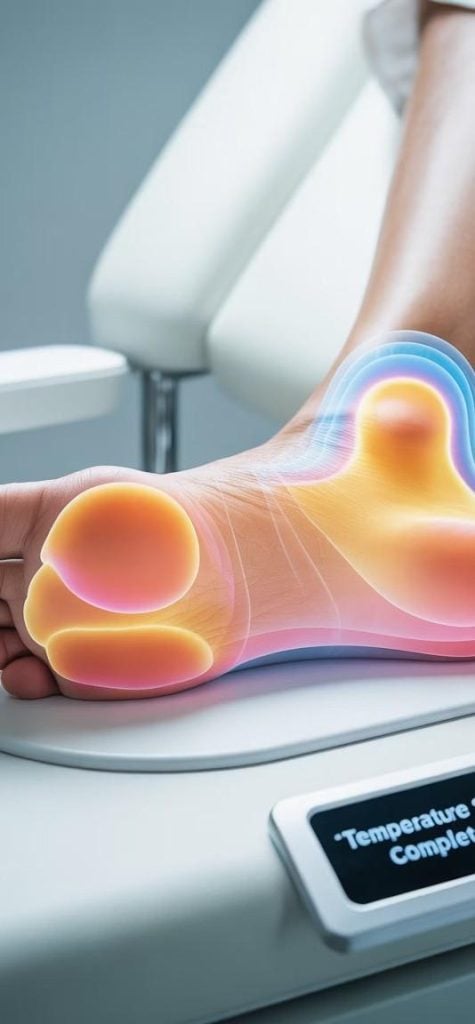
For example, abnormal temperature patterns in the feet are sometimes used as early indicators of diabetic neuropathy. Thermogenesis-and-Dysautonomia-…
Lifestyle factors also play a significant role.
Sedentary behavior and excessive caloric intake can impair hypothalamic signaling, disrupting thermogenesis long before metabolic disease develops.
The Role of the Sympathetic Nervous System in Energy Expenditure
The sympathetic nervous system has a profound influence on metabolic rate.
Research suggests that blocking sympathetic activity can reduce resting metabolic rate by approximately 25%. Thermogenesis-and-Dysautonomia-…
Additionally, about 60% of fat metabolism relies on sympathetic nervous system activity.
When autonomic signaling is impaired:
- Energy expenditure decreases
- Fat oxidation becomes less efficient
- Metabolic imbalance may develop
This connection helps explain why dysautonomia can contribute to metabolic disorders, weight gain, and chronic fatigue.
Clinical Implications and Emerging Therapies
Understanding how thermogenesis and dysautonomia interact opens new possibilities for medical treatment.
Potential therapeutic strategies include:
Restoring Autonomic Function
Treatments that improve nervous system balance may enhance thermogenesis and metabolic regulation.
Targeting Brown Fat Activation
Researchers are exploring medications and therapies that stimulate brown adipose tissue to increase energy expenditure.
Neurological Circuit Research
Better understanding of the brain-autonomic circuits controlling thermogenesis may lead to more targeted treatments for dysautonomia and metabolic disease.
Clinics specializing in neurological and metabolic health—such as Hope Brain & Body Center—are increasingly integrating these insights into patient care strategies.
The Future of Thermogenesis Research
Recent scientific discoveries emphasize the importance of the brain-sympathetic axis, which connects neural control mechanisms with metabolic heat production.
Researchers are also studying nutrient-induced thermogenesis, where digestion itself contributes to heat generation and energy expenditure.
These discoveries suggest that metabolism is not controlled solely by hormones or calorie intake—but by a complex network involving the nervous system, metabolism, and environmental signals.
Advancing our understanding of these systems may transform how we treat metabolic diseases and autonomic disorders in the future.
What is thermogenesis?
Thermogenesis is the biological process through which the body produces heat by converting stored energy into thermal energy.
What causes dysautonomia?
Dysautonomia can result from genetic conditions, metabolic disorders, infections, autoimmune diseases, or nutritional deficiencies that disrupt autonomic nervous system function.
How does the autonomic nervous system regulate body temperature?
The autonomic nervous system controls heat production and heat loss through mechanisms such as blood flow regulation, sweating, and activation of brown adipose tissue.
What is brown adipose tissue?
Brown adipose tissue (brown fat) is specialized fat that burns energy to produce heat, helping maintain body temperature and metabolic balance.
Can autonomic dysfunction affect metabolism?
Yes. Dysautonomia can reduce metabolic efficiency, impair fat oxidation, and disrupt energy expenditure, potentially contributing to metabolic disorders.