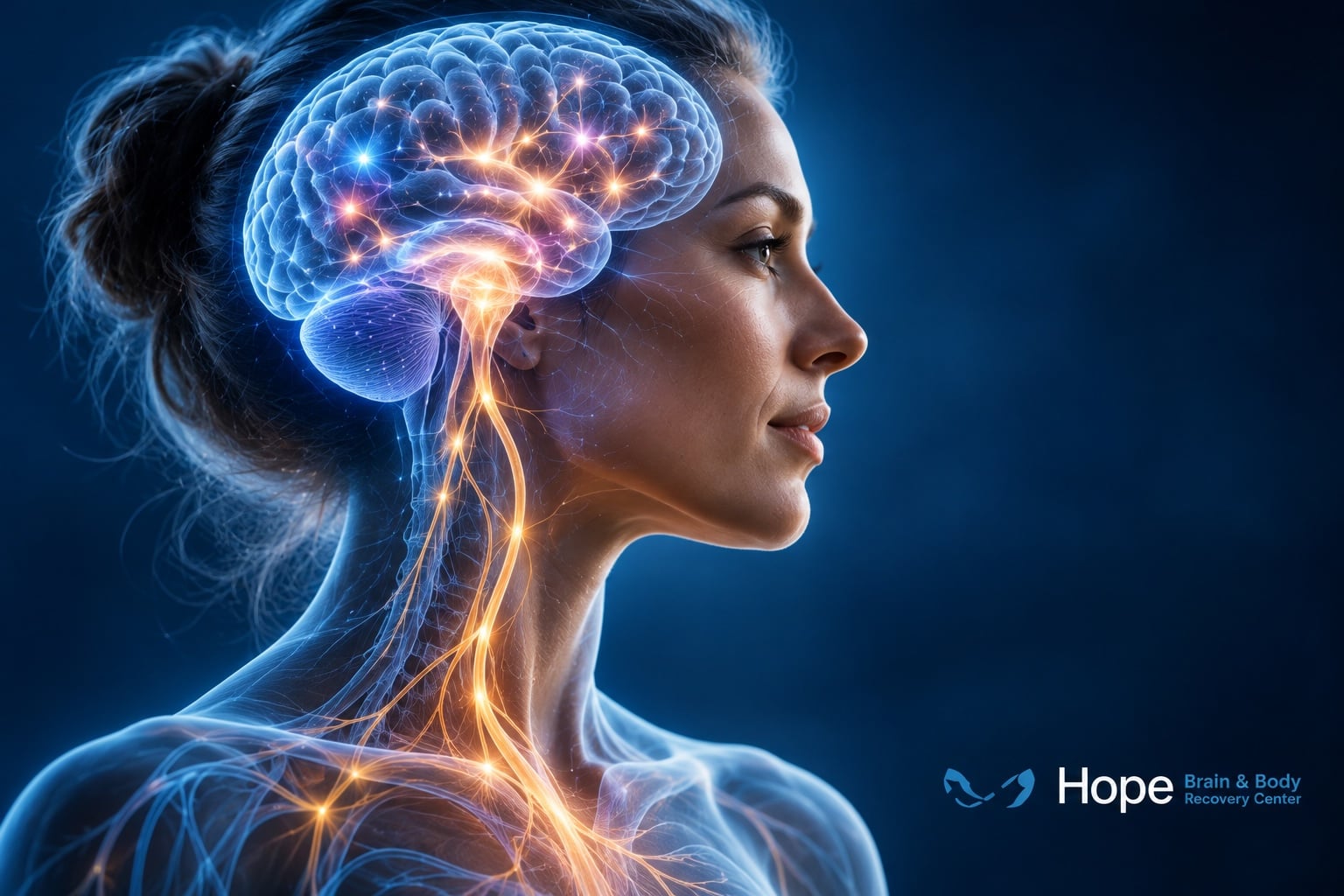
Vertigo is more than just dizziness — it’s a complex neurological experience involving the delicate relationship between our vestibular system (balance organs in the inner ear) and our visual system. When these systems work together seamlessly, we maintain balance, clear vision, and spatial orientation. When they clash, the result can be disorientation, instability, and severe discomfort.
At Hope Brain and Body Recovery Center, we specialize in understanding and treating the complex causes of vertigo, using advanced diagnostic tools and integrative therapies to restore your balance and quality of life.
What is Vertigo?
Vertigo is a specific type of dizziness characterized by the false sensation that you or your surroundings are spinning or moving — even though you’re perfectly still. This is different from general lightheadedness and often comes with additional symptoms:
- Spinning or tilting sensation
- Nausea and vomiting
- Unsteadiness or loss of balance
- Difficulty focusing
- Feeling pulled in one direction
Vertigo typically arises from dysfunction in the vestibular system or its connections in the brain, creating a mismatch between actual movement and perceived movement.
How the Vestibular System Works
Your vestibular system acts as the body’s balance center, located in the inner ear. It contains specialized structures that detect movement and position:
- Semicircular Canals – Three fluid-filled loops that detect head rotation:
- Superior canal: nodding “yes”
- Horizontal canal: shaking “no”
- Posterior canal: tilting head side-to-side
- Utricle – Detects horizontal movement and head position relative to gravity, using calcium carbonate crystals called otoconia.
- Saccule – Detects vertical movement and gravitational changes.
- Hair Cells – Sensory receptors that convert movement into electrical signals sent to the brain.
The Brain’s Role in Balance
The brain processes vestibular signals in several key areas:
Vestibular Nuclei (Brainstem Hub)
Acts as the first relay station for balance information, integrating signals from:
- Inner ear sensors
- Visual system
- Proprioception (body awareness)
- Cerebellum feedback
Different nuclei control posture, eye movement coordination, and reflexes that stabilize vision during motion.
Cerebellum and Basal Ganglia
- Cerebellum: Fine-tunes movement, adjusts posture, and adapts to changes in balance.
- Basal Ganglia: Helps with motor planning, suppresses unwanted movements, and stabilizes posture during complex actions.
Damage to these areas can cause central vertigo, leading to persistent imbalance, abnormal eye movements, and difficulty focusing.
Frontal Cortex
The frontal cortex integrates sensory information, creates a “map” of body position, and manages attention during movement. Dysfunction here can cause spatial disorientation and difficulty concentrating while moving.
Vision’s Role: The Vestibulo-Ocular Reflex (VOR)
Your eyes and vestibular system are closely linked through the vestibulo-ocular reflex (VOR). This reflex stabilizes your gaze during head movement by producing equal and opposite eye movements — all in just 7–15 milliseconds.
When the VOR malfunctions, patients may experience oscillopsia — the unsettling sensation that the world is bouncing or jumping when you move your head.
When Vision and Balance Systems Clash
A mismatch between visual and vestibular inputs can create a sensory conflict, leading to:
- Visual disturbances – Blurry or double vision, difficulty focusing, visual “jumping” during head movement.
- Visual motion sensitivity – Discomfort in busy environments like supermarkets or scrolling screens.
- Compensation strain – The brain works harder to reconcile conflicting inputs, causing fatigue, headaches, and reduced depth perception.


Common Vestibular Disorders
Some of the most common causes of vertigo include:
- BPPV (Benign Paroxysmal Positional Vertigo) – Caused by displaced crystals in the inner ear’s semicircular canals.
- Vestibular Neuritis – Inflammation of the vestibular nerve, often viral in origin.
- Ménière’s Disease – Inner ear fluid buildup leading to vertigo, hearing loss, and tinnitus.
- Central Vertigo – Originates in the brainstem or cerebellum due to stroke, multiple sclerosis, or tumors.
Treatment Approaches at Hope Brain and Body Recovery Center
At Hope Brain and Body Recovery Center, we use a multimodal, individualized approach to vertigo treatment, addressing both vestibular and visual components.
Our treatment options include:
- Canalith Repositioning – Gentle head maneuvers (Epley, Semont) to move displaced crystals back into place.
- Vestibular Rehabilitation Therapy – Exercises that retrain the brain to process balance information correctly.
- Vision Therapy – Improves eye movement control and visual processing to support balance.
- Neuro-Optometric Rehabilitation – Integrates visual and vestibular rehab for comprehensive results.
- Medications – Used selectively for short-term symptom management during acute episodes.
Learn more about our Vestibular Rehabilitation Therapy programs.
Why Integrated Care Matters
Since balance relies on both the vestibular and visual systems, effective treatment must address both. By combining vestibular rehabilitation, vision therapy, and neurological retraining, patients often experience:
- Reduced vertigo episodes
- Improved stability and mobility
- Greater confidence in movement
- Enhanced quality of life
Conclusion
Vertigo is a symptom of a deeper problem involving the coordination between your inner ear, eyes, and brain. Understanding the vestibular–vision connection is key to effective treatment. At Hope Brain and Body Recovery Center, we specialize in targeted therapies that restore balance, retrain the brain, and help you regain control of your daily life.
If you are experiencing vertigo or balance issues, contact us to schedule a comprehensive evaluation and begin your path to recovery.
Frequently Asked Questions (FAQ) About Vertigo
1. What’s the difference between dizziness and vertigo?
Dizziness is a general feeling of unsteadiness or lightheadedness, while vertigo specifically involves a false sensation of spinning or movement.
2. Can vision problems cause vertigo?
Yes. Visual disturbances can disrupt balance by sending conflicting information to the brain, especially if the vestibulo-ocular reflex (VOR) is impaired.
3. How long does vertigo last?
It depends on the cause. BPPV episodes may last seconds to minutes, while vestibular neuritis or Ménière’s disease can cause episodes lasting hours or days.
4. Can vertigo be cured?
Many cases can be successfully treated, especially when both vestibular and visual components are addressed through targeted rehabilitation.
5. How do I know if my vertigo is serious?
If vertigo is accompanied by severe headache, sudden hearing loss, weakness, difficulty speaking, or vision changes, seek emergency medical attention immediately.