Copper: Essential for Life, Dangerous in Excess — Understanding Its Role in Human Health
Copper is one of the most important trace minerals in the human body. Required for everything from blood production to immune defense and brain development, copper plays a role in countless metabolic pathways. But as the attached document explains on page 1, while copper is essential, both deficiency and excess can cause serious health problems.
Copper is a perfect example of the nutritional principle that balance is everything. Too little impairs basic biological functions; too much becomes toxic. In this comprehensive guide, we’ll explore the biology of copper, how the body uses it, what happens when levels swing too low or too high, and why the copper-binding peptide GHK-Cu is gaining attention for its regenerative potential.

Why Copper Matters: Key Biological Functions
Copper is necessary for survival. As page 2 outlines, the mineral supports three major categories of human physiology:
1. Blood Production
Copper is required for:
- Red blood cell formation
- Iron absorption
- Prevention of anemia
Without sufficient copper, the body struggles to use iron properly, leading to anemia that does not respond to iron supplementation alone.
2. Development and Tissue Formation
Copper is essential for the development of:
- Connective tissue
- Brain structures
- The heart and cardiovascular system
These roles begin in infancy and continue throughout life, emphasizing how foundational copper is for structural and neurological health.
3. Immune Support and Antioxidant Defense
Copper regulates ALPK1 pathways, which influence innate immunity. It also powers antioxidant enzymes—particularly superoxide dismutase (SOD)—which protect cells from oxidative stress.
In short, copper helps your body build, repair, defend, and energize itself.

Food Sources of Copper: Where We Get It
Most people obtain adequate copper through diet, as noted on page 3.
Highest Copper Sources
- Organ meats (especially liver)
- Shellfish
Good Sources
- Whole grains
- Nuts
- Seeds
- Dark chocolate
Moderate Sources
- Legumes
- Certain vegetables
While the average adult meets their copper needs through food alone, some health conditions can hinder copper absorption, potentially leading to deficiency.
Copper Deficiency: Causes, Symptoms, and Long-Term Effects
Copper deficiency is uncommon but can have severe consequences. Page 4 of the document highlights both the causes and clinical effects.
Common Causes of Copper Deficiency
- Malabsorption disorders (e.g., celiac disease, inflammatory bowel disease)
- Menkes disease, a rare genetic disorder affecting copper transport
- Excessive zinc supplementation, which blocks copper absorption
- GI conditions or surgeries that reduce nutrient assimilation
Symptoms and Clinical Effects
Copper deficiency may lead to:
- Anemia that does not respond to iron therapy
- Neutropenia, or low white blood cell count
- Bone abnormalities and connective tissue weakness
- Neurological problems, including difficulty walking, numbness, or cognitive impairment
These symptoms arise because copper is deeply involved in blood cell maturation, nerve myelination, and bone development.
If left untreated, deficiency can cause irreversible neurological damage.
Copper Toxicity: When Levels Become Dangerous
Just as deficiency harms the body, excessive copper can be equally dangerous. Page 5 explains the difference between acute and chronic copper toxicity.
Acute Copper Toxicity
This typically occurs from contaminated water, accidental ingestion, or industrial exposure. Symptoms can include:
- Vomiting
- Abdominal pain
- Organ failure
- In extreme cases, death
Chronic Copper Toxicity
Long-term elevated copper levels can cause:
- Liver failure
- Kidney disease
- Neurological damage
- Fatigue, irritability, and mood disorders
Safety Limit
The upper safe limit for adults is 10 mg/day from all sources.
People with certain genetic conditions—like Wilson’s disease—are particularly vulnerable to copper overload and require medical monitoring.
GHK-Cu: A Copper-Binding Peptide With Regenerative Potential
While excess copper is toxic, the controlled use of copper in biological systems can be therapeutic. One of the most promising examples is GHK-Cu, a naturally occurring copper-binding tripeptide discussed on page 6.
What Is GHK-Cu?
- A tripeptide composed of glycyl-L-histidyl-L-lysine
- Naturally present in human plasma
- Acts as a signaling molecule that promotes healing
What Does GHK-Cu Do?
According to the document:
- Regulates wound healing
- Controls inflammation
- Promotes tissue regeneration and renewal
GHK-Cu acts like a biological “repair switch,” activating genes associated with cellular recovery.
Therapeutic Uses of GHK-Cu: Skin, Cellular Protection, Hair Growth & More
Page 7 provides an overview of the rapidly expanding therapeutic applications of GHK-Cu.
1. Skin Health and Rejuvenation
GHK-Cu:
- Stimulates collagen production
- Accelerates wound healing
- Reduces visible signs of aging
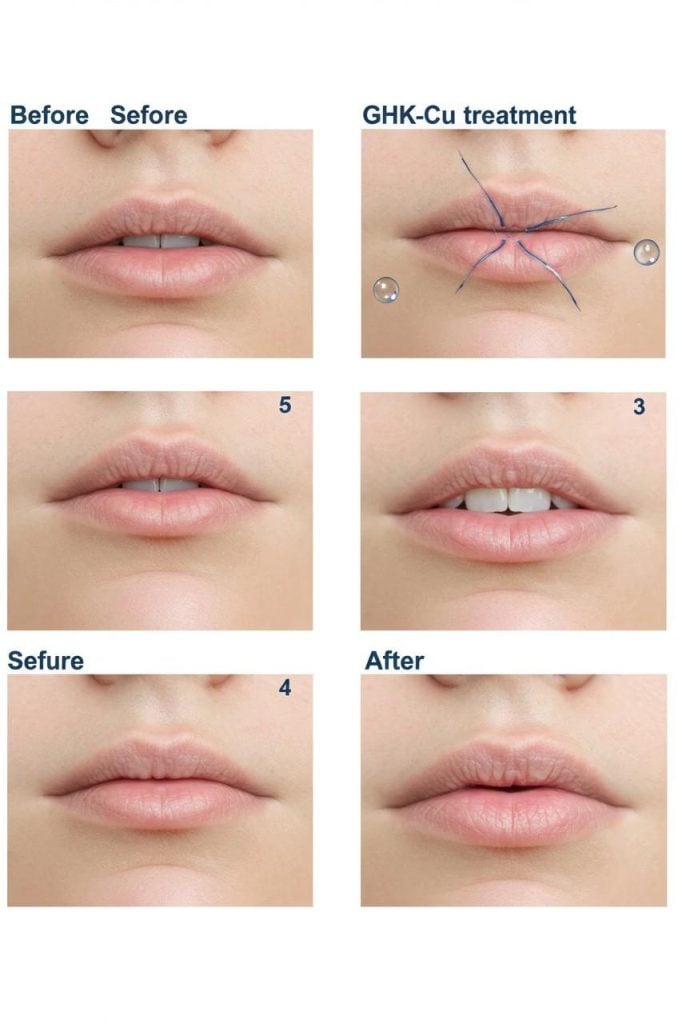
Images on page 7 even showcase before-and-after lip rejuvenation, highlighting smoother, fuller, and more hydrated tissue following GHK-Cu application.
2. Cellular Protection
GHK-Cu acts as a powerful antioxidant, helping to:
- Reduce inflammation
- Neutralize oxidative damage
- Support healthier cell function
3. Emerging Areas of Research
Scientists are exploring GHK-Cu’s potential in:
- Hair growth stimulation
- Nerve regeneration
- Tissue engineering
These early findings suggest GHK-Cu may play a major future role in regenerative medicine and anti-aging therapies.
Copper Balance: Why Too Little or Too Much Affects the Whole Body
The final page of the document summarizes an essential truth: balance is everything when it comes to copper.
Dietary Balance
A varied, nutrient-rich diet is usually enough to maintain healthy copper levels.
Medical Supervision
Copper supplements should only be taken under professional guidance—particularly because both deficiency and excess carry serious risks.
Future Research
The document notes that GHK-Cu continues to gain scientific interest for its biomedical applications, especially in tissue repair, anti-aging, and neuroregeneration.
Copper’s dual nature—vital yet potentially toxic—highlights the importance of personalized nutrition and careful monitoring in functional and integrative medicine.
Conclusion: Copper’s Double-Edged Role in Human Health
Copper is indispensable. It helps your body create blood, form connective tissue, absorb iron, fight infections, and repair itself at the cellular level. Yet the mineral’s powerful effects also mean that imbalance—whether too little or too much—can cause significant harm.
From anemia and neurological decline to liver toxicity and oxidative stress, copper imbalances affect nearly every major organ system.
Meanwhile, advances in copper-binding peptides like GHK-Cu reveal exciting therapeutic possibilities, pointing toward a future where copper-based compounds may help regenerate tissues, restore youthful skin, and even support nerve healing.
Understanding your copper levels—and maintaining healthy balance—is an essential component of long-term wellness. Always work with a qualified clinician when evaluating mineral levels or considering supplementation.
Copper FAQ
❓ What is copper and why does the body need it?
Copper is an essential mineral involved in energy production, immunity, antioxidant defense, red blood cell formation, and nervous system development. Your body cannot make copper, so you must get it from food.
❓ What are the symptoms of copper deficiency?
Copper deficiency may cause:
- Fatigue or weakness
- Anemia that does not respond to iron
- Low white blood cells (weakened immunity)
- Neurological issues (numbness, difficulty walking)
- Bone weakness
❓ What causes copper deficiency?
Common causes include:
- Celiac disease or malabsorption
- GI surgery
- Excess zinc supplementation
- Menkes disease (genetic)
- Very poor diet
❓ Can you have too much copper?
Yes. Copper toxicity can be dangerous and may lead to:
- Liver and kidney damage
- Nausea, vomiting, abdominal pain
- Neurological symptoms and mood changes
- Oxidative stress and inflammation
❓ What foods are high in copper?
Top sources include:
- Organ meats
- Shellfish
- Nuts and seeds
- Whole grains
- Legumes
- Dark chocolate
❓ Should I take a copper supplement?
Not unless recommended by your clinician. Copper supplements should only be used under guidance because both deficiency and excess can be harmful.
❓ What is the safe upper limit for copper intake?
The adult tolerable upper intake level (UL) is 10 mg/day from all sources.
❓ What is GHK-Cu and why is it beneficial?
GHK-Cu is a naturally occurring copper peptide known for its:
- Collagen-boosting effects
- Anti-aging and skin repair benefits
- Wound healing and tissue regeneration
- Anti-inflammatory and antioxidant activity
- Potential in hair growth and nerve repair
❓ Is copper related to brain function?
Yes. Copper is needed for:
- Neurotransmitter regulation
- Myelin formation
- Mitochondrial energy production
- Antioxidant protection
Both copper deficiency and toxicity can impair cognitive function and mood.
❓ How can I find out if my copper levels are imbalanced?
A functional medicine clinician can test blood and urine levels, evaluate symptoms, and assess dietary patterns. Many people benefit from a full mineral panel including zinc, iron, ceruloplasmin, and inflammatory markers.
❓ Can copper imbalance affect mood?
Yes. Too much copper can contribute to anxiety, irritability, mood swings, or agitation. Too little copper can cause fatigue, slowed cognition, and depressive symptoms.
❓ How do I restore copper balance naturally?
This depends on whether levels are too high or too low. Treatment may involve:
- Adjusting dietary sources
- Managing zinc intake
- Supporting liver detoxification
- Treating malabsorption
- Using chelation therapy in cases of toxicity
Always follow a clinician’s guidance.
Concerned about copper imbalance and its impact on your brain and body?
At Hope Brain Center, we specialize in evaluating mineral levels—including copper, zinc, and ceruloplasmin—to understand how they affect cognition, mood, focus, and neurological function.
Take the next step toward clarity and balance.
📍 Visit us: 6 Dickinson Dr, Ste 310, Chadds Ford, PA 19317
📞 Call: +1 (610) 652-4732
💬 Schedule a consultation: https://hopebraincenter.com/contact/