What Is Neuro AI and Why Traditional Brain Assessment Falls Short
“AI is perhaps the most transformational technology of our time, and healthcare is perhaps AI’s most pressing application.” — Satya Nadella, Chief Executive Officer, Microsoft
Defining Neuro AI: Where Neuroscience Meets Artificial Intelligence
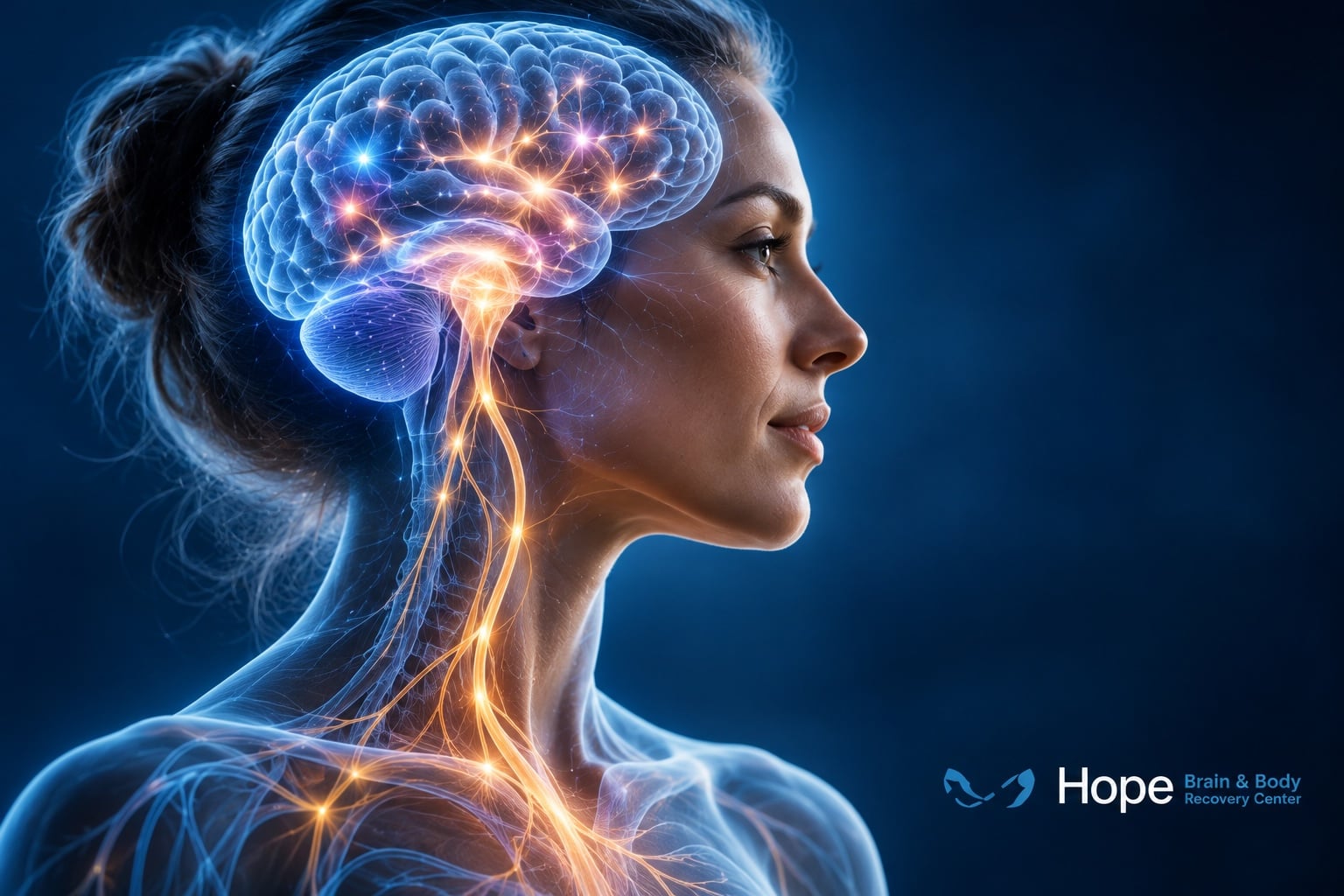
Neuro AI sits at the intersection of brain science and artificial intelligence. Neuroscience uses AI tools to analyze neural data and understand how the brain actually functions. At the same time, AI systems draw on principles from neuroscience to build better artificial agents. Both fields benefit. Neuroscience gains powerful computational tools. AI gains insight from millions of years of evolutionary brain optimization.
Here’s something worth thinking about. Your brain runs on roughly 20 watts of power — yet performs computations that would require megawatts in conventional AI systems. With neurodegenerative diseases rising steadily in our aging population, the need for better diagnostics and treatments has never been more urgent.
The Limitations of Traditional Brain Diagnostics
Traditional neurological exams can take anywhere from a few minutes to well over an hour, depending on your symptoms. They cover mental status checks, cranial nerve tests, motor system evaluations, reflex testing, and sensory assessments. Neuropsychological evaluations are nearly 90% effective at distinguishing Alzheimer’s from other brain and psychiatric conditions — but they require significant expertise and are difficult to access in time-sensitive situations.
Brain imaging carries its own set of problems. Cost is a major barrier. Many patients simply cannot access these technologies, particularly in regions where medical resources are stretched thin. And even when imaging is available, it only captures a single moment in time. It cannot track dynamic changes as they unfold.
Why Standard Neurological Tests Miss Subtle Changes
The sensitivity of traditional neurological examinations is, frankly, limited. Motor examination sensitivity ranges between just 0.13 and 0.61. Sensory examination sensitivity falls between 0.61 and 0.63. Paper-based dementia screening tools are subjective, resource-intensive, and require 10 to 15 minutes of staff time — while still missing subtle cognitive changes that matter.
Traditional neuropsychological methods were never built to detect subtle shifts in neurocognitive or neurobehavioral functioning on their own. The absence of neuropsychological findings has even been used to argue “no residual effects” from mild traumatic brain injury. That conclusion misses the underlying complexities that advanced methods can now detect.
How AI-Powered Assessment Changes Everything
AI frameworks use speech-based biomarkers to catch subtle linguistic changes and signs of cognitive decline — years before traditional tools even register a concern — and they do it in under a minute. AI algorithms analyze patient data to assist with diagnosis and predict the risk of developing certain disorders based on historical patterns. Machine learning models analyzing MRI images are making early detection of neurodegenerative diseases more accessible, with studies showing AI can accurately differentiate between Alzheimer’s and other conditions.
This is not a small upgrade to existing tools. It is a fundamentally different approach to understanding what is happening in your brain.
How the Spryson Chair Works: Key Technologies
Eye-Tracking Technology for Brain Health Insights
Your eyes tell a story your brain cannot hide.
The Spryson DX200 features a 250 Hz sampling rate with spatial resolution of 0.01° for horizontal and vertical movements and 0.1° for torsional movements. That level of precision matters. Eye movements connect to the brain through fewer neural pathways than other muscles. This means they respond quickly — and accurately — to what is happening inside your brain.
Different eye motion types associate with specific brain locations, allowing clinicians to pinpoint neurological dysfunction. Early signs of Parkinson’s disease, for example, show up through specific saccadic eye movement patterns before any other symptoms appear. For dementia screening, patients simply view images on a screen while the system tracks fixation duration and hesitation patterns — measuring short-term memory, language ability, attention, and orientation in just three minutes.
Three minutes. That is all it takes.
Portable EEG Testing and Real-Time Data Collection
Traditional EEG meant sitting in a lab, wired up, going nowhere. Portable EEG systems changed that. These wireless devices use scalp electrodes to detect neural communication patterns, amplifying signals for processing — without the lab constraints.
Mobile EEG has demonstrated a sensitivity of 39% and specificity of 85% for detecting abnormalities. Battery life extends beyond 96 hours on rechargeable lithium-ion batteries, enabling multi-day unattended studies. Your brain activity can now be monitored continuously — in your real life, not just during a clinic visit.
Cloud-Based Analysis and Secure Data Management
Your brain health data deserves the same protection as your brain itself.
Cloud platforms provide secure, GDPR-compliant environments for storing and analyzing that data. Real-time streaming sends EEG data to cloud-based portals, allowing physicians to review recordings remotely. These systems support thousands of simultaneous users while maintaining institutional review board standards for participant protection.
Your doctor can review your results. Without you needing to travel anywhere.
AI Pattern Recognition That Detects What Humans Miss
Here is where things get remarkable. Machine learning algorithms analyze brain scans and movement data to spot early Alzheimer’s and Parkinson’s signs — patterns too subtle for the human eye to catch consistently.
AI-powered tools have helped clinicians double their review speed and triple diagnostic accuracy. Algorithms detected seizure burden with 100% sensitivity and 93% specificity for high-burden periods. These are not small improvements. These are the kinds of numbers that change outcomes for real patients — patients like you.
Clinical Applications: Where Neuro AI Makes a Real Difference
“We do believe diagnosing early and accurately is one of the best ways to provide the best possible medical care.” — Dr. David T. Jones, Mayo Clinic neurologist and senior author of the study
This isn’t just technology for technology’s sake. Neuro AI is showing up in real clinical settings, helping real patients. Here’s where it matters most.
Traumatic Brain Injury and Concussion Assessment
TBI remains the leading cause of preventable trauma-related morbidity worldwide. That’s a heavy statement. And yet, diagnosis has historically relied on tools that miss more than they catch.
Not anymore. AI models now predict in-hospital mortality with up to 95.6% accuracy. Deep learning detects intracranial hemorrhage on CT scans with 96% sensitivity. Voice-based AI tools correlate speech changes to brain injury with greater than 90% accuracy — enabling sideline diagnosis within seconds. Not hours. Seconds.
Early Detection of Parkinson’s Disease
By the time most patients receive a Parkinson’s diagnosis, significant neurological damage has already occurred. That’s the problem with “wait and see.”
Voice analysis using hybrid deep learning models now distinguishes Parkinson’s patients from healthy individuals with 91.11% accuracy. AI-powered MRI imaging differentiates Parkinson’s from similar conditions with 96% sensitivity and predicts postmortem neuropathology in 94% of cases. The window for early intervention is no longer being missed.
Alzheimer’s and Cognitive Decline Monitoring
You don’t have to wait for memory loss to become undeniable before taking action.
AI predicts Alzheimer’s progression with 78.5% accuracy by analyzing speech patterns. Deep learning models achieve 90.91% accuracy diagnosing Alzheimer’s using non-invasive near-infrared spectroscopy. The FDA approved BrainSee in 2024 specifically to predict dementia progression within five years using brain scans. Years of lead time. That changes everything.
Balance Disorders and Fall Prevention
Falls don’t just happen. There are neurological patterns that come first.
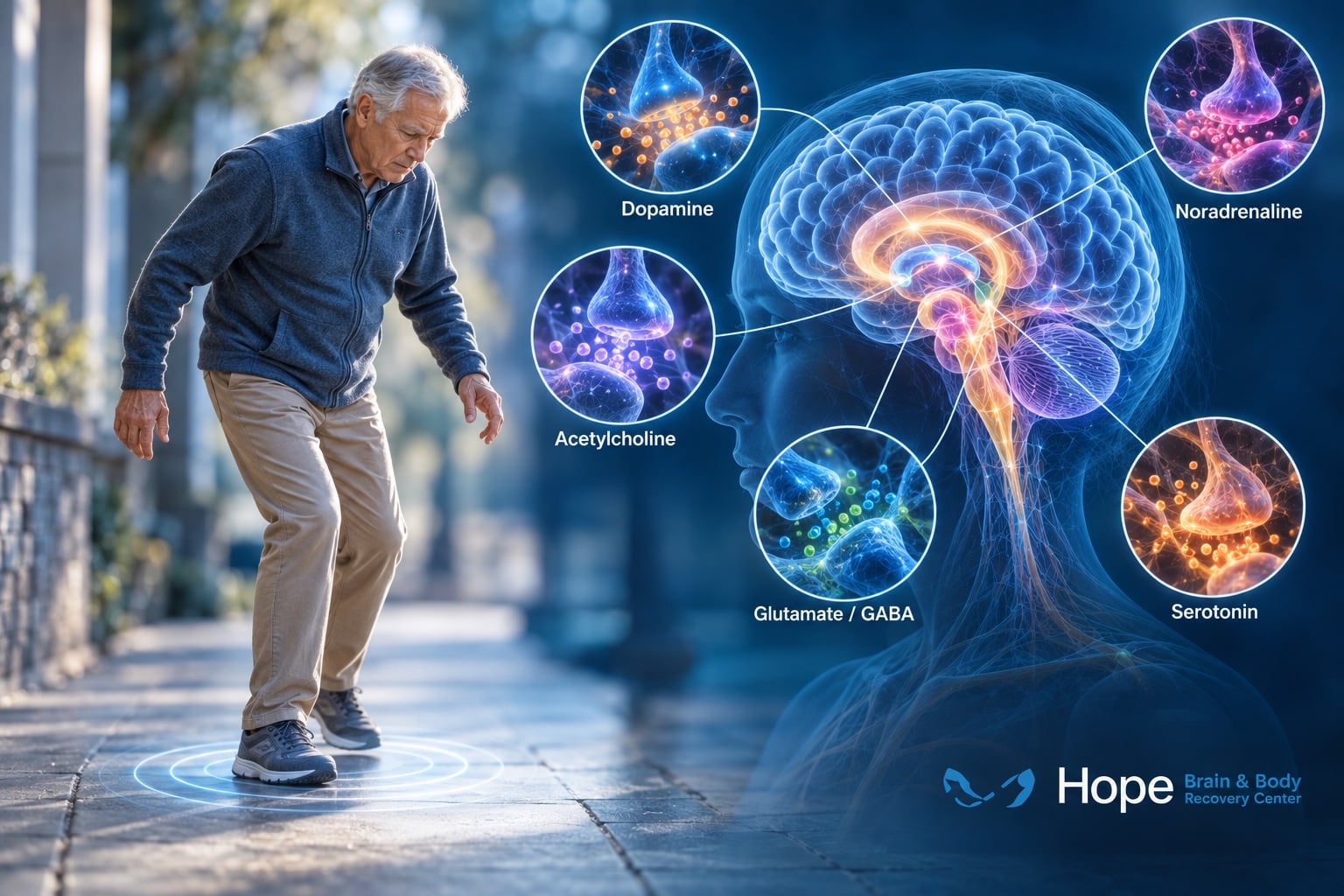
AI predicts falls 30 to 60 seconds before patients even exit their beds. Machine learning models identify gait phenotypes that forecast future fall risk before any incident occurs. This is proactive care — not reactive.
Stroke Recovery and Rehabilitation
Recovery after stroke is not one-size-fits-all. It never was. AI-driven imaging improves early stroke diagnosis and identifies treatment targets. Machine learning predicts language recovery and functional outcomes, making truly personalized rehabilitation protocols possible.
Performance Optimization for Athletes
Peak performance isn’t just physical. It’s neurological.
Brain-computer interfaces and AI-powered neurostimulation optimize cognitive function, reaction time, and decision-making. Advanced assessments identify neural dysfunction affecting balance, coordination, and injury risk — before those issues cost an athlete their season or career.
Are you living with dizziness, chronic nausea, balance problems, concussion symptoms, POTS, neuropathy, or other complex neurological conditions? Don’t settle for “managing” symptoms. Schedule your FREE 15-minute consultation with Hope Brain & Body Recovery Center to discuss your health concerns and find out whether our personalized, brain-based approach is right for you.
What Neuro AI Means for You — and Your Doctor
Faster Answers. Better Accuracy.
Hours of testing. Inconclusive results. Sound familiar?
AI algorithms correctly diagnose up to 85% of complex neurological cases — more than four times the rate of experienced physicians using conventional methods alone. Medical scribe technology handles visit documentation automatically, so your doctor spends less time typing and more time actually focused on you.
That’s a meaningful shift.
Catching Problems Before You Feel Them
The real power of Neuro AI isn’t just faster diagnosis. It’s catching what’s coming before it arrives.
Early signs of cognitive decline — detected now — give you and your care team time to make lifestyle changes and pursue treatments that protect your memory and brain function. AI-powered tools have shown up to 90% accuracy in identifying risk through non-invasive methods like speech pattern analysis and blood-based biomarkers. You don’t have to wait for symptoms to get bad before someone takes action.
That’s the difference between reactive care and proactive care. And it matters.
Treatment Plans Built Around Your Brain
Not every brain is the same. So why should every treatment plan be?
AI analyzes patient data — your genetics, your history, your individual response to therapies — to build care plans tailored specifically to you. This isn’t a one-size-fits-all approach. Precision-based care users diagnosed with depression, for example, experienced a 51% average decrease in symptoms after just 8 weeks.
Your brain is unique. Your treatment should be too.
Ongoing Support — Without the Waitlist
Remote patient monitoring connects wearable technology with virtual care teams for continuous, long-term disease management. When real-time data shows elevated distress, your care team can step in immediately — no long waitlist, no waiting for the next available appointment.
Care That Doesn’t Break the Bank
Early detection does more than protect your health. It protects your wallet too.
Catching neurological conditions early slows disease progression and reduces the need for expensive surgeries, prolonged medications, or lengthy hospital stays. AI-based diagnostic screening cuts both time and cost, while taking the burden off specialist screenings that are often difficult to access.
Better care, available sooner, at a lower cost. That’s what Neuro AI makes possible.
Schedule a FREE Consulation
Neuro AI transforms brain health diagnostics from time-consuming guesswork into precise, accessible assessments. The Spryson Chair delivers what traditional methods cannot: fast results, early detection, and personalized insights based on your unique brain patterns. All things considered, this technology makes advanced neurological care available to more patients than ever before. Schedule your FREE 15-minute consultation with Hope Brain & Body Recovery Center today to discuss your health concerns and discover whether our personalized, brain-based approach fits your needs.
FAQs
Q1. What exactly is Neuro AI? Neuro AI represents the intersection of neuroscience and artificial intelligence, where brain science uses AI tools to analyze neural data and understand brain function, while AI systems implement principles from neuroscience to design better artificial agents. This bidirectional relationship creates powerful computational tools for brain diagnostics and treatment.
Q2. How does the Spryson Chair’s eye-tracking technology detect brain health issues? The Spryson Chair uses advanced eye-tracking technology with a 250 Hz sampling rate that analyzes 2,000 samples per second of pupil responses and movement patterns. Since eye movements connect to the brain through fewer neural pathways than other muscles, different eye motion types associate with specific brain locations, allowing clinicians to pinpoint neurological dysfunction and detect early signs of conditions like Parkinson’s disease before other symptoms appear.
Q3. Can AI-powered brain diagnostics detect diseases before symptoms appear? Yes, AI-powered tools can detect early signs of cognitive decline and neurodegenerative diseases before symptoms become apparent. These systems achieve up to 90% accuracy in risk detection through non-invasive methods like speech pattern analysis, achieving 97.5% diagnostic accuracy while identifying subtle changes that traditional tests miss, enabling proactive prevention rather than reactive treatment.
Q4. What conditions can Neuro AI technology help diagnose and monitor? Neuro AI technology assists in diagnosing and monitoring multiple conditions including traumatic brain injury and concussions, Parkinson’s disease, Alzheimer’s and cognitive decline, balance disorders, stroke recovery, and even performance optimization for athletes. The technology provides faster, more accurate assessments across these diverse neurological conditions.
Q5. How does AI-powered brain assessment save time and money compared to traditional methods? AI-powered assessments deliver results in seconds compared to traditional neurological tests that take 4-8 hours, while achieving higher diagnostic accuracy. Early detection through these systems slows disease progression and reduces the need for expensive surgeries, medications, or lengthy hospital stays, making advanced neurological care more accessible and cost-effective for patients.