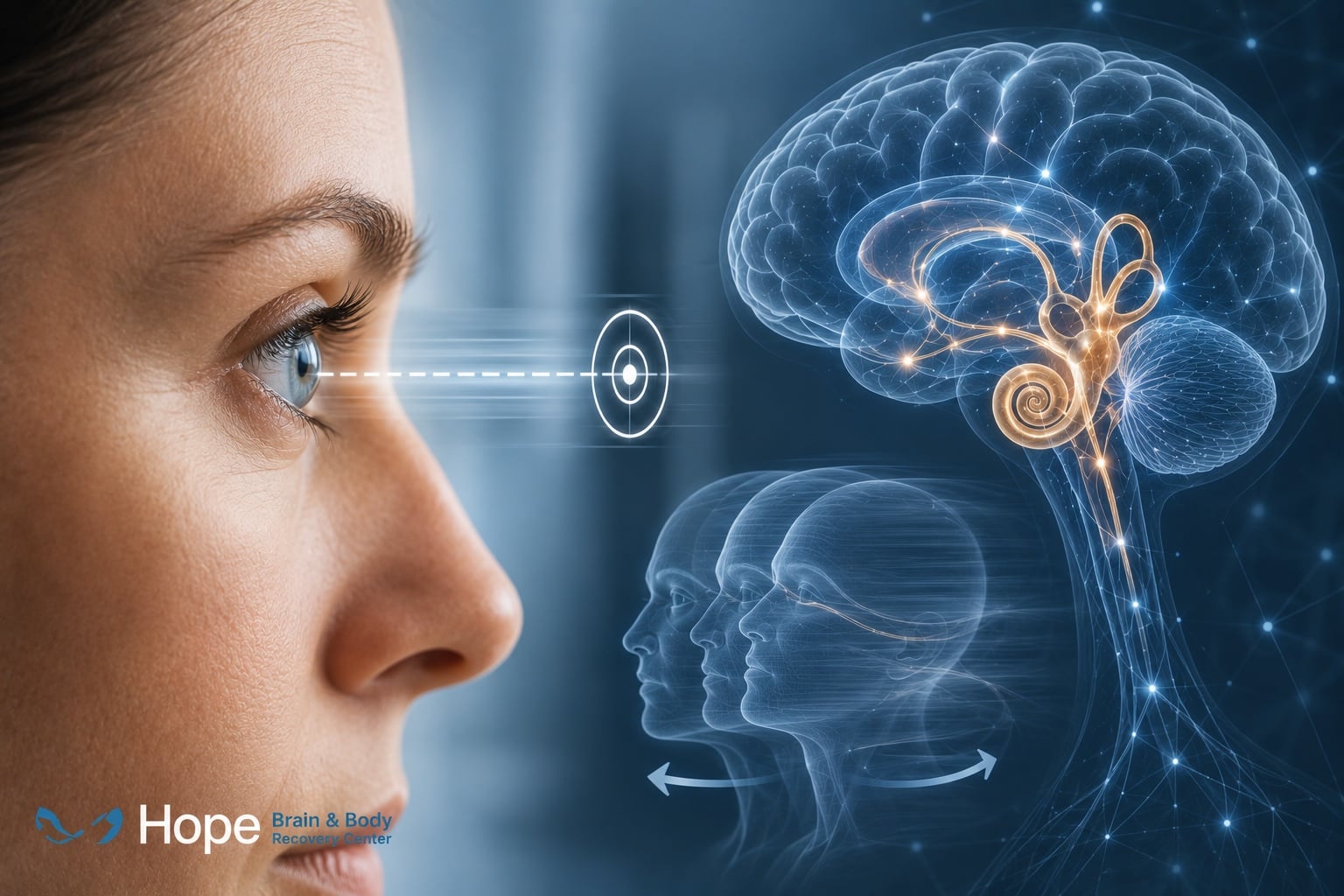
Do you know what helps you focus on complex tasks or quickly move between different activities? Your brain’s hidden command center, the frontoparietal network, coordinates these significant cognitive functions that we use daily .
This powerful network extends across your brain’s frontal and parietal lobes. It works in a rhythmic pattern between 4 Hz to 73 Hz θ/α to control behavior in rapid, accurate, and flexible goal-driven ways . The frontoparietal control network acts as your cognitive orchestra’s conductor. It manages executive functions like attention, working memory, and decision-making. Research shows that better cognitive control directly links to greater segregation of this network .
The frontoparietal attention network works with other brain systems to process environmental information and help us stay focused while ignoring distractions. This connection explains why many conditions, including schizophrenia and attention-deficit/hyperactivity disorder, involve frontoparietal network dysfunction . A newer study, published by researchers suggests that lifelong exposure to enriched environments might strengthen right fronto-parietal networks and protect against age-related cognitive decline .
Scientists found that there was a strong link between this network’s integrity and brain resilience. The network’s functional integrity helps alleviate the effects of brain atrophy and hypoperfusion . This research explains why people who carry certain genetic mutations show an age-related decrease in left frontoparietal network integrity, while non-carriers maintain their network function .
In this piece, we’ll learn about the science behind this powerful cognitive network, how it supports your daily mental activities, and why it matters for cognitive health and treating neurological conditions.
Understanding the Frontoparietal Network Function
“The frontoparietal pathway sends the spatial information of cognitively processed motor plans through multiple parallel connections.” — Neuroscience research community, Experts in motor planning and frontoparietal connectivity
The frontoparietal network acts as your brain’s cognitive control center. It conducts a symphony of mental processes that help you direct complex tasks with precision. This neural system links areas between your frontal and parietal lobes to create a dynamic framework that adapts to your changing cognitive needs.
What it does in the brain
The frontoparietal network (FPN) works as a flexible hub that changes its connectivity patterns based on specific tasks [1]. This network doesn’t work alone – it coordinates with other brain regions to support your goal-directed behavior. The FPN splits into two subsystems that connect with other networks: one connects to the default mode network to help you contemplate, while another links to the dorsal attention network for perceptual attention [2].
Your frontoparietal network stands out because it can change its functional connectivity faster during rapid task switching than any other brain network [3]. This remarkable adaptability lets it work as a functional backbone to adjust brain-wide communication.
The frontoparietal network is a vital part of memory processes. Studies show that memory replay in visual areas becomes stronger when the frontoparietal network is active rather than inactive [4]. The network’s changes and its connection with the hippocampus predict offline memory improvement, which shows its role in learning and memory consolidation.
The frontoparietal network has its own rhythm—it communicates in the 4 Hz to 73 Hz θ/α frequency range—during both rest and tasks [3]. This rhythm helps it coordinate activity across the whole brain.
Why it’s essential for executive function
Executive function includes cognitive processes that help us plan, focus, remember instructions, and handle multiple tasks. The frontoparietal network plays a key role in these abilities for several reasons:
This network guides your moment-to-moment decisions in planning and executing goal-directed behavior [5]. It supports what neuroscientists call “cold” executive skills:
- Working memory – keeping and using information actively
- Inhibitory control – staying focused on goals without distraction
- Attention focusing – filtering out unnecessary information
- Action planning – creating and adjusting plans based on context
Your frontoparietal network also enables cognitive flexibility—you can adapt to new situations and requirements. Research shows that stronger connections between the frontoparietal and default mode networks during rest relate to higher intelligence scores [3]. The brain’s overall cognitive ability improves when the frontoparietal network has better functional integration [3].
Math skills highlight the frontoparietal network’s importance. Recent studies show that frontoparietal functional connectivity links directly to math achievement. Children’s connectivity increases as they move from second to third grade [5]. Strong connections in this network help master complex cognitive tasks.
Problems with the frontoparietal network can affect your cognitive abilities. Many conditions, from schizophrenia to attention-deficit/hyperactivity disorder, show issues in this vital network [3]. A healthy frontoparietal network helps maintain cognitive function throughout life.
How the FPN Supports Attention and Working Memory

Image Source: Frontiers
The frontoparietal network (FPN) helps your brain focus on what matters while blocking out distractions. This neural system doesn’t just identify important information—it actively shapes how you see and process the world around you.
Top-down modulation of sensory input
The frontoparietal network excels at selective information processing through top-down modulation. Bottom-up processing responds automatically to stimuli, but top-down control lets your brain prioritize specific inputs based on your goals.
This vital process works through several connected mechanisms:
- Signal enhancement – The FPN boosts neural activity linked to relevant stimuli. Your frontoparietal connections improve activity in visual areas that process target features during visual attention tasks [6].
- Distractor suppression – The network blocks neural responses to irrelevant information. Research shows people with better cognitive control have more isolated FPN from other networks, which helps filter distractions [7].
- Flexible connectivity changes – The FPN quickly rearranges its connections based on what you need to do. Dynamic causal modeling shows the FPN strengthens its links with visual cortex regions during task switching but reduces these connections during task repetition [8].
The FPN communicates through specific brain rhythms—we focused on slow-frequency oscillations in the theta and alpha (4-14Hz) range [6]. These rhythms coordinate activity between distant brain regions. The prefrontal cortex often guides the posterior parietal cortex during sustained attention tasks [6].
This synchronized brain activity is significant for complex thinking. Scientists found that damage to frontoparietal integrity weakens both early and late visual grouping processes, which shows this network’s fundamental role in organizing perception [6].
Maintaining task-relevant information
The frontoparietal network plays a key role in keeping relevant information active and available—the core of working memory.
The FPN supports working memory through several unique functions:
- Adaptive coding – FPN neurons adjust to represent what’s most important about stimuli or task contexts [9]. You can maintain different types of information based on your current goals.
- Distributed connectivity – Your unique “fingerprint” of FPN connectivity predicts how well you perform challenging tasks [9]. The network directs relevant information throughout the brain by changing its functional connections.
- Distraction resistance – The prefrontal parts of the FPN maintain steady activity despite distractions, unlike parietal regions that might briefly process distracting information [10]. This difference helps you stay focused when interruptions occur.
The dorsolateral prefrontal cortex (part of the FPN) handles executive functioning and focuses attention on task-relevant information [6]. The posterior parietal cortex optimizes storage and processing [6]. These regions work together as one system to support working memory.
The network’s structure directly affects how it works. Strong structural connections within the FPN make it more resistant to distractions [10]. This explains why better integration between the frontoparietal network and other brain regions leads to superior cognitive function [6].
Fluid intelligence improves with stronger FPN connections across brain networks—especially when frontoparietal and default mode networks connect better [6]. This strengthens the link between network integration and cognitive ability.
These complex mechanisms make the frontoparietal network your brain’s central coordinator for attention and working memory, helping you handle complex tasks effectively.
The Frontoparietal Attention Network in Action
Image Source: ResearchGate
Your frontoparietal attention network kicks into action the moment you start multitasking or making tough decisions under pressure. This powerful network coordinates your mental resources with remarkable precision. It works non-stop in your daily activities.
Examples from ground tasks
The frontoparietal network (FPN) excels at handling complex, multifaceted challenges. A fascinating example comes from research using the Space Fortress video game—a task that mirrors cognitive demands in life. Players must control a ship, destroy a fortress, eliminate moving mines, and capture bonuses [11]. These tasks activate different cognitive functions like selective attention, planning, and resource allocation.
Scientists noticed increased functional connectivity in participants’ frontoparietal networks as they became skilled at this multitasking challenge [11]. The intrinsic functional connectivity of the FPN explained much of the performance variance in this complex task [11]. Your brain’s coordination between frontal and parietal regions directly affects your performance on challenging ground tasks.
The frontoparietal network helps you handle daily activities that need moving between different spatial reference frames. You need two types of spatial information to pick up a coffee cup: the cup’s position relative to your body (egocentric reference), and the handle’s position relative to the cup (allocentric reference) [12]. The FPN manages this smooth coordination through specialized pathways—a lateral projection connects the frontal eye field to intraparietal sulcus, and a medial projection links the supplementary eye field to superior parietal lobule [12].
These pathways work differently based on what you need. Pattern detection experiments revealed that the supplementary eye field and superior parietal lobule showed substantial connection only during ipsilateral visual field attention, but not during contralateral visual field attention [12]. This shows the network’s amazing flexibility in adapting to different attentional needs.
How it helps in decision-making
The frontoparietal network is the life-blood of effective decision-making, particularly under uncertain or complex conditions. Recent studies show that the FPN is vital to goal-directed behavior in rule-based problem-solving [13]. It helps you choose appropriate actions based on your current objectives.
The FPN handles several vital functions in decision-making:
- Processing multiple factors – The FPN shows increased activation while integrating complex variables like probability and delay [14]
- Strategy switching – FPN activation associates with longer reaction times during tough decisions, suggesting extra cognitive resource recruitment to switch strategies [14]
- Error detection and adaptation – Error signals from cerebellar regions help the frontoparietal network quickly adjust control settings based on feedback [15]
Decision-making architecture involves specific roles within the network. The dorsolateral prefrontal cortex selects relevant information from alternatives and controls retrieval strategies, improving recall response times [5]. The parietal area proves significant to stimulus storage and quick information processing [5].
Scientists originally thought frontoparietal network connectivity might indicate decision-making patterns. However, recent Bayesian modeling suggests more complex relationships [16]. Studies clearly show this network’s activity has a substantial negative correlation with the default mode network during cognitive effort [13]. Your brain moves resources based on current demands.
Your frontoparietal attention network adapts continuously to changing circumstances. It guides your decisions and actions with remarkable flexibility and precision.
Age and the Changing Frontoparietal Cortex

Image Source: Nature
The frontoparietal network changes throughout our lifetime. These changes reshape the scene of cognitive abilities. The brain keeps adapting to what we need from childhood through adolescence into older adulthood.
Developmental changes in children and teens
Young brains show a remarkable path in frontoparietal cortex development. Research shows that reasoning skills—which the frontoparietal network supports—improve early in life. The biggest improvements happen in the youngest children (around age 6) [17]. These cognitive developments link to specific changes in the network’s structure and function.
The strongest increases in structural connections between main frontoparietal areas—especially between the rostrolateral prefrontal cortex (RLPFC) and inferior parietal lobule (IPL)—happen around age 7 [17]. The functional connections between these same areas peak later at age 13 [17]. This time gap between structural and functional growth shows how complex the network’s development really is.
The network’s connection strength affects cognitive performance differently as children grow. Better reasoning skills link to stronger structural connections in children under 12. This connection doesn’t exist in teens or adults [17]. Different parts of network development help cognitive skills at various growth stages.
The frontoparietal network becomes more specialized as teens grow up. Young people with better cognitive control show more separation between the frontoparietal network and other networks. This network separation—not just connection strength—plays a vital role in cognitive development [18]. The network also develops unique patterns with other networks. It shows a U-shaped pattern in its connection with the salience network. Teens show less synchronization compared to children and adults [19].
Age-related decline in older adults
Middle age brings changes to the frontoparietal network that affect cognitive function. Physical activity—which helps cognitive health—starts dropping around age 49. The frontoparietal network’s connections play a part in this age-related change [4]. This timing matches broader patterns that aging research has found.
The network’s ability to control itself decreases with age. This drop becomes most noticeable before age 61 [20]. These changes affect executive function directly. The brain struggles to switch between different cognitive states when the network loses control.
The frontoparietal network reorganizes itself after middle age. Older adults’ networks show less integration between hemispheres. The left frontoparietal network specifically shows more separation between hemispheres [21]. Both frontoparietal and salience networks show weaker internal connections in older adults compared to younger people [22].
Not all changes that come with age mean decline. Mid-life and older adults actually show stronger connections between default mode and frontoparietal networks [22]. This might help compensate for other losses. Yes, it is interesting that several theories try to explain these complex patterns. The hemispheric asymmetry reduction in older adults (HAROLD) model suggests that using both sides of the brain more equally might help counter age-related cognitive decline [21].
These network changes bring important effects. Older adults with more scattered connections in their frontoparietal network tend to show more signs of depression [23]. This shows how the network’s health affects both thinking ability and emotional wellbeing in later years.
Brain Resilience: FPN and Cognitive Reserve
The brain’s ability to maintain cognitive performance despite physical damage is the sort of thing I love about cognitive resilience. The frontoparietal network is a vital part of this resilience and forms the foundations of what scientists call cognitive reserve.
How FPN integrity supports function despite atrophy
Cognitive reserve (CR) protects against cognitive decline, even if you have substantial white matter hyperintensities (WMH) and other brain pathologies. WMH volume relates to cognitive function only in people with low CR—not those with high CR. This suggests a powerful buffering effect [24]. The frontoparietal control network enables this protection through specific mechanisms.
Research shows people with high cognitive reserve have increased functional connectivity in the frontoparietal control network compared to those with low reserve [25]. This improved connectivity relates to better neurocognitive preservation. These connectivity patterns support better cognitive performance whatever the brain atrophy levels.
The frontoparietal network doesn’t work alone. People with high CR show an interesting pattern. They have increased connectivity in the frontoparietal control network and reduced connectivity in the Dorsal Attention Network [25]. This balanced rewiring of neural resources helps maintain cognitive abilities as age-related changes occur.
The left lateral frontal cortex stands out as a key hub of the frontoparietal network. Its global functional connectivity provides a neural foundation for cognitive reserve and helps preserve memory in mild cognitive impairment [2]. Strong left FPN connectivity reduces beta-amyloid’s negative effect on cognitive decline. People show less cognitive decline at similar pathology levels [3].
Network control theory explains why the frontoparietal network uniquely supports resilience. The FPN has many “modal control” hubs that enable transitions to hard-to-reach brain states [3]. This explains the FPN’s vital role in cognitive resilience compared to other networks like the default mode network.
Role in pre-symptomatic neurodegeneration
The frontoparietal network becomes more important in pre-symptomatic neurodegeneration. Pre-symptomatic genetic mutation carriers show an age-related decrease in left frontoparietal network integrity. Non-carriers maintain stable network function [1]. This difference suggests FPN integrity could be an early sign of neurodegeneration.
Executive functions in pre-symptomatic carriers depend more on left frontoparietal network integrity as they age [1]. Healthy controls’ cognitive performance relates mainly to global gray matter volume. Mutation carriers need frontoparietal network integrity to maintain cognitive function, especially as they get older [26].
This dependence on network integrity rather than brain volume reveals an interesting compensatory mechanism. Mutation carriers experience similar age-related atrophy and hypoperfusion as non-carriers. Yet maintaining frontoparietal network integrity helps slow their cognitive decline [1].
Parkinson’s disease provides more evidence of the FPN’s protective role. Cognitively stable Parkinson’s patients have more resilient frontoparietal networks. These networks better resist network disruption compared to patients with cognitive decline [27]. The specific structure of the frontoparietal network provides this protection, not differences in overall connectivity or general network properties.
FPN and Individual Differences in Cognitive Ability
Scientists have spent decades studying why people differ in their cognitive abilities. Some individuals can switch between tasks with ease while others find it challenging. These differences stem in part from each person’s unique frontoparietal network characteristics.
Why some people perform better on control tasks
People with better cognitive control abilities stand out not just because of stronger connections. The specific pattern of connectivity in their frontoparietal network (FPN) makes the difference. Their frontoparietal network shows greater isolation from other networks, which helps them filter distractions more effectively [18]. This separation serves as the foundation for maintaining focus on relevant information.
You might find it surprising that fluid intelligence has a positive association with how well the frontoparietal network connects to other brain networks, especially the default mode network [6]. This unexpected relationship reveals that cognitive excellence needs both network separation and strategic integration.
Research shows that better alignment between white matter structural networks and functional signals leads to improved cognitive flexibility [10]. People who have stronger functional integration between the frontoparietal network and other brain regions show better cognitive functioning [6]. Young people demonstrate higher cognitive control when they have better differentiation between the frontoparietal and cingulo-opercular networks [18].
Neural markers of high cognitive flexibility
People with exceptional cognitive flexibility show several distinct neural signatures:
- Creative achievement shows a connection with greater functional differences between core regions of the default mode and frontoparietal control networks. This suggests that creative ability depends on these networks maintaining distinct cognitive roles [28]
- Dopamine system connectivity plays a vital role. Stronger baseline connectivity between the ventral tegmental area (VTA) and lateral prefrontal cortex predicts better accuracy improvements during learning tasks [29]
- Myelination levels within the frontoparietal system affect plasticity. Lower myelin map values predict better improvements in response times [29]
The time people spend in brain states with functional connectivity between medial-frontoparietal and lateral-frontoparietal regions relates directly to their cognitive flexibility [10]. Understanding these temporal dynamics has become increasingly important in explaining individual differences.
Both the frontoparietal and cingulo-opercular networks contain specialized subnetworks. Some parts handle external tasks for immediate use, while others manage internal representations for future behavior [30]. People whose networks display clearer functional specialization typically show better cognitive performance in tasks of all types.
Clinical Relevance of the Frontoparietal Control Network

The way frontoparietal control network fails to work has become a key factor in many psychiatric conditions. This gives us a better understanding of how diseases work and possible ways to treat them.
FPN dysfunction in depression and anxiety
Studies show clear patterns of frontoparietal network changes in mood and anxiety disorders. People with major depressive disorder (MDD) show less functional connectivity within the frontoparietal network. They also show increased connectivity within the default mode network [31]. This imbalance between task-positive and intrinsic networks leads to cognitive and executive problems that we see in depression.
The more severe the depression symptoms become, the less the FPN connects with other parts of the brain [32]. This shows how important the network’s role is in controlling mood.
Older adults with depression have lower functional connectivity in their right frontoparietal network. Their white matter that connects to this network also shows damage [8]. These changes have a strong link to how severe their anxiety is. This suggests that when the FPN doesn’t work properly, it might affect the anxiety parts of depression more [8].
There’s a key difference between primary and secondary control disorders. Conditions like schizophrenia directly affect control networks. Secondary disorders like anxiety and depression show up differently [6]. In these secondary disorders, cognitive control acts as a shield. Good control helps reduce symptoms, but poor control can’t fix other brain problems.
Implications for early diagnosis and treatment
The unique way FPN dysfunction shows up in brain scans could help doctors diagnose better. For bipolar disorder, looking at how uniform the frontoparietal network is can tell manic states from remitted states with 69.7% accuracy [33]. This could be a great way to spot the condition using brain imaging.
These findings suggest that frontoparietal connectivity could be a good target for treatment. Brain training and therapy might help increase frontoparietal connectivity [6]. Mapping each person’s FPN layout could also help make treatments like transcranial magnetic stimulation work better [6].
The next step is to learn how antidepressants change these brain networks. Research shows that people who take antidepressants have more flexible and connected global and sensorimotor networks than those who don’t [34]. This suggests that medication might help the brain rewire itself.
Future Directions in FPN Research
Scientists are making faster progress in frontoparietal network research. This opens new possibilities to understand and treat cognitive disorders better.
Personalized brain mapping
The next phase of FPN research focuses on mapping each person’s unique brain structure. Standard group methods often miss vital differences in how networks are organized [6]. Scientists can now get reliable resting-state correlations from individuals with enough data collection (~45 minutes) [6]. The MIDB Precision Brain Atlas shows this approach well. It provides specific networks for individuals along with population probability maps [35]. New evidence suggests that networks estimated from task data match closely with resting-state data [9]. This allows researchers to get task responses and network estimates at the same time.
Neurofeedback and cognitive training
Real-time neurofeedback targeting the frontoparietal network shows promising therapeutic uses. Schizophrenia patients showed substantial improvement in working memory performance on digit-span backward tasks through frontoparietal connectivity-informed neurofeedback training [7]. Patients who learned to improve their functional connectivity performed better in mean N-back level tests [7]. Research with fMRI and fNIRS neurofeedback showed that people can learn to control activation in frontoparietal regions [36]. Cognitive training could strengthen these networks and help protect against cognitive deficits [37].
Potential for non-invasive stimulation
FPN-targeted non-invasive brain stimulation techniques could improve executive functions. Tailored theta transcranial alternating current stimulation (tACS) to the FPN helped people perform better in motor sequence learning tasks that needed high working memory [38]. Gamma-band (40 Hz) stimulation helped younger participants respond faster in spatial attention tasks [39]. These results show how specific cognitive improvements come from stimulation and suggest that the best targets might change across different cognitive areas [39].
Conclusion
The frontoparietal network works as your brain’s hidden control center that orchestrates complex cognitive processes with precision and flexibility. Your brain’s FPN acts like a conductor of a cognitive orchestra by connecting regions across frontal and parietal lobes to coordinate attention, working memory, and decision-making abilities.
This powerful network uses specialized mechanisms to boost relevant signals while it suppresses distractions. It maintains task-relevant information and adapts its connectivity patterns faster based on changing needs. The FPN works among other brain networks and changes its connections to support your specific cognitive needs at any moment.
Of course, age brings most important changes to the frontoparietal network. Children and adolescents show developmental trajectories where structural connectivity comes before functional maturation. Older adults might experience reorganization patterns that affect cognitive performance. Notwithstanding that, the FPN is a vital part of cognitive reserve that potentially protects against decline despite physical brain changes.
Your frontoparietal network’s unique characteristics explain individual differences in cognitive abilities. People with superior cognitive control show greater network segregation. This helps them filter distractions more effectively while they maintain strategic integration with other brain systems.
This vital network’s dysfunction underlies several clinical conditions. Depression, anxiety, ADHD, and schizophrenia show distinctive alterations in frontoparietal connectivity patterns. Understanding these network signatures is a chance to improve diagnostics and targeted treatments.
Future advances in personalized brain mapping, neurofeedback techniques, and non-invasive stimulation show great promise. These approaches could allow precise modulation of frontoparietal networks to boost cognitive function or treat neurological conditions.
The frontoparietal network shapes your daily cognitive experiences silently. Your focus during challenging tasks, ability to switch between activities, and information retention all depend on this remarkable neural system. Scientists continue to uncover its mysteries, yet we already know the frontoparietal network are the foundations of our cognitive health and brain function – an essential command center that guides us through life’s cognitive demands.
Key Takeaways
The frontoparietal network (FPN) serves as your brain’s executive control center, coordinating attention, working memory, and decision-making through flexible connectivity patterns that adapt to changing cognitive demands.
• The FPN acts as your brain’s cognitive conductor, connecting frontal and parietal regions to orchestrate executive functions like attention, working memory, and flexible task switching with remarkable precision.
• Network integrity protects against cognitive decline, with stronger FPN connectivity serving as cognitive reserve that maintains mental abilities despite brain aging or pathology.
• Individual differences in FPN connectivity explain cognitive abilities, where greater network segregation enables better focus while strategic integration with other networks supports superior intelligence.
• FPN dysfunction underlies major psychiatric conditions, including depression, anxiety, ADHD, and schizophrenia, making it a crucial target for diagnosis and treatment.
• Emerging therapies can enhance FPN function, including personalized neurofeedback, cognitive training, and targeted brain stimulation that may improve executive abilities and treat cognitive disorders.
Understanding your frontoparietal network empowers you to appreciate how this hidden neural system shapes your daily cognitive experiences—from maintaining focus during complex tasks to adapting flexibly when circumstances change.
FAQs
Q1. What is the primary function of the frontoparietal network? The frontoparietal network serves as the brain’s cognitive control center, coordinating attention, working memory, and decision-making. It connects regions in the frontal and parietal lobes to orchestrate complex mental processes and adapt to changing cognitive demands.
Q2. How does the frontoparietal network support attention and memory? The network enhances relevant neural signals while suppressing distractions, allowing for focused attention. It also maintains task-relevant information in an active state, supporting working memory. The network’s ability to rapidly reconfigure its connections enables flexible cognitive control.
Q3. Does the frontoparietal network change with age? Yes, the frontoparietal network undergoes significant changes throughout life. In children and adolescents, structural connectivity develops before functional maturation. Older adults may experience network reorganization that can affect cognitive performance, though the network also plays a role in cognitive reserve against decline.
Q4. How does frontoparietal network function relate to individual cognitive abilities? Individual differences in frontoparietal network connectivity correlate with cognitive performance. People with superior cognitive control often show greater network segregation, allowing better focus. However, strategic integration with other networks is also important for higher intelligence and cognitive flexibility.
Q5. What role does the frontoparietal network play in mental health conditions? Dysfunction in the frontoparietal network is associated with several psychiatric conditions, including depression, anxiety, ADHD, and schizophrenia. These disorders often show distinctive alterations in frontoparietal connectivity patterns, making the network a potential target for diagnosis and treatment approaches.
References
[1] – https://pmc.ncbi.nlm.nih.gov/articles/PMC11667541/
[2] – https://www.frontiersin.org/journals/aging-neuroscience/articles/10.3389/fnagi.2017.00264/full
[3] – https://pmc.ncbi.nlm.nih.gov/articles/PMC11266218/
[4] – https://academic.oup.com/biomedgerontology/article/80/6/glaf075/8115489
[5] – https://pmc.ncbi.nlm.nih.gov/articles/PMC11315429/
[6] – https://pmc.ncbi.nlm.nih.gov/articles/PMC6136121/
[7] – https://pubmed.ncbi.nlm.nih.gov/40545821/
[8] – https://www.sciencedirect.com/science/article/pii/S2213158220302357
[9] – https://www.sciencedirect.com/science/article/pii/S0896627325006646
[10] – https://pmc.ncbi.nlm.nih.gov/articles/PMC7856857/
[11] – https://www.frontiersin.org/journals/neuroergonomics/articles/10.3389/fnrgo.2021.718176/full
[12] – https://www.pnas.org/doi/10.1073/pnas.1313903110
[13] – https://www.frontiersin.org/journals/human-neuroscience/articles/10.3389/fnhum.2023.1133367/full
[14] – https://www.sciencedirect.com/science/article/pii/S1053811922000222
[15] – https://www.pnas.org/doi/10.1073/pnas.0704320104
[16] – https://www.sciencedirect.com/science/article/pii/S0306460323000783
[17] – https://www.jneurosci.org/content/37/35/8549
[18] – https://www.sciencedirect.com/science/article/pii/S1053811925004574
[19] – https://pubmed.ncbi.nlm.nih.gov/39046114/
[20] – https://www.biorxiv.org/content/10.1101/2023.02.17.528999v1.full-text
[21] – https://www.aging-us.com/article/102421/text
[22] – https://www.sciencedirect.com/science/article/pii/S0168010222002383
[23] – https://www.sciencedirect.com/science/article/pii/S0197458025001666
[24] – https://www.sciencedirect.com/science/article/pii/S0166432822000997
[25] – https://www.sciencedirect.com/science/article/pii/S0197458022001129
[26] – https://alz-journals.onlinelibrary.wiley.com/doi/abs/10.1002/alz.14299
[27] – https://www.nature.com/articles/s42003-021-02478-3
[28] – https://academic.oup.com/cercor/article-abstract/35/3/bhaf046/8063807
[29] – https://www.nature.com/articles/s41539-022-00130-1
[30] – https://www.jneurosci.org/content/43/7/1225
[31] – https://www.pnas.org/doi/10.1073/pnas.1900801116
[32] – https://pmc.ncbi.nlm.nih.gov/articles/PMC6326740/
[33] – https://www.sciencedirect.com/science/article/pii/S0165032723008674
[34] – https://www.sciencedirect.com/science/article/pii/S0165178124000593
[35] – https://www.nature.com/articles/s41593-024-01596-5
[36] – https://www.sciencedirect.com/science/article/abs/pii/S0278584624000368
[37] – https://www.frontiersin.org/journals/psychiatry/articles/10.3389/fpsyt.2023.1289300/full
[38] – https://www.sciencedirect.com/science/article/pii/S1935861X22001164
[39] – https://pubmed.ncbi.nlm.nih.gov/40840637/