Your brain is one of the most energy-demanding organs in your bod0-y.
Every thought, movement, memory, and sensation depends on billions of neurons maintaining their electrical activity and communicating with one another.
That process requires a continuous supply of energy.
Under ordinary conditions, the brain relies heavily on glucose.
But what happens when glucose availability changes—or when neurons struggle to use energy efficiently?
The brain has another potential fuel source: ketones.
Ketones are molecules that can help supply energy during fasting, carbohydrate restriction, and other metabolic conditions.
Scientists are now investigating whether ketones do more than simply replace some glucose.
Experimental research suggests that certain ketone bodies, particularly beta-hydroxybutyrate (BHB), may influence mitochondrial function, oxidative stress, and cellular survival.
These findings have generated interest in the potential relationship between ketones and neurological conditions such as Alzheimer’s disease, Parkinson’s disease, and stroke.
But the science comes with an important warning.
A substance that helps neurons under one experimental condition may not be beneficial at every concentration or in every clinical situation.
Understanding that distinction is essential.
At Hope Brain & Body Recovery Center, understanding how the nervous system functions—and how neurological symptoms may relate to broader physiological processes—is an important part of our individualized approach to brain health.
Why Does the Brain Need So Much Energy?
Neurons communicate through electrical and chemical signals.
To maintain these signals, they must constantly regulate the movement of charged particles across their cell membranes.
They also need energy to release and recycle neurotransmitters, maintain cellular structures, and support communication between different brain regions.
Much of this energy comes from a molecule called adenosine triphosphate, or ATP.
ATP acts as a readily usable energy source for cellular processes.
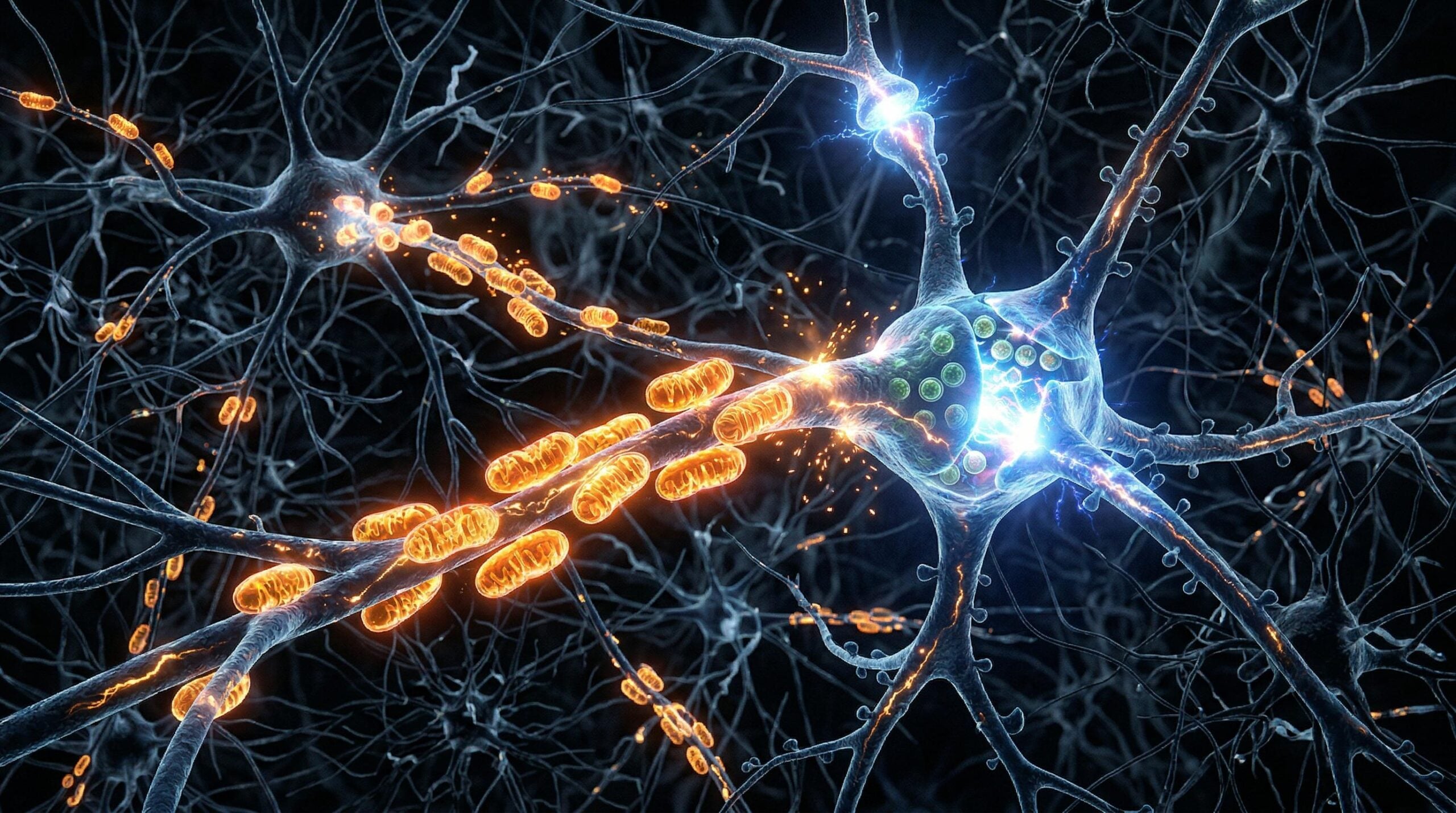
Inside neurons, specialized structures called mitochondria produce much of this ATP.
Mitochondria convert nutrients into energy through interconnected biochemical pathways.
When mitochondrial function becomes impaired, neurons may have difficulty maintaining the processes required for normal activity.
This is one reason researchers are interested in alternative energy sources that neurons can use under different metabolic conditions.
What Are Ketones?
Ketones, also called ketone bodies, are molecules produced primarily by the liver when the body shifts toward greater fat utilization.
Two important ketone bodies are:
- Beta-hydroxybutyrate (BHB)
- Acetoacetate (AcAc)
A third ketone body, acetone, is produced during ketone metabolism but contributes much less directly to energy production.
When carbohydrate availability decreases, the liver can convert fatty-acid-derived molecules into ketone bodies.
These ketones circulate through the bloodstream and can be used by several organs, including the brain.
Ketones become particularly important during prolonged fasting and certain ketogenic dietary interventions.
Unlike long-chain fatty acids, ketone bodies can cross into the brain and provide an alternative substrate for cellular energy metabolism.
This doesn’t mean the brain stops needing glucose.
It means the brain has metabolic flexibility—the ability to use more than one fuel source.
Where Do Brain Ketones Come From?
The liver is the body’s major source of circulating ketone bodies.
During fasting or carbohydrate restriction, it produces ketones from fatty-acid-derived acetyl-CoA.
These ketones travel through the bloodstream and enter brain tissue through specialized transport mechanisms.
But the research presentation also highlights another possible source.
Can Brain Cells Produce Ketones Locally?
The brain contains cells called astrocytes.
Astrocytes support neurons by helping regulate the chemical environment, participating in metabolic communication, and contributing to normal brain function.
Experimental research suggests that astrocytes possess some capacity for ketone production.
This raises the possibility that they may supply locally generated metabolic substrates to nearby neurons under certain conditions.
However, the contribution of astrocyte-derived ketones to normal human brain energy metabolism remains incompletely understood.
The important concept is that the brain’s energy system involves communication among different cell types, not simply a direct delivery of glucose to neurons.
How Do Ketones Become Energy Inside Neurons?
Once ketones reach cells capable of metabolizing them, they can enter biochemical pathways that produce ATP.
The process involves several stages.
Step 1: Ketones Become Acetyl-CoA
Ketone bodies are converted through enzymatic reactions into acetyl-CoA.
Acetyl-CoA is a central molecule in energy metabolism.
It provides an entry point into the cell’s main energy-producing cycle.
Step 2: The TCA Cycle Generates Energy-Carrying Molecules
Acetyl-CoA enters the tricarboxylic acid cycle, also called the TCA or Krebs cycle.
This process generates molecules that carry high-energy electrons.
Step 3: Mitochondria Produce ATP
The electrons are transferred through the mitochondrial electron transport chain.
This process supports ATP production.
ATP can then be used to maintain neuronal activity.
The important point is that ketones do not require neurons to invent an entirely new energy system.
They enter established metabolic pathways that cells already use.
Can Ketones Supply a Significant Amount of Brain Energy?
The presentation describes an experiment involving rats with elevated circulating ketone levels.
Researchers found that ketones supplied approximately 40% of total brain substrate oxidation.
The study also suggested that neurons used BHB more extensively than astrocytes, with an approximate 70:30 distribution.
Importantly, neuronal TCA cycle activity remained comparable to normal conditions.
These findings demonstrate that the brain can use substantial amounts of ketone-derived energy when ketones are available.
However, the result came from a specific experimental rat model.
It does not mean ketones routinely supply 40% of brain energy in healthy humans eating a typical diet.
The percentage of energy derived from ketones changes according to metabolic conditions, ketone availability, and other physiological factors.
Do Human Neurons Use Ketones Even When Glucose Is Available?
One of the most interesting findings in the presentation concerns research involving human neurons grown from induced pluripotent stem cells.
These laboratory-grown cells allow researchers to investigate aspects of human neuronal metabolism under controlled conditions.
The presentation describes 2026 experimental findings suggesting that ketone oxidation contributes to maximal neuronal energy production and function.
This raises an intriguing possibility.
Ketones may participate in neuronal metabolism even when glucose is available.
In related mouse models of Alzheimer’s disease, disrupting neuronal ketone oxidation was associated with increased mortality and greater memory-related deficits.
These findings suggest that ketone metabolism may have important biological functions beyond serving as an emergency fuel during fasting.
However, cell cultures and genetically modified mouse models cannot establish that consuming ketones improves memory or treats Alzheimer’s disease in humans.
The results identify mechanisms worth studying, not a proven treatment.
Beyond Energy: Can Ketones Protect Mitochondria?
Mitochondria are essential for neuronal survival.
When their energy-producing systems become disrupted, cells may experience oxidative stress, impaired electrical activity, and activation of pathways associated with cell death.
The presentation examines several experiments investigating whether BHB can help preserve mitochondrial function.
One particularly interesting experiment involved dopaminergic neurons.
These neurons produce dopamine, a neurotransmitter important for movement and several other neurological functions.
BHB and Dopamine-Producing Neurons
Researchers exposed dopaminergic neurons to rotenone, a substance that interferes with mitochondrial Complex I.
Complex I is an important component of the mitochondrial electron transport chain.
When Complex I is inhibited, energy production can become disrupted.
In the experiment described in the presentation, researchers exposed the cells to BHB at a concentration of 8 millimolar (mM).
Under these laboratory conditions, BHB helped reverse aspects of rotenone-induced mitochondrial dysfunction.
The study reported preservation of mitochondrial membrane potential and reduced activation of processes associated with programmed cell death.
These included cytochrome-c release and caspase-3 activation.
This suggests that BHB can influence mitochondrial stress responses under certain experimental conditions.
But the concentration used in the experiment should not be interpreted as a recommended blood ketone target.
And protecting cultured dopaminergic neurons from a laboratory toxin does not demonstrate that a ketogenic diet prevents or treats Parkinson’s disease.
Ketones, Oxidative Stress, and Cellular Defenses
Another potential mechanism involves oxidative stress.
Oxidative stress occurs when reactive molecules exceed the capacity of cellular systems to regulate them effectively.
Neurons are particularly sensitive to disruptions in energy metabolism and oxidative balance.
The presentation describes experiments involving hippocampal cells exposed to oxidative stress.
In these experiments, BHB was associated with reduced levels of reactive oxygen species and nitrite.
Researchers also observed increased glutathione, an important cellular antioxidant.
Activity of mitochondrial Complexes I and IV increased as well.
These findings suggest that BHB may influence cellular antioxidant defenses and mitochondrial function.
However, the results were obtained under controlled experimental conditions.
They do not establish that ketone supplements reliably reduce oxidative stress in the brains of patients with neurological disease.
What Does the Research Say About Ketones and Stroke?
An ischemic stroke occurs when blood flow to part of the brain becomes blocked.
Without adequate circulation, affected tissue may lose access to oxygen and essential energy substrates.
This can rapidly disrupt mitochondrial function and damage neurons.
Researchers have investigated whether ketone-related metabolic pathways can influence cellular responses to ischemic injury.
The presentation highlights experimental stroke models involving two important proteins:
SIRT3 and SOD2.
SIRT3: A Mitochondrial Regulatory Enzyme
SIRT3 is an enzyme located primarily within mitochondria.
It helps regulate aspects of cellular metabolism and responses to stress.
SOD2: An Antioxidant Defense Enzyme
SOD2 helps convert superoxide, a reactive molecule produced during cellular metabolism, into less reactive substances.
In experimental stroke models, ketone-related interventions increased SIRT3 and SOD2 activity.
The studies reported smaller infarct areas and improved neurological scores.
These are promising laboratory findings.
But they do not establish that ketogenic diets, fasting, or ketone supplements improve outcomes after a stroke in humans.
A suspected stroke is a medical emergency requiring immediate evaluation and established acute treatment.
Ketosis must never be used as a substitute for emergency stroke care.
Patients interested in rehabilitation after a stroke can learn more about our Stroke Treatment services.
Are Ketones Most Useful When Glucose Is Limited?
This may be one of the most important insights in the presentation.
Ketones do not necessarily produce the same effect under every metabolic condition.
One experiment involved hippocampal tissue exposed to NMDA excitotoxicity.
Excitotoxicity occurs when excessive excitatory signaling contributes to neuronal injury.
Researchers examined how the tissue recovered under different glucose conditions.
When glucose was low, adding ketones increased a reported recovery measure from approximately 7% to 31%.
However, the same benefit was not observed under normal-glucose conditions.
This suggests that the usefulness of ketones may depend on the energy environment surrounding the neurons.
In other words, ketones may be especially relevant when alternative energy substrates are needed.
The presentation also discusses a possible role for FGF21 and AMPK in regulating mitochondrial capacity under these conditions.
FGF21 is involved in metabolic signaling.
AMPK helps cells respond to changes in energy availability.
Together, these pathways may contribute to the cellular response to metabolic stress.
The findings support further investigation into ketones as a rescue fuel.
They do not establish that fasting or deliberately lowering blood glucose improves neurological recovery.
What Happens to Brain Ketone Levels During Fasting?
During fasting, circulating ketone concentrations generally increase as the body shifts toward greater fat utilization.
The presentation describes research measuring BHB in the human brain after two to three days of fasting.
Reported brain concentrations increased from approximately 0.05 mmol/L to 0.60–0.98 mmol/L.
That represents a substantial increase.
However, brain ketone concentrations remained lower than circulating plasma concentrations.
The presentation reports a brain-to-plasma ratio of approximately 0.26 under the studied conditions.
This distinction matters because blood ketone measurements do not directly tell us the exact ketone concentration inside brain tissue.
It also demonstrates why laboratory experiments involving high concentrations of BHB cannot be directly compared with everyday fasting.
Fasting is not automatically appropriate for everyone, particularly people with diabetes, certain medications, a history of eating disorders, or other medical vulnerabilities.
What Is Therapeutic Ketosis?
Therapeutic ketosis refers to the deliberate use of ketogenic metabolic strategies in specific clinical contexts.
One established example is the use of medically supervised ketogenic dietary therapy for certain forms of drug-resistant epilepsy.
In these settings, ketogenic diets can help reduce seizure frequency in some patients.
The presentation discusses ketone concentrations of approximately 2–5.5 mmol/L in particular therapeutic or experimental contexts.
However, this range is not a universal target for brain health.
Appropriate ketone concentrations and monitoring depend on the medical indication, treatment protocol, and patient’s clinical circumstances.
Ketogenic dietary therapy for epilepsy requires professional oversight, particularly in children and patients with complex medical needs.
What Happens to Brain Blood Flow During Ketone Infusion?
The presentation describes a human infusion study involving elevated plasma ketone levels.
At a reported concentration of approximately 5.5 mmol/L, cerebral glucose uptake decreased by about 14%, while cerebral blood flow increased by approximately 30%.
These results demonstrate that ketone availability can influence measurable aspects of human brain metabolism.
However, the study involved a controlled experimental infusion.
It does not establish that a ketogenic diet or ketone supplement produces the same changes.
Nor does increased cerebral blood flow automatically mean improved memory, cognition, or neurological recovery.
The findings are valuable because they show that ketones can influence human brain physiology.
The clinical significance of those changes remains an important research question.
Can Too Many Ketones Harm the Brain?
Yes, ketone-related metabolic states are not universally beneficial.
The presentation emphasizes that concentration and context matter.
It describes experiments in which very high BHB concentrations disrupted neuronal function.
For example, at approximately 25 mM BHB, researchers observed impaired synaptic vesicle recycling.
Synaptic vesicles are structures that help neurons store and release neurotransmitters.
The experiments also reported changes in membrane electrical properties and inflammatory responses in microglia, the brain’s immune cells.
These findings illustrate that extreme experimental conditions can produce harmful cellular effects.
However, it is important not to confuse laboratory exposure to concentrated BHB with the clinical diagnosis of ketoacidosis.
Nutritional Ketosis vs. Diabetic Ketoacidosis
Nutritional ketosis is a metabolic state in which the body produces and uses more ketones, often because of carbohydrate restriction.
Diabetic ketoacidosis (DKA) is a dangerous medical condition involving ketone accumulation, metabolic acidosis, and major disturbances in insulin and glucose regulation.
DKA can occur at ketone concentrations well below the extreme levels used in some laboratory experiments.
It cannot be defined by one universal ketone threshold.
Clinical assessment must consider blood acidity, bicarbonate, glucose, insulin status, symptoms, and other findings.
DKA is a medical emergency.
People with diabetes—especially those taking SGLT2 inhibitors—should not assume that a modest glucose reading rules out ketoacidosis.
Why More Ketones Doesn’t Necessarily Mean More Brain Protection
It’s tempting to assume that if some ketones can support neuronal energy production, higher ketone levels must be even better.
But biological systems rarely work that way.
The presentation describes several reasons why excessive ketone exposure or the loss of glucose availability may create problems.
One involves neurotransmitter metabolism.
Glucose contributes to biochemical pathways that help maintain the brain’s supply of glutamate, an important excitatory neurotransmitter.
The presentation reports that replacing glucose entirely with BHB in experimental conditions reduced the glutamate pool.
This suggests that glucose and ketones may have complementary roles rather than being fully interchangeable.
The brain needs more than energy alone.
It also needs the metabolic ingredients required for neurotransmitter production, cellular maintenance, and normal signaling.
Ketones may supplement neuronal metabolism without replacing every function of glucose.
Could Ketones Help People With Alzheimer’s Disease?
Alzheimer’s disease involves complex changes in neuronal function, protein processing, inflammation, and brain metabolism.
Some research has identified altered glucose utilization in affected brain regions.
This has generated interest in whether alternative fuels could support neuronal metabolism when glucose processing is impaired.
The presentation highlights experimental findings suggesting that neuronal ketone oxidation may contribute to cellular function.
Mouse models also suggest that disrupting this pathway can worsen neurological outcomes.
These results provide a rationale for investigating ketogenic interventions in Alzheimer’s disease.
However, the human evidence remains limited and varied.
Studies of ketogenic diets, medium-chain triglycerides, and ketone supplements have produced mixed findings, often involving small populations or short follow-up periods.
There is not sufficient evidence to conclude that ketogenic interventions prevent Alzheimer’s disease or reliably reverse cognitive decline.
Patients should discuss major dietary changes with their healthcare professionals, especially when taking medications or managing other medical conditions.
Learn more about our approach to Neurodegenerative Disorders.
What About Ketone Supplements?
Ketone supplements are marketed for various purposes, including energy, cognitive performance, and metabolic health.
Some products contain ketone salts or ketone esters.
Others contain medium-chain triglycerides, which can increase ketone production through liver metabolism.
These products differ substantially in composition and physiological effects.
The research described in the presentation does not establish that over-the-counter ketone supplements improve neurological recovery.
It also does not identify a universally effective dose or treatment duration.
Even when a supplement increases blood BHB, that does not automatically demonstrate improved mitochondrial function or neuronal survival in a patient.
Clinical outcomes—not just ketone measurements—are what ultimately matter.
Why Brain Metabolism Matters in Neurological Rehabilitation
Neurological function depends on an adequate energy supply.
Movement, balance, memory, sensory processing, and cognition all require coordinated neural activity.
Mitochondrial function and metabolic signaling are therefore important areas of neuroscience research.
However, neurological recovery involves more than changing the brain’s fuel source.
After a stroke, traumatic brain injury, or another neurological condition, rehabilitation may need to address motor control, sensory integration, balance, cognitive function, and other specific impairments.
At Hope Brain & Body Recovery Center, our Brain-Specific Rehabilitation services focus on individualized assessment and targeted neurological rehabilitation.
Our Functional Medicine approach also considers relevant physiological factors when evaluating complex symptoms.
The ketone research discussed here helps illustrate the importance of brain metabolism, but it does not mean ketogenic therapy is an established component of every neurological rehabilitation program.
What Does the Evidence Actually Support?
The presentation brings together several important findings.
Ketones can provide an alternative energy substrate for neurons.
Experimental research shows that BHB can influence mitochondrial function and oxidative stress.
Animal models suggest potential protective effects in certain neurological injury conditions.
Human physiological studies demonstrate that ketone availability can alter cerebral metabolism.
But important limitations remain.
Cell studies cannot predict treatment outcomes in patients.
Animal findings may not translate directly to human disease.
A short-term change in blood flow or energy metabolism does not necessarily produce lasting neurological improvement.
And high ketone concentrations are not automatically safer or more effective.
The next step for research is determining which patients, if any, benefit from specific ketone-based interventions, under what conditions, and with what long-term outcomes.
Your Brain Needs Flexibility, Not Just One Fuel
The most important lesson from this research is not that glucose is bad or ketones are universally better.
It’s that the brain has multiple ways to support its energy needs.
Glucose remains essential to normal brain physiology.
Ketones can provide additional fuel under certain metabolic conditions.
And the balance between these substrates may influence how neurons respond to stress.
The possibility that BHB also affects mitochondrial defenses and cellular signaling makes this field particularly interesting.
But the findings also demonstrate why metabolic interventions must be approached carefully.
The goal of brain health is not to maximize ketone levels. It’s to support healthy neurological function through evidence-informed, individualized care.
Explore Brain Health at Hope Brain & Body Recovery Center
If you’re experiencing persistent brain fog, memory difficulties, reduced coordination, balance problems, or other neurological symptoms, a comprehensive evaluation may help identify appropriate next steps.
At Hope Brain & Body Recovery Center, we focus on understanding neurological function and developing personalized rehabilitation strategies based on each patient’s clinical presentation.
Our approach can complement ongoing medical care for neurological and metabolic conditions.
Schedule your FREE 15-minute consultation with Hope Brain & Body Recovery Center to discuss your symptoms and whether a neurological evaluation may be appropriate.
Our Location: 6 Dickinson Dr suite 310 Building 300, Chadds Ford, PA 19317, United States
Ready to Take the Next Step?
Living with neuropathy, chronic nerve pain, brain injury, or complex neurological symptoms can be frustrating—especially when the treatments you’ve already tried haven’t delivered the progress you hoped for.
At Hope Brain Center, Dr. Joseph Schneider and his team take a comprehensive approach to neurological rehabilitation, including tPRF, combining advanced diagnostics with individualized therapies designed around how your nervous system is actually functioning.
Your first step is a conversation.
Book Your Consultation Today
Discover whether Hope Brain Center’s personalized neurological approach may be right for you.
👉 BOOK NOW: https://hopebraincenter.com/book/
Don’t settle for simply managing symptoms. Start exploring what’s possible when your brain and nervous system are evaluated as a whole.