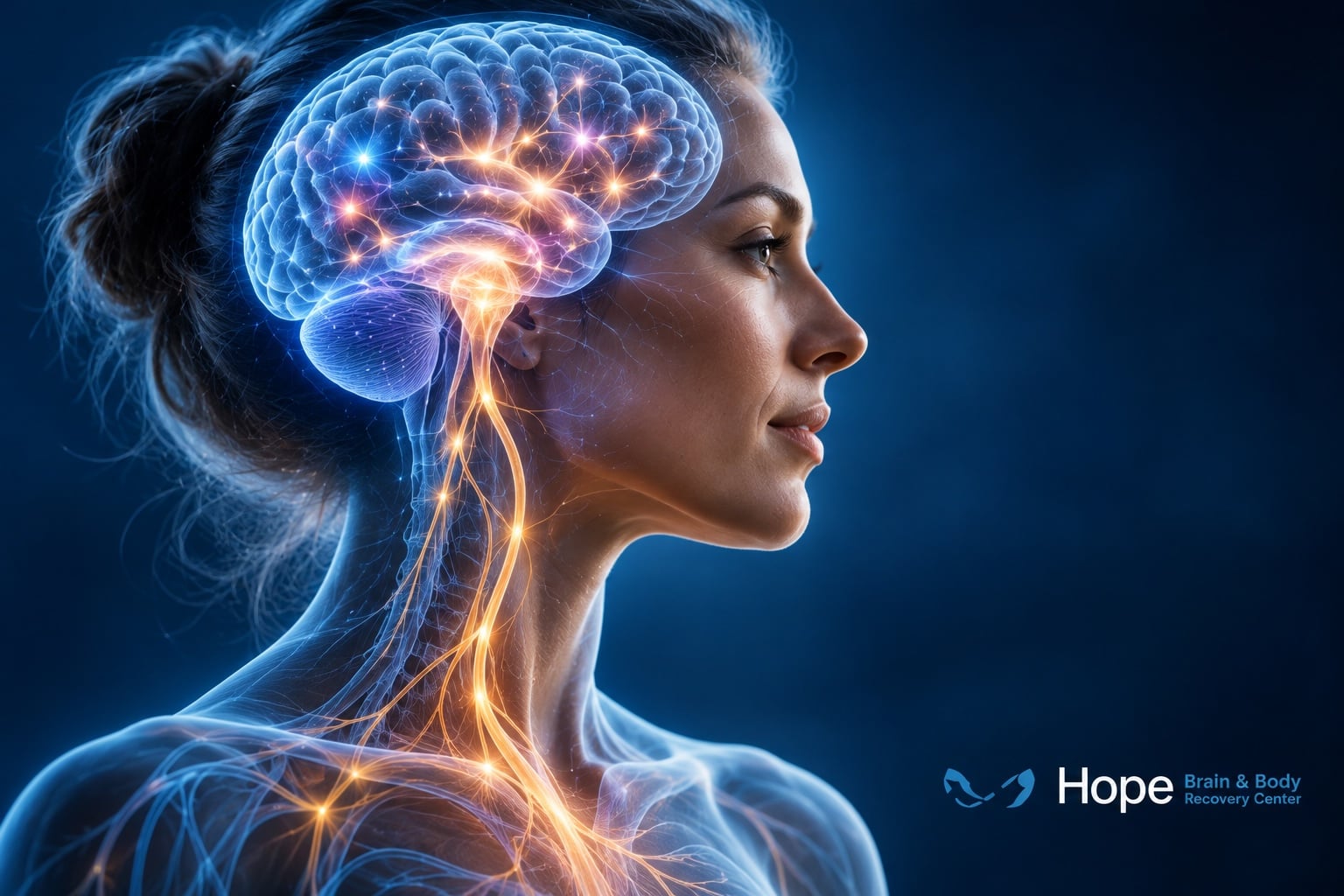
When you’re stressed, you probably notice changes in your thoughts first.
Your mind races. Concentration becomes difficult. You may feel overwhelmed, distracted, or unable to relax.
But something else is happening at the same time.
Your heart rate changes. Your breathing becomes faster or shallower. Your muscles tense, and your autonomic nervous system adjusts to the demands of the moment.
These physical responses aren’t separate from what happens in your brain.
Your heart and brain are constantly communicating.
This relationship is at the center of growing interest in heart-brain coherence, heart rate variability (HRV), and biofeedback-based approaches to stress regulation.
Research into heart-brain communication has helped scientists better understand how cardiovascular activity, breathing, emotions, and autonomic regulation interact.
One approach, developed through the HeartMath system, uses real-time heart-rhythm feedback to help people practice more regulated physiological responses.
At Hope Brain & Body Recovery Center, understanding the interaction between the brain, body, and autonomic nervous system is an important part of evaluating complex neurological symptoms.
Your Heart and Brain Are in Constant Communication
Most people think of the brain as the body’s command center.
And in many ways, it is.
The brain coordinates movement, processes sensory information, regulates behavior, and helps control essential physiological functions.
But communication between the brain and body isn’t one-directional.
The heart and cardiovascular system continuously send information back toward the central nervous system.
These signals travel through several pathways, including the vagus nerve and other sensory pathways involved in monitoring cardiovascular function.
The brain uses this information to help regulate heart rate, blood pressure, breathing, and responses to changing circumstances.
This ongoing communication contributes to what scientists call autonomic regulation.
The autonomic nervous system helps coordinate functions that occur largely without conscious effort.
These include heart-rate regulation, digestion, vascular responses, and many aspects of physiological adaptation.
When you encounter a stressful situation, autonomic activity changes.
When the situation passes, your body needs to adjust again.
The ability to respond appropriately—and recover afterward—is an important aspect of physiological resilience.
What Is Heart-Brain Coherence?
The term heart-brain coherence is commonly used in HeartMath training to describe an organized pattern of heart-rhythm variation associated with particular breathing and emotional-regulation practices.
During these exercises, heart-rate fluctuations may become more regular and rhythmic.
These patterns can be observed through heart rate variability measurements.
The concept is based on the idea that cardiovascular rhythms, breathing, and autonomic activity are interconnected.
When breathing becomes slower and more consistent, heart-rate fluctuations often begin following a more pronounced rhythm.
This occurs partly through respiratory sinus arrhythmia, a normal physiological process in which heart rate changes with breathing.
The HeartMath approach combines this physiological response with attention and emotional-regulation exercises.
The objective is to help people recognize and practice patterns associated with a more regulated state.
However, heart coherence should not be interpreted as proof that the brain and heart have entered a medically defined optimal state.
A coherent HRV pattern is measurable, but its clinical significance depends on the individual and the circumstances.
Understanding Heart Rate Variability
Your heart doesn’t beat at perfectly identical intervals.
Even when you’re sitting quietly, the time between consecutive heartbeats changes slightly.
This variation is called heart rate variability, or HRV.
For example, your heart may beat a little faster when you inhale and a little slower when you exhale.
These variations reflect interactions among breathing, autonomic activity, and cardiovascular regulation.
HRV has become an important research tool because it provides information about certain aspects of autonomic nervous system function.
Some HRV measurements are particularly influenced by parasympathetic activity.
Others reflect a more complex combination of physiological influences.
Does Higher HRV Always Mean Better Health?
Not necessarily.
Higher resting HRV is often associated with cardiovascular fitness and adaptability in healthy populations.
But HRV is affected by numerous factors, including:
- Age and physical fitness
- Sleep quality
- Breathing patterns
- Medications
- Illness and recovery
- Emotional and physical stress
- Measurement conditions
A single HRV reading cannot diagnose stress, neurological dysfunction, or a specific autonomic disorder.
It is also important to distinguish ordinary HRV measurements from the coherence scores generated by particular biofeedback systems.
These are related concepts, but they are not interchangeable.
How Stress Changes Your Heart Rhythm
When your brain perceives a challenge, your autonomic nervous system helps prepare the body to respond.
Heart rate may increase.
Breathing may accelerate.
Blood vessels and other physiological systems adjust.
These responses are not inherently harmful.
They are part of normal adaptation.
Problems can arise when stress is persistent, recovery is inadequate, or physiological regulation becomes difficult.
For example, someone experiencing chronic stress may report poor sleep, muscle tension, fatigue, difficulty concentrating, or a persistent sense of being on edge.
The relationship between stress and HRV is complex, but researchers have observed changes in autonomic regulation under different psychological and physiological conditions.
This is one reason HRV biofeedback has attracted interest as a stress-management tool.
Rather than attempting to control every stressful thought, the person practices changing aspects of their physiological response.
What Is HRV Biofeedback?
Heart rate variability biofeedback is a training approach that provides real-time information about heart-rhythm patterns.
The goal is to help people recognize how their breathing and other self-regulation techniques influence measurable physiological activity.
During a session, a sensor records pulse or heart-related signals.
Software then displays information about heart-rhythm variation.
The person follows guided breathing or other instructions while observing how the pattern changes.
This creates a feedback loop:
Practice a technique → observe a physiological response → adjust the technique → practice again.
Over time, the objective is to improve the person’s ability to use the technique without relying entirely on the device.
Biofeedback does not require a person to consciously control each heartbeat.
Instead, it helps them influence processes that naturally affect heart rhythm, particularly breathing and autonomic regulation.
What Is the HeartMath Method?
HeartMath is a branded approach to heart-rhythm biofeedback and emotional self-regulation.
Its educational materials describe a research program extending back to the early 1990s.
The presentation Your Heart Knows How to Calm Your Mind reports more than 80 peer-reviewed publications associated with HeartMath research and more than 12,000 certified professionals worldwide.
These figures are reported by HeartMath and should not be confused with proof that every product claim has been independently established.
The HeartMath approach emphasizes combining physiological feedback with techniques intended to shift attention and emotional state.
Rather than simply monitoring stress, users practice responding to it.
The system’s central concept is that repeated self-regulation exercises may help people become more familiar with physiological patterns associated with calm and focused attention.
How the HeartMath Inner Balance System Works
The presentation describes a simple three-stage process using the HeartMath Inner Balance sensor and app.
Step 1: See Your Heart Rhythm
A small sensor attaches to the ear and measures pulse-related signals.
The app uses these signals to display heart-rhythm information and coherence feedback.
This allows users to observe changes while practicing breathing or emotional-regulation techniques.
Step 2: Train With Guided Breathing
The user follows a breathing guide and practices shifting attention toward a calmer emotional state.
As breathing becomes more regular, the heart-rhythm display may develop a smoother, more organized pattern.
The feedback helps users recognize which practices produce the desired response during the session.
Step 3: Practice Consistently
The presentation encourages regular practice over time.
The idea is that repeated training may make self-regulation techniques easier to use during everyday situations.
However, claims that coherence training reliably raises everyone’s baseline HRV, improves sleep, or creates a permanent state of calm require more careful evaluation than a training-device score alone can provide.
The strongest practical value is learning a repeatable technique for managing physiological arousal.
HRV Tracking vs. HRV Training: What’s the Difference?
Many wearable devices measure HRV while you sleep.
They may use the information to estimate recovery, readiness, or changes in physiological stress.
These measurements can help identify trends.
But most passive tracking doesn’t teach a person how to influence their heart-rhythm patterns during a specific moment.
HRV biofeedback takes a different approach.
Instead of only observing the measurement, the person practices techniques while watching the physiological response.
For example, someone may notice that their heart rhythm becomes more regular when they slow their breathing comfortably.
That immediate feedback can help them learn the technique.
This is the central distinction highlighted in the HeartMath presentation:
Tracking tells you what your physiology is doing. Biofeedback helps you practice influencing it.
Both approaches can be useful.
Neither replaces a medical evaluation when symptoms suggest an underlying cardiovascular, neurological, or autonomic condition.
Why Breathing Is So Important
Breathing is unusual because it operates both automatically and under voluntary control.
You don’t need to think about every breath.
But you can deliberately change your breathing pattern.
That makes breathing a useful way to influence certain physiological responses.
During inhalation and exhalation, interactions between respiration and autonomic activity affect heart rate.
When breathing becomes slower and more regular, heart-rate fluctuations may become more pronounced and rhythmic.
HRV biofeedback often uses breathing near an individual’s resonance frequency, commonly around six breaths per minute in adults, although the most suitable rate varies.
At this frequency, interactions among breathing, heart rate, and blood-pressure regulation can produce relatively large, regular heart-rate oscillations.
These patterns are sometimes described as cardiovascular resonance.
The process involves the baroreflex, a feedback system that helps regulate blood pressure.
Importantly, the goal is comfortable, controlled breathing—not taking excessively deep breaths or forcing the body into an uncomfortable rhythm.
Can Heart-Brain Coherence Improve Emotional Resilience?
Emotional resilience doesn’t mean never feeling stressed.
It means being able to respond to challenges and recover without remaining overwhelmed.
HeartMath training encourages users to combine regulated breathing with a deliberate shift in attention or emotional state.
Some people may find that focusing on appreciation, calmness, or a reassuring memory helps make the practice more engaging.
HRV biofeedback research has reported improvements in perceived stress and some anxiety-related outcomes across certain study populations.
However, results vary, and not all studies use the same devices, training methods, or outcome measures.
It’s also difficult to separate the effects of paced breathing, relaxation, attention training, and biofeedback in every study.
Therefore, it is more accurate to describe heart coherence training as a potentially useful self-regulation tool rather than a proven treatment for all forms of chronic stress.
What About Brain Fog and Difficulty Concentrating?
Stress can interfere with attention and cognitive performance.
When someone feels overwhelmed, maintaining concentration may become more difficult.
The brain must allocate resources to competing demands, including emotional responses and task performance.
Practices that help reduce perceived stress may indirectly support concentration for some individuals.
This is one reason breathing exercises and biofeedback are being investigated in relation to cognitive and emotional regulation.
However, brain fog can have many causes.
These include sleep problems, medication effects, autonomic disorders, neurological conditions, and other medical issues.
An improvement in coherence scores does not establish that a person’s underlying cognitive symptoms have been treated.
Persistent or worsening cognitive difficulties deserve appropriate clinical evaluation.
Heart-Brain Coherence and the Vagus Nerve
The vagus nerve plays an important role in communication between the brain and internal organs.
It contributes to parasympathetic regulation of heart rate and participates in broader autonomic processes.
Because certain HRV measurements are influenced by cardiac vagal activity, the vagus nerve is relevant to understanding heart-rhythm biofeedback.
However, a high coherence score is not a direct measurement of total vagus nerve health.
Nor can an ear-clip pulse sensor determine whether the vagus nerve is functioning normally throughout the body.
This distinction matters because the vagus nerve contributes to many functions beyond cardiac regulation.
At Hope Brain & Body Recovery Center, patients experiencing complex neurological or autonomic symptoms may benefit from an individualized evaluation rather than relying on a single wearable-device measurement.
Could HRV Biofeedback Help People With Dysautonomia or POTS?
Dysautonomia refers to conditions involving abnormal regulation of autonomic nervous system functions.
Patients may experience dizziness, palpitations, fatigue, digestive symptoms, or difficulty tolerating upright posture.
One form, Postural Orthostatic Tachycardia Syndrome (POTS), involves an excessive heart-rate increase on standing alongside relevant symptoms.
Because HRV biofeedback involves autonomic regulation, it is reasonable to investigate whether selected patients with autonomic symptoms may benefit from carefully adapted breathing and self-regulation techniques.
But there are important limitations.
HRV biofeedback is not an established stand-alone treatment for POTS.
Some people with dysautonomia may experience dizziness or symptom worsening during certain breathing exercises.
For these individuals, the breathing pace, position, and duration may need to be adjusted under appropriate clinical guidance.
Learn more about Dysautonomia and POTS at Hope Brain & Body Recovery Center.
Can Heart Coherence Training Improve Sleep?
Many people struggle to fall asleep because their minds remain active at bedtime.
A brief breathing or relaxation routine may help some individuals transition away from the demands of the day.
The HeartMath presentation suggests incorporating coherence practice into evening routines.
This is a reasonable application of self-regulation training.
However, evidence that a particular coherence device reliably improves sleep disorders is more limited than the general evidence supporting some relaxation-based approaches.
Persistent insomnia, sleep apnea symptoms, or severe daytime fatigue require appropriate evaluation.
Biofeedback may complement a sleep-supportive routine, but it should not replace established treatments for diagnosed sleep disorders.
How to Practice Heart-Focused Breathing
You don’t necessarily need a device to begin practicing comfortable, regulated breathing.
A simple starting approach involves sitting in a comfortable position and allowing your breathing to become slower and more regular.
You can gently direct your attention toward the area around your chest while maintaining relaxed breathing.
Some people find it helpful to focus on a calming memory or a feeling of appreciation.
The objective is not to force a particular emotion.
It’s to create a repeatable moment of focused attention and physiological regulation.
If you’re using a biofeedback device, you can observe how your heart-rhythm pattern responds during the practice.
Start with a few comfortable minutes rather than trying to achieve a perfect score.
If the technique causes lightheadedness, breathlessness, chest discomfort, or worsening symptoms, stop and seek appropriate medical advice.
Why Consistency Matters More Than Chasing a Perfect Score
One of the challenges with health-tracking technology is that people can become overly focused on numbers.
A low HRV score may create anxiety.
A high coherence score may produce a false sense that every aspect of the nervous system is functioning optimally.
Neither interpretation is justified.
Heart-rhythm measurements are influenced by context.
Breathing rate, body position, measurement conditions, and other factors can change the results.
A more useful goal is to learn whether a self-regulation technique helps you respond to stress more effectively in everyday life.
Can you recognize when you’re becoming overwhelmed?
Can you use a familiar breathing routine without needing the device?
Does the practice help you return to a comfortable level of alertness?
These practical outcomes may be more meaningful than achieving a particular number during a single session.
How HRV Biofeedback Fits Into a Broader Brain-Health Strategy
HRV biofeedback is one possible component of a broader approach to stress and neurological health.
Other factors remain important.
Regular physical activity, adequate sleep, appropriate nutrition, social connection, and management of underlying medical conditions all contribute to wellbeing.
For people with neurological symptoms, individualized rehabilitation may also be relevant.
At Hope Brain & Body Recovery Center, our Functional Medicine and Brain-Specific Rehabilitation services consider different aspects of neurological and physiological function.
Biofeedback concepts may be useful in understanding self-regulation, but the discussion of HeartMath in this article does not imply that Hope Brain provides or endorses a particular HeartMath device.
Your Heart Doesn’t Work Separately From Your Brain
One of the most important lessons from heart-brain research is that physiological regulation depends on communication among multiple systems.
The brain influences the heart.
The heart sends information back toward the brain.
Breathing changes cardiovascular rhythms.
Emotions and attention interact with autonomic activity.
These processes happen continuously.
HRV biofeedback offers a practical way to observe some of these interactions and practice influencing them through controlled breathing and focused attention.
The technology doesn’t give you complete control over your nervous system.
And it doesn’t replace medical care.
But it may help you develop greater awareness of how your body responds to stress.
Sometimes the first step toward better regulation isn’t trying to stop every stressful thought. It’s learning how your body responds—and practicing a different response.
Looking Beyond Stress at Hope Brain & Body Recovery Center
If you’re experiencing persistent brain fog, dizziness, autonomic symptoms, fatigue, or difficulty recovering from stress, understanding your neurological and physiological function may help guide the next steps.
At Hope Brain & Body Recovery Center, we focus on identifying patterns of neurological dysfunction and developing individualized rehabilitation strategies informed by each patient’s clinical findings.
Our goal is to understand how different systems may be contributing to symptoms rather than assuming every problem has a single cause.