Heart rate variability (HRV) refers to the natural variation in the time intervals between heartbeats.
Your heart does not beat like a perfectly timed metronome.
Instead, its rhythm continuously adjusts in response to breathing, physical activity, emotional demands, and changes in the body’s internal environment.
Certain HRV measurements can provide information about cardiac parasympathetic regulation.
Higher resting vmHRV is often associated with greater physiological flexibility, although HRV is influenced by many factors and cannot independently diagnose vagus nerve dysfunction.
Researchers are increasingly interested in how these physiological patterns relate to cognitive performance.
The Surprising Connection Between Vagal Tone and Memory
Most people associate memory with brain regions such as the hippocampus and prefrontal cortex.
But the autonomic nervous system may also contribute to how efficiently these networks function.
Research summarized in the clinical presentation describes a study involving 143 healthy adults, in which higher resting vagally mediated HRV was significantly associated with stronger performance across several executive-function domains.
These included:
- Cognitive flexibility
- Working memory
- Inhibitory control
- Executive set-shifting
Another study involving 42 undergraduate students found that individuals with higher vagal tone demonstrated faster reaction times, greater accuracy, and more efficient prefrontal neural-resource allocation during working-memory tasks.
These findings suggest that vagal regulation and cognitive performance are interconnected.
However, an important distinction remains: an association between higher vagal tone and better cognition does not prove that increasing vagal tone will automatically improve memory.
Nevertheless, these findings provide a compelling reason to investigate the relationship between autonomic function and brain performance.
How the Vagus Nerve Communicates With Your Brain
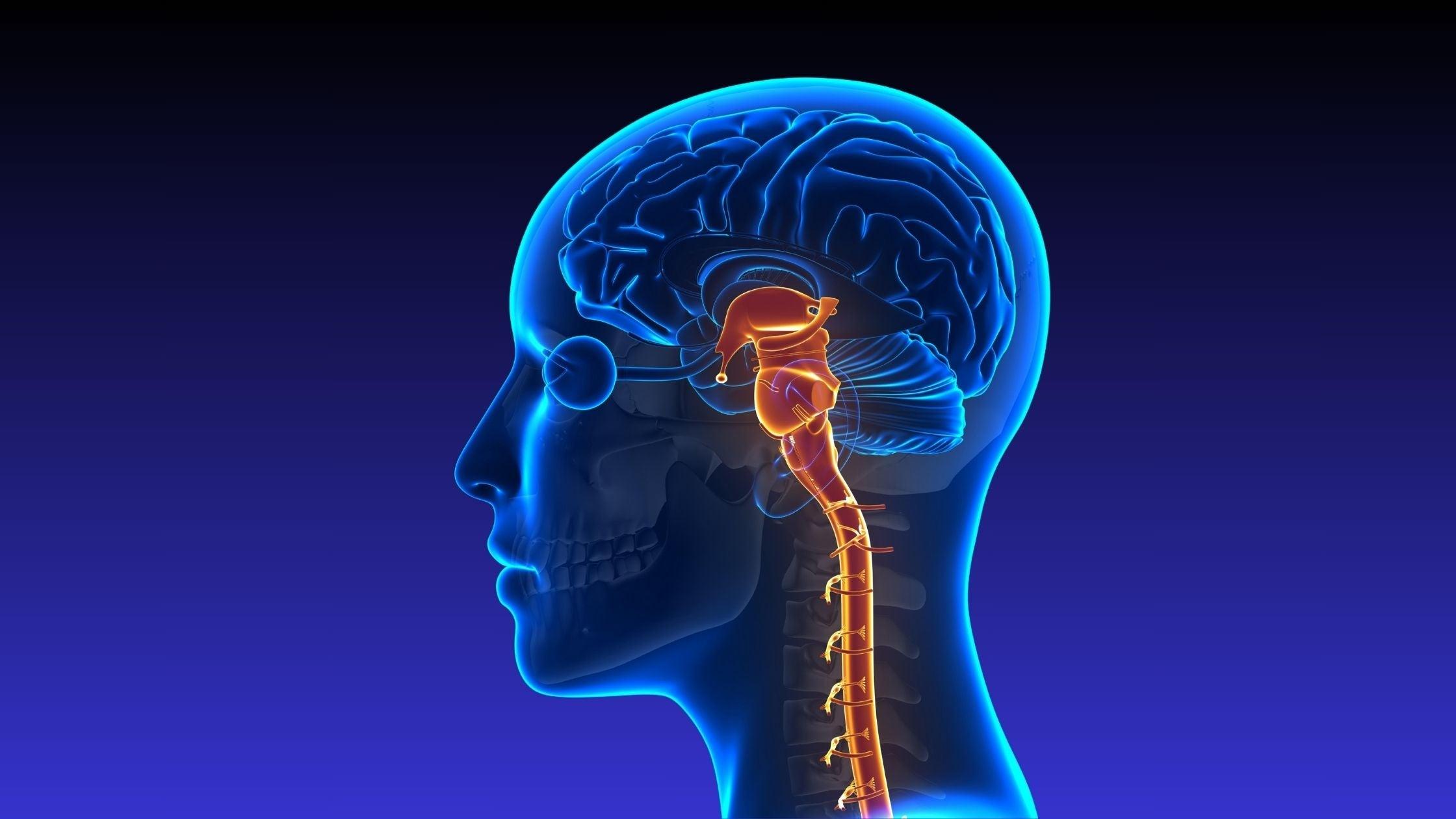
The vagus nerve communicates with brainstem structures that connect to broader networks involved in attention, emotion, memory, and autonomic regulation.
One particularly important structure is the nucleus tractus solitarius (NTS).
The NTS receives substantial sensory information from the vagus nerve and helps distribute that information to other brain regions.
These connections allow vagal signaling to influence more than heart rate and digestion.
They also help explain why researchers are investigating vagus nerve stimulation as a method of influencing neurological function.
The Locus Coeruleus: Attention and Alertness
The locus coeruleus (LC) is a small brainstem structure that plays an important role in arousal, attention, and norepinephrine signaling.
Research examining vagus nerve stimulation has demonstrated changes in locus coeruleus activity.
This is particularly interesting because norepinephrine helps regulate how the brain responds to important information and adapts to changing demands.
The Prefrontal Cortex: Thinking and Decision-Making
The prefrontal cortex contributes to planning, decision-making, working memory, and cognitive control.
Functional MRI research has identified changes in prefrontal activity during certain forms of transcutaneous vagus nerve stimulation.
These observations are consistent with research exploring whether vagal modulation can influence higher-order cognitive processing.
The Thalamus and Insula: Internal Awareness
The thalamus helps relay and integrate information across brain networks.
The insula contributes to interoception, or the brain’s perception of internal bodily states.
Together, these structures help connect physical sensations with attention, emotion, and autonomic responses.
Studies of implanted vagus nerve stimulation have repeatedly identified the thalamus and insula as important activation regions.
Memory-Related Brain Networks
Research has also identified changes in activity within the parahippocampal region during certain forms of noninvasive cervical vagus nerve stimulation.
Because this region participates in memory-related processing, it represents another potential connection between vagal activity and cognition.
These findings demonstrate that vagal stimulation can influence distributed neurological networks rather than one isolated brain area.
What Is Vagus Nerve Stimulation?
Vagus nerve stimulation (VNS) involves delivering controlled electrical impulses intended to influence activity within vagal pathways.
There are several approaches.
Implanted VNS uses a surgically placed device connected to the vagus nerve, typically in the neck.
This approach has established clinical uses for certain patients with drug-resistant epilepsy and treatment-resistant depression.
Transcutaneous vagus nerve stimulation (tVNS) uses externally applied stimulation without surgically implanting an electrode.
Researchers commonly investigate stimulation at selected areas of the ear or neck.
Noninvasive stimulation is attracting interest because it may provide a way to influence vagal pathways without surgery.
However, the clinical evidence varies substantially depending on the condition being treated, the device used, and the stimulation protocol.
Not every VNS device or application has the same regulatory status or demonstrated clinical benefit.
Why Vagus Nerve Stimulation Settings Matter
One of the most interesting findings in recent neuroscience is that vagus nerve stimulation does not produce identical brain responses under every set of conditions.
Frequency, pulse width, electrode placement, and stimulation timing can all influence which neural networks respond.
For example, the research presentation describes studies comparing different stimulation frequencies.
In certain experimental protocols, stimulation at 20 Hz produced broader frontal-limbic activation and increased connectivity involving the locus coeruleus, anterior cingulate cortex, and insula.
By comparison, 1 Hz stimulation produced different patterns involving posterior and parietal brain regions.
Research also suggests that pulse width—the duration of an individual electrical pulse—can influence the balance between regional brain activation and deactivation.
These findings are scientifically important because they indicate that stimulation parameters can alter the neurological response.
But they should not be interpreted as instructions for choosing a stimulation frequency at home.
There is no single stimulation setting established as optimal for every neurological condition.
Appropriate parameters depend on the clinical indication, device, patient characteristics, and available evidence.
The Vagus Nerve and Neuroinflammation
Inflammation is an essential part of the body’s defense and repair systems.
However, poorly regulated inflammatory signaling can contribute to neurological dysfunction.
Researchers have identified an important relationship between vagal pathways and inflammatory regulation.
This is commonly discussed through the cholinergic anti-inflammatory pathway.
In experimental models, vagal signaling can influence immune responses and inflammatory cytokine activity.
The vagus nerve also communicates with systems that affect the behavior of immune cells within the central nervous system.
These include microglia, the brain’s resident immune cells.
Microglia perform important protective functions, but excessive or persistent inflammatory activation may contribute to certain neurological disease processes.
Research summarized in the presentation suggests that vagus nerve stimulation can reduce markers of neuroinflammation in several animal models.
This has generated interest in whether carefully targeted vagal modulation could eventually support treatment strategies for conditions involving neuroinflammatory processes.
Importantly, findings from animal models do not establish equivalent clinical benefits in humans.
The Gut-Brain Connection: Why Digestion and Neurological Health Are Linked
The vagus nerve is a major communication pathway within the gut-brain axis.
This relationship helps explain why gastrointestinal function and neurological symptoms can sometimes occur together.
The digestive system constantly sends information to the brain about internal conditions.
Meanwhile, the brain influences digestive activity through autonomic pathways.
The vagus nerve participates in this two-way communication.
Researchers are particularly interested in how immune and inflammatory signaling within the gastrointestinal system may interact with neural pathways.
This is relevant when evaluating patients who experience combinations of digestive symptoms, autonomic dysfunction, fatigue, and neurological complaints.
At Hope Brain & Body Recovery Center, our Functional Medicine approach can complement neurological assessment when digestive, metabolic, nutritional, or inflammatory factors may contribute to a patient’s broader clinical picture.
Can the Vagus Nerve Influence Brain Aging?
As we age, changes occur throughout the nervous system.
These include changes in neural signaling, cardiovascular regulation, autonomic function, and cognitive performance.
The vagus nerve is no exception.
Research summarized in the presentation indicates that older adults can demonstrate longer brainstem response latencies following vagal stimulation.
However, aging does not necessarily produce a uniform reduction in every aspect of vagal responsiveness.
In one sham-controlled crossover study described in the source, older adults demonstrated more pronounced physiological responses associated with the locus coeruleus than younger participants.
This is an interesting finding because it suggests that certain neurological pathways may remain responsive to vagal modulation later in life.
Researchers are therefore investigating whether VNS could have future applications in supporting cognitive function during aging.
However, VNS has not been established as a general treatment for preventing age-related cognitive decline.
The findings are promising research directions rather than proof of an anti-aging therapy.
Vagus Nerve Stimulation and Parkinson’s Disease
Parkinson’s disease involves complex neurological changes, including degeneration of dopamine-producing neurons and abnormal accumulation of proteins such as alpha-synuclein.
Experimental research has investigated whether vagus nerve stimulation can influence some of these processes.
In animal models, VNS has been associated with reductions in neuroinflammatory markers, changes in alpha-synuclein accumulation, and preservation of certain neuronal populations.
These observations have encouraged further investigation into potential neuroprotective mechanisms.
But the distinction between experimental findings and clinical treatment is essential.
VNS is not an established disease-modifying treatment for Parkinson’s disease.
Patients experiencing Parkinson’s symptoms or other progressive neurological changes require appropriate medical diagnosis and management.
Learn more about Hope Brain’s approach to Neurodegenerative Disorders.
Could Vagus Nerve Stimulation Help Alzheimer’s Disease?
Researchers are also investigating vagal modulation in Alzheimer’s disease and related forms of cognitive impairment.
Potential areas of interest include memory-related brain networks, inflammatory signaling, and vascular function.
The presentation describes experimental evidence involving neuroprotection and cognitive performance in animal models.
It also discusses research examining the relationship between vagal stimulation and the blood-brain barrier.
The blood-brain barrier helps regulate the movement of substances between circulating blood and brain tissue.
In experimental models of vascular cognitive impairment, transcutaneous auricular VNS has been associated with changes in pathways involved in blood-brain barrier integrity and angiogenesis.
These findings may eventually help researchers better understand how autonomic and vascular mechanisms interact in neurological disease.
For now, however, evidence is insufficient to conclude that VNS prevents Alzheimer’s disease or reverses established dementia.
Ready to Take the Next Step?
Living with neuropathy, chronic nerve pain, brain injury, or complex neurological symptoms can be frustrating—especially when the treatments you’ve already tried haven’t delivered the progress you hoped for.
At Hope Brain Center, Dr. Joseph Schneider and his team take a comprehensive approach to neurological rehabilitation, including tPRF, combining advanced diagnostics with individualized therapies designed around how your nervous system is actually functioning.
Your first step is a conversation.
Book Your Consultation Today
Discover whether Hope Brain Center’s personalized neurological approach may be right for you.
👉 BOOK NOW: https://hopebraincenter.com/book/
Don’t settle for simply managing symptoms. Start exploring what’s possible when your brain and nervous system are evaluated as a whole.
Vagus Nerve Stimulation and Stroke Rehabilitation
One of the more clinically developed areas of vagus nerve stimulation research involves stroke rehabilitation.
After a stroke, the brain may need to reorganize neural networks to support the recovery of lost functions.
This process is known as neuroplasticity.
Researchers have investigated whether pairing vagus nerve stimulation with structured rehabilitation exercises can enhance motor learning and recovery.
The timing of stimulation is particularly important because the goal is not simply to activate the vagus nerve continuously.
Instead, stimulation can be paired with specific rehabilitation movements to support activity-dependent plasticity.
Certain implanted VNS systems have received regulatory authorization for use alongside rehabilitation in appropriately selected patients with chronic ischemic stroke and upper-limb impairment.
This represents a more established clinical application than experimental VNS approaches for Alzheimer’s or Parkinson’s disease.
Nevertheless, eligibility and expected benefits depend on the patient’s condition and the specific treatment protocol.
At Hope Brain, our Stroke Treatment and Rehabilitation services focus on individualized neurological assessment and rehabilitation strategies.
What Does the Vagus Nerve Have to Do With Dysautonomia and POTS?
The autonomic nervous system regulates functions that usually occur without conscious effort.
These include heart rate, blood pressure regulation, digestion, and physiological responses to changes in posture.
Because the vagus nerve contributes to parasympathetic regulation, it is relevant to understanding autonomic function.
Patients with dysautonomia may experience symptoms such as dizziness, palpitations, fatigue, digestive disturbances, and difficulty tolerating upright posture.
In Postural Orthostatic Tachycardia Syndrome (POTS), standing produces an abnormal increase in heart rate alongside associated symptoms.
However, dysautonomia is not simply another name for low vagal tone.
And POTS cannot be diagnosed—or adequately explained—by an HRV reading alone.
Different autonomic disorders involve different mechanisms, making careful clinical evaluation essential.
Learn more about Dysautonomia and POTS at Hope Brain & Body Recovery Center.
Can You Improve Vagal Tone Naturally?
Interest in vagal tone has led to widespread discussion of breathing exercises, meditation, physical activity, and other techniques intended to support autonomic regulation.
Some of these practices can influence heart-rate patterns and parasympathetic activity.
For example, slow, comfortable breathing can change respiratory-related heart-rate variability.
Regular physical activity may also support cardiovascular and autonomic health.
However, an increase in HRV during a breathing exercise does not necessarily indicate a lasting change in vagus nerve function.
And none of these techniques should be presented as a proven treatment for neurodegenerative disease.
People with significant dizziness, fainting, cardiac conditions, or severe autonomic symptoms should seek medical guidance before attempting aggressive breathing exercises or electrical stimulation devices.
The objective is not to chase the highest possible HRV number.
It is to support appropriate autonomic regulation and physiological adaptability.
Why Neurological Assessment Matters More Than a Single Number
The growing popularity of wearable devices has made HRV measurements more accessible.
But the nervous system is too complex to be summarized by one measurement.
A person’s HRV can be influenced by sleep, medications, age, breathing patterns, cardiovascular fitness, illness, and measurement conditions.
Likewise, vagus nerve stimulation research demonstrates that neurological responses depend on more than whether stimulation is present.
Frequency, pulse width, timing, anatomical targets, and individual patient characteristics can all influence the response.
This is why an individualized neurological approach matters.
At Hope Brain & Body Recovery Center, evaluating neurological symptoms involves looking at the interaction between different systems rather than assuming that every symptom has one cause.
When appropriate, Brain-Specific Rehabilitation may form part of an individualized plan based on a patient’s neurological findings, functional limitations, and treatment goals.
The Vagus Nerve Is More Than a Relaxation Switch
The vagus nerve is frequently described as the body’s relaxation nerve.
But that description barely scratches the surface.
Its pathways connect internal physiological regulation with brain networks involved in attention, memory, emotion, and sensory processing.
Research into vagal activity and VNS is helping scientists explore relationships among autonomic function, neuroinflammation, neuroplasticity, and neurological recovery.
Some applications are already established for specific medical indications.
Others remain experimental.
And many of the most exciting findings still require larger, carefully controlled human studies.
The key message is not that stimulating the vagus nerve can cure neurological disease.
It is that brain health depends on communication across the entire nervous system—and the vagus nerve is an important part of that conversation.
Ready to Take the Next Step?
Living with neuropathy, chronic nerve pain, brain injury, or complex neurological symptoms can be frustrating—especially when the treatments you’ve already tried haven’t delivered the progress you hoped for.
At Hope Brain Center, Dr. Joseph Schneider and his team take a comprehensive approach to neurological rehabilitation, including tPRF, combining advanced diagnostics with individualized therapies designed around how your nervous system is actually functioning.
Your first step is a conversation.
Book Your Consultation Today
Discover whether Hope Brain Center’s personalized neurological approach may be right for you.
👉 BOOK NOW: https://hopebraincenter.com/book/
Don’t settle for simply managing symptoms. Start exploring what’s possible when your brain and nervous system are evaluated as a whole.