Are the holidays supposed to make you feel this overwhelmed?
If you’re like most people I see in my practice, you’re probably wondering why the “most wonderful time of the year” feels more like the most stressful time of your life. Here’s what might surprise you: 41% of Americans report their anxiety actually gets worse during the festive season.
As a physician, I’ve watched countless patients struggle with this same contradiction year after year. You want to create those perfect holiday moments. You want to feel joy. Instead, you’re changing your sleep patterns, eating differently, drinking more, and feeling like you’re barely keeping up.
Your doctor might tell you this is just “normal holiday stress” and you should “try to relax more.”
But what if there’s actually something you can do about it?
Holiday stress management doesn’t have to be another item on your endless to-do list. The strategies I’m going to share with you target the actual biological reasons why your body responds this way during the holidays. We’re not talking about complicated treatments or major lifestyle overhauls.
You’re going to learn exactly what happens in your brain when holiday pressure hits. I’ll show you simple daily habits that protect your mental health. And you’ll get real-time techniques you can use right in the middle of family gatherings or holiday shopping chaos.
Because here’s what I’ve learned after years of treating patients: understanding why your body reacts to holiday stress the way it does is just as important as knowing what to do about it.
What Really Happens When Holiday Stress Hits Your Body
Here’s something most doctors won’t tell you about holiday stress: it’s not “all in your head.”
Nearly nine in ten adults (89%) experience real, measurable stress during the holiday season. Your body launches multiple biological systems into action. This isn’t weakness. This is biology.
Your Brain Under Holiday Pressure
The moment holiday pressures start building, your brain’s alarm system goes off. The amygdala—think of it as your internal smoke detector—immediately signals the hypothalamus to coordinate your body’s fight-or-flight response.
What happens next? Your prefrontal cortex, the part of your brain responsible for clear thinking and emotional control, gets overwhelmed.
This explains why you can’t seem to focus on your holiday shopping list. Why you snap at your family over small things. Your brain literally shuts down higher thinking to deal with what it perceives as a threat. During family gatherings, your anterior cingulate cortex—the bridge between your emotional and thinking brain—becomes hyperactive.
No wonder holiday dinners feel like walking through a minefield.
The Hormone Storm
Your stressed brain releases two powerful chemicals: cortisol and adrenaline.
Adrenaline hits first. Heart racing, energy surging, senses on high alert. That jittery feeling when you’re rushing through the mall? That’s adrenaline doing its job.
Cortisol follows close behind. People call it the “stress hormone,” but it’s actually trying to help you. Cortisol breaks down proteins and fats to give you energy, adjusts your immune system, and controls your sleep cycle. Under normal circumstances, cortisol rises in the morning and drops at night.
Holiday stress breaks this pattern. Your body doesn’t know the difference between running from a predator and running to twelve different stores before they close.
Why Holidays Hit Different
The holidays create what I call a “perfect storm” of stressors.
Money tops the list. 58% of adults worry about spending too much or not having enough. Gift-giving pressure affects 40% of people. Missing loved ones weighs on 38%.
But here’s what makes holiday stress particularly brutal: it compounds. The American Psychological Association found that 43% of adults say holiday stress actually prevents them from enjoying the season.
Your income matters too. Families earning under $50,000 report high stress levels at 24%, compared to 18% for those earning over $100,000.
The good news? Once you understand what’s happening in your body, you can do something about it. Your stress response isn’t broken. It’s just responding to a situation it wasn’t designed to handle.
Simple Daily Habits That Actually Work
“The more time you spend in a tranquil place, the lower your depression, the lower your stress, and the better your quality of life is. You’re getting healthy oxygen into your system.” — Dr. Frank A. Bauchman, Psychiatrist and medical director at the University of Texas Southwestern Medical Center
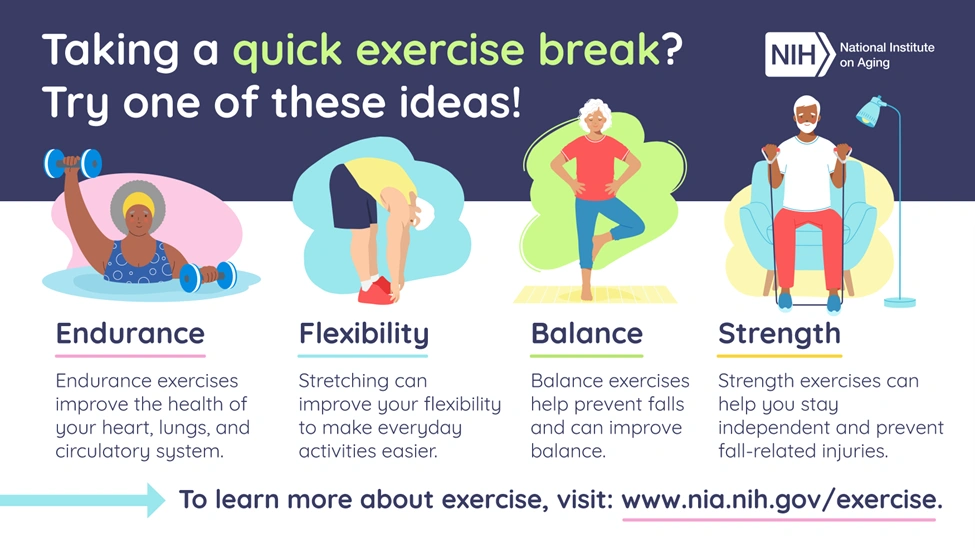
Image Source: Sierra Senior Services
You don’t need a complete lifestyle overhaul to manage holiday stress.
If you’re like most of my patients, you’ve probably been told to “just relax more” or “try meditation.” But here’s what I’ve found after years of practice: simple, consistent habits work better than complicated wellness routines you’ll abandon by New Year’s.
The key is building your stress resilience before the pressure hits.
Start Your Morning Right
Your brain needs just 5 minutes of focused breathing to reset your entire stress response for the day. Try the 4-7-8 technique: breathe in for 4 counts, hold for 7, breathe out for 8. This activates your parasympathetic nervous system, counteracting that fight-or-flight feeling that holiday chaos triggers.
Another method that works? The physiological sigh. Inhale once, then take a second smaller inhale before fully exhaling. Even my busiest patients can manage this while their coffee brews.
Your Sleep Schedule Matters More Than You Think
The CDC recommends 7-9 hours of sleep nightly. Going to bed and waking at the same time daily—yes, even during holiday parties—regulates your circadian rhythm.
Nearly 30% of people experience sleep disruption during the holidays. Create a sleep sanctuary: keep your bedroom dark, quiet, and between 60-67 degrees.
Here’s why this matters: insufficient sleep increases ghrelin (your hunger hormone) while decreasing leptin (the hormone that tells you you’re full). This makes healthy eating during the holidays nearly impossible.
Eat Like Your Mental Health Depends On It
Schedule three small to medium meals at regular times. Your body needs extra protein, B-vitamins, magnesium, and vitamins A and C during stressful periods.
Focus on anti-inflammatory foods: fatty fish, nuts, olive oil, fruits, vegetables, and fiber-rich options. Stay hydrated—dehydration makes you tired and irritable, and you already have enough to deal with.
The Sugar and Alcohol Trap
Cortisol makes you crave foods high in fat and sugar when you’re stressed. But excessive sugar spikes your blood sugar, pushes insulin into overdrive, and causes energy crashes and mood swings.
Alcohol increases cortisol levels, making anxiety, fatigue, and sleep problems worse. Try alternating alcoholic drinks with water or festive mocktails.
Move Your Body (Even Just a Little)
Exercise naturally increases endorphins—your body’s own feel-good chemicals. Just 15-20 minutes of movement most days significantly improves your mood.
Aerobic exercise works best: 30 minutes three to four times weekly at 60-80% of your maximum heart rate for optimal endorphin release. Make it part of your holiday traditions through family walks, friendly sports competitions, or charity runs.
The best habit? The one you’ll actually stick with.
What to Do When Holiday Stress Hits Hard
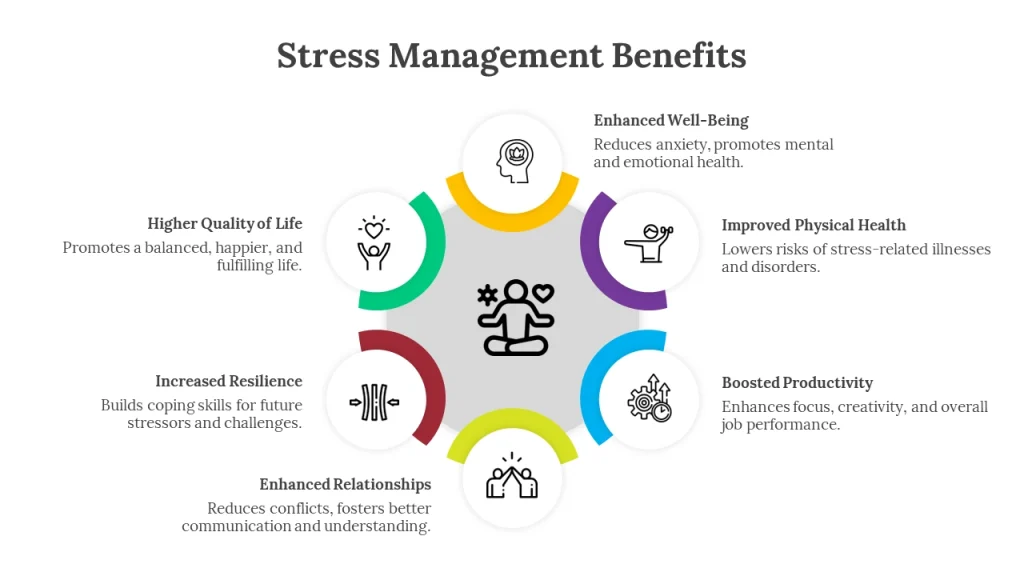
Image Source: SlideEgg
You’ve probably been there. Right in the middle of holiday chaos, feeling like your heart is racing and your mind is spinning. Maybe it’s during a family gathering. Maybe it’s while holiday shopping.
The good news? You don’t have to just “tough it out” until January.
There are specific techniques that work right in the moment when stress overwhelms you. I’ve taught these to countless patients, and they’ve helped people get through everything from difficult family dinners to last-minute gift shopping panic.
Box breathing and the 4-7-8 Technique
Here’s something Navy SEALs use in high-pressure situations: box breathing. It’s simple. Breathe in for 4 counts, hold for 4, breathe out for 4, hold for 4. Repeat several times. This immediately activates your body’s relaxation response.
Want something even more powerful? Try the 4-7-8 technique: breathe in through your nose for 4 counts, hold for 7, then breathe out through pursed lips for 8 counts. This pattern actually decreases your heart rate and blood pressure.
I tell my patients to practice this three cycles, twice a day. It’s like training for when you really need it.
Put Your Phone Away (Really)
Your phone reduces your ability to think clearly just by being nearby—even when it’s turned off. During the holidays, this matters more than usual.
Try these approaches:
- Check your phone only at specific times
- Make meals and family time phone-free zones
- Challenge your family to see who can stay offline longest
Patients who disconnect report up to 70% less stress, plus lower anxiety and blood pressure. Worth trying, right?
Ground Yourself in 30 Seconds
When your mind is racing, grounding techniques bring you back to the present moment. The 5-4-3-2-1 method works fast: name 5 things you can see, 4 you can touch, 3 you hear, 2 you smell, and 1 you taste.
Or try something even simpler: stomp your feet or press your palms together firmly. These body awareness exercises create immediate sensory anchoring.
Write Down What’s Going Right
Gratitude journaling works because it shifts your attention away from what’s stressing you toward what’s actually good in your life. You don’t need anything fancy.
On busy days, just bullet-point three things you’re grateful for. When you have more time, write detailed paragraphs. Try listing three things on weeknights and ten items with more detail on weekends.
The key is consistency, not perfection.
Sometimes Self-Care Isn’t Enough
You’ve tried the breathing exercises. You’ve worked on your sleep schedule. You’re eating better and moving your body. But sometimes, holiday stress goes deeper than what daily habits can fix.
If you’re still struggling, that doesn’t mean you’re doing something wrong. It means you might need additional support.
Your Body Is Trying To Tell You Something
Watch for symptoms that won’t go away: persistent headaches, muscle tension that never releases, fatigue that sleep doesn’t fix, chest tightness, or digestive problems. Your body is sending you signals.
Emotionally, you might feel constantly sad, irritable, overwhelmed, or hopeless. Maybe you’re avoiding family gatherings or social interactions entirely. If you’re having thoughts of self-harm, these are serious warning signs that professional support is needed.
These aren’t character flaws. They’re your body and mind asking for help.
What Professional Support Actually Does
Here’s what 41% of people dealing with elevated holiday stress have found: professional counseling gives you a safe space to explore what’s really triggering your stress and develop specific coping strategies.
Therapy isn’t just talking about your feelings. It’s learning practical tools to manage stressors you might not even realize are affecting you. This becomes especially important when you’re dealing with grief during the holidays or unresolved family conflicts.
Getting to the Root Cause
Functional medicine practitioners can test your cortisol levels to see exactly how stress is affecting your body, then create a treatment plan specific to you. Instead of just managing symptoms, this approach looks for connections between things like gut health and stress responses.
Excess cortisol from holiday stress can cause weight gain, insulin resistance, sleep problems, and weakened immunity. When you know what’s happening in your body, you can address it at the source.
What We Do Differently
If you’re dealing with swelling, fatigue, frequent illness, or slow recovery, your lymphatic system may need attention. At Hope Brain & Body Recovery Center in Chadds Ford, PA, we focus on therapies that support circulation, detoxification, and immune resilience — helping your body heal naturally from the inside out.
Instead of the focus being all about the disease, our focus is on our patients as individuals and what is needed to restore their good health.
Remember: asking for help is actually a sign of strength. The Substance Abuse and Mental Health Services Administration (SAMHSA) has resources specifically for holiday-related mental health challenges. Community connections reduce stress and improve overall wellbeing, so don’t hesitate to reach out.
You don’t have to handle everything alone. Sometimes the best gift you can give yourself is getting the support you need.
You Don’t Have to “Survive” the Holidays
Holiday stress isn’t just in your head. It’s a real physiological response happening in your body right now. We’ve covered how your brain chemistry changes, how your hormones get disrupted, and why your entire system feels overwhelmed during what’s supposed to be a joyful season.
But here’s what I want you to remember: your body is remarkably good at healing when you give it the right support.
Simple morning breathing exercises. Consistent sleep schedules. Balanced nutrition choices. These aren’t complicated interventions, yet they create a foundation that protects both your mental and physical health when holiday pressures hit.
You’re still going to face stressful moments. Family dynamics don’t magically improve because it’s December. Financial pressures won’t disappear. Your schedule will still feel packed. That’s when those quick techniques – box breathing, grounding exercises, strategic phone breaks – become your immediate relief tools.
Most of the time, these approaches work beautifully for holiday stress management. Sometimes, though, you need additional support. Persistent headaches, constant irritability, sleep problems that won’t resolve, thoughts of self-harm – these are your body’s way of telling you it’s time to reach out for professional help.
Perfect holidays? They don’t exist.
My patients who feel best during the holidays focus on one thing: maintaining their basic health routines while accepting their human limitations. They understand that showing up calm and present matters more than creating Instagram-worthy celebrations.
Your mind and body deserve care, especially during demanding seasons like this. Small, consistent actions protect your wellbeing far better than trying to do everything perfectly once in a while.
Pay attention to what your body is telling you. Use these strategies. And remember – taking care of yourself isn’t selfish. It’s actually the most meaningful gift you can give the people you care about. Because when you’re calm and centered, you can genuinely be present for the moments that matter.
Key Takeaways
Understanding the biological basis of holiday stress empowers you to take control of your wellbeing during this demanding season through science-backed strategies.
• Holiday stress triggers real biological changes: Your brain’s amygdala activates fight-or-flight responses while cortisol and adrenaline flood your system, explaining why you feel overwhelmed during festive seasons.
• Daily wellness habits create stress resilience: Start mornings with 4-7-8 breathing, maintain consistent sleep schedules, eat balanced meals, limit sugar/alcohol, and incorporate 15-20 minutes of daily movement.
• Use real-time stress management tools: Practice box breathing (4-4-4-4 pattern), try digital detox periods, use 5-4-3-2-1 grounding exercises, and maintain gratitude journaling for immediate relief.
• Recognize when professional help is needed: Persistent physical symptoms, constant emotional distress, social withdrawal, or thoughts of self-harm indicate it’s time to seek therapy or medical support.
• Perfect holidays don’t exist – focus on presence over perfection: Small, consistent self-care actions protect your wellbeing better than occasional grand gestures, allowing you to genuinely enjoy the season.
The most meaningful gift you can give yourself and loved ones is your calm, centered presence during the holidays.
FAQs
Q1. How does holiday stress affect the body and brain? Holiday stress triggers the release of cortisol and adrenaline, activating the brain’s fight-or-flight response. This can lead to increased heart rate, disrupted sleep patterns, and difficulty focusing on tasks or enjoying festive moments.
Q2. What are some simple daily habits to manage holiday stress? Start your day with mindful breathing exercises, maintain a consistent sleep schedule, eat balanced meals, limit sugar and alcohol intake, and incorporate light physical activity into your routine. These habits can significantly reduce the impact of seasonal stressors.
Q3. Are there quick techniques to manage stress in the moment during holiday gatherings? Yes, techniques like box breathing (4-4-4-4 pattern), the 5-4-3-2-1 grounding exercise, and short digital detox periods can provide immediate stress relief during holiday events.
Q4. When should someone seek professional help for holiday-related stress? If you experience persistent physical symptoms like headaches or sleep disturbances, constant emotional distress, social withdrawal, or thoughts of self-harm, it’s time to consider professional support from a therapist or counselor.
Q5. How can gratitude journaling help with holiday stress? Gratitude journaling helps counterbalance negative emotions by focusing attention on positive aspects of your life. It can be particularly effective during the holidays when practiced consistently, such as listing three things you’re grateful for each day.