Is your memory “just not what it used to be”?
If you’re like most people over 50, you’ve probably noticed some changes. Maybe you walked into a room and forgot why. Perhaps you struggled to find a word that should have come easily. Your doctor might have told you “it’s just normal aging.”
But what if it’s not? Neurodegenerative diseases have nearly doubled among adults 75 and older in Western nations over the past two decades [15]. More than 3 billion people worldwide now live with a neurological condition [15]. For the first time, more elderly American women die from brain diseases than from cancer [15].
What exactly are we talking about here? These disorders cause the progressive breakdown or death of nerve cells, often leading to severe changes in thinking and behavior [16]. Right now, approximately 57 million people worldwide live with a neurodegenerative condition [15]. The numbers from dementia alone tell a sobering story – global disability-adjusted life years increased from 13.6 million in 1990 to 36.3 million in 2021. That’s a 168.7% rise [1].
You might be thinking, “Those numbers are scary.” We understand. Neurological conditions have become the leading cause of ill health and disability worldwide, with an 18% increase since 1990 [15].
But here’s what we want you to know – recognizing the early warning signs can change everything. If you’re concerned about your brain health or that of someone you love, there are subtle signals your brain might be sending that you shouldn’t ignore.
Is there hope? Absolutely. And it starts with knowing what to look for.
What Your Brain Might Be Trying To Tell You
“Dementia is our most-feared illness, more than heart disease or cancer.” — David Perlmutter, Neurologist, bestselling author, and leading expert in brain health
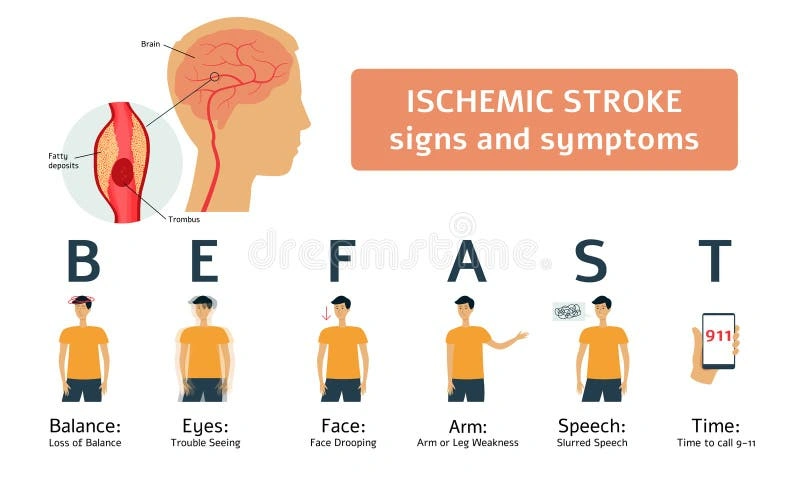
Image Source: Dreamstime.com
If you’re like most people, you’ve probably had moments that made you pause. A word that wouldn’t come. A familiar face you couldn’t place. A conversation you completely forgot having.
Your first thought? “I’m just getting older.”
Here’s what we’ve learned from treating thousands of patients – those subtle warning signals often appear years before any formal diagnosis. Yet most people dismiss them as “normal aging” or “just stress.”
We find that’s rarely the whole story.
When Memory Problems Cross The Line
Misplacing your keys occasionally? That’s normal. Putting them in the refrigerator and not remembering why? That’s different.
The concerning pattern includes forgetting recent events or conversations that you would typically remember [1]. You might find yourself repeatedly asking the same questions, getting lost in familiar places, or putting items in places that make no sense [1].
What distinguishes normal age-related changes from something more serious? When these lapses start disrupting your daily life. When memory problems begin interfering with your routine activities or work performance, it’s time to seek help [1].
Personality Changes You Can’t Explain
Sometimes the brain sends its first distress signals through your emotions. You might experience unexplained depression, lose interest in activities you once loved, or find yourself withdrawing socially [1].
Here’s a fact that might surprise you – about 40% of people over 65 experience some form of memory loss [17]. But when memory issues come alongside mood changes like increased irritability or anxiety, it suggests something deeper is happening in your brain [4].
These aren’t temporary emotional reactions to life events. They persist. They often get worse over time, reflecting actual changes in brain structure and function [5].
Your Body’s Balance System Breaking Down
Have you become more cautious on stairs lately? Do you need to concentrate harder on physical tasks that used to be automatic?
Balance problems often signal nervous system trouble. You might feel unsteady walking, have coordination issues, or experience unexplained dizziness or vertigo [6]. These symptoms typically start subtly – you might not even realize you’re compensating for them.
When Words Won’t Come
“It’s right on the tip of my tongue.”
Language difficulties frequently emerge as early warning signs. You might struggle to find everyday words during conversations, substitute wrong words, or have trouble following discussions despite hearing perfectly well [7].
These problems usually develop gradually. You might initially blame word-finding hesitations on stress or being tired [7]. But when language difficulties start interfering with your social interactions or communication, especially when they’re getting progressively worse, it’s time for professional evaluation.
The truth is, your brain might be working harder than ever to maintain what seems like normal function. But that extra effort often comes at a cost.
What’s Really Behind This Growing Crisis?
“None of us wants to be reminded that dementia is random, relentless, and frighteningly common.” — Laurie Graham, Author and dementia awareness advocate
You might be wondering why these brain diseases seem to be everywhere now. The truth is, this isn’t just your imagination. Multiple factors are working together to create what researchers now recognize as a growing health crisis. More than 50 million people globally [8] currently live with these conditions.
Living Longer Has a Hidden Cost
The main reason is actually straightforward – we’re living longer than ever before. The World Health Organization projects that people over 65 will at least double in the next 30 years [8]. Healthcare improvements have given us longer lifespans [9], but this positive development comes with an unintended consequence. More people are now reaching the ages where neurodegenerative disorders typically show up.
Your Environment Is Working Against Your Brain
We find that environmental factors play a much bigger role than most people realize. Neurotoxic metals like lead, aluminum, mercury, manganese, cadmium, and arsenic have been directly linked to Parkinson’s and Alzheimer’s disease [10].
Pesticides show the strongest evidence among environmental toxins for causing ALS [11]. Air pollution, especially fine particulate matter (PM2.5), increases your risk of dementia, vascular dementia, and Alzheimer’s disease [11].
Stress Is Literally Shrinking Your Brain
Chronic stress creates changes in your brain that accelerate aging. High cortisol levels can actually kill neurons in the hippocampus, the brain’s memory center [12]. Clinical studies show that people with depression have smaller hippocampal volume compared to healthy individuals [13].
Poor lifestyle habits make everything worse. Smoking, high-sugar diets, high blood pressure, and type 2 diabetes all increase your risk of developing various neurodegenerative conditions [14].
The Digital Age May Be Taking a Toll
The explosion in electronic device use raises serious questions about brain health. RF-EMF exposure from mobile phones has been classified as “possibly carcinogenic to humans” by the WHO’s International Agency for Research on Cancer [15].
Studies suggest EMF exposure affects central nervous system cells, causing neuronal cell death and changes in brain function [15]. Children are especially vulnerable – their developing brains conduct electricity better and absorb more electromagnetic energy than adults [16].
Why Most Doctors Miss the Early Signs
You’ve probably been told “everything looks normal” on your tests. Meanwhile, you know something isn’t right.
This happens more often than you might think. Detecting neurodegenerative diseases in their earliest stages creates significant challenges for both doctors and patients. Several factors work together to delay proper diagnosis when it matters most.
The “Normal Aging” Problem
The earliest signs of brain disorders develop slowly, often over years. Most people dismiss these changes as normal aging or temporary stress. You might forget where you put your glasses and think “I’m just getting older.” Your family might notice mood changes but assume you’re having a rough patch.
Even when symptoms are recognized, many people avoid seeking help. They’re afraid of what they might find out. Others genuinely believe “there’s nothing that can be done anyway.” By the time obvious symptoms appear, significant damage has often already occurred.
Current Tests Only Show Advanced Damage
Traditional diagnostic methods have serious limitations. MRI scans, CT scans, and EEGs typically reveal problems only after substantial brain deterioration has taken place. More advanced neuroimaging techniques exist, but they’re expensive and not widely available.
PET imaging can detect amyloid plaques, but finding these plaques doesn’t definitively diagnose Alzheimer’s. Many neurodegenerative conditions aren’t clinically identified until symptoms become impossible to ignore. At that point, treatment options become more limited.
Hope Through Better Detection Methods
Biomarkers offer one of the most promising paths forward. These measurable indicators can potentially predict disease risk years before clinical symptoms emerge. Scientists are studying beta-amyloid and tau levels in spinal fluid, which change at different disease stages.
Blood-based biomarkers show particular promise. Researchers are investigating UCH-L1, GFAP, S100 proteins, and specific inflammatory markers that could track disease processes before irreversible damage occurs.
A Different Approach to Brain Health
Functional neurology takes a different path. Instead of waiting for obvious symptoms or managing disease after it’s established, this approach focuses on stimulating neuroplasticity and reorganizing brain function.
New technologies support this approach – wearable sensors, smartphone applications, virtual reality assessments, and other non-invasive tools designed to detect subtle changes in thinking and behavior. These methods work outside traditional clinical settings, making early detection more accessible when intervention can be most effective.
We find that the brain has remarkable capacity for improvement when given the right support and stimulation.
What You Can Do to Fight Back
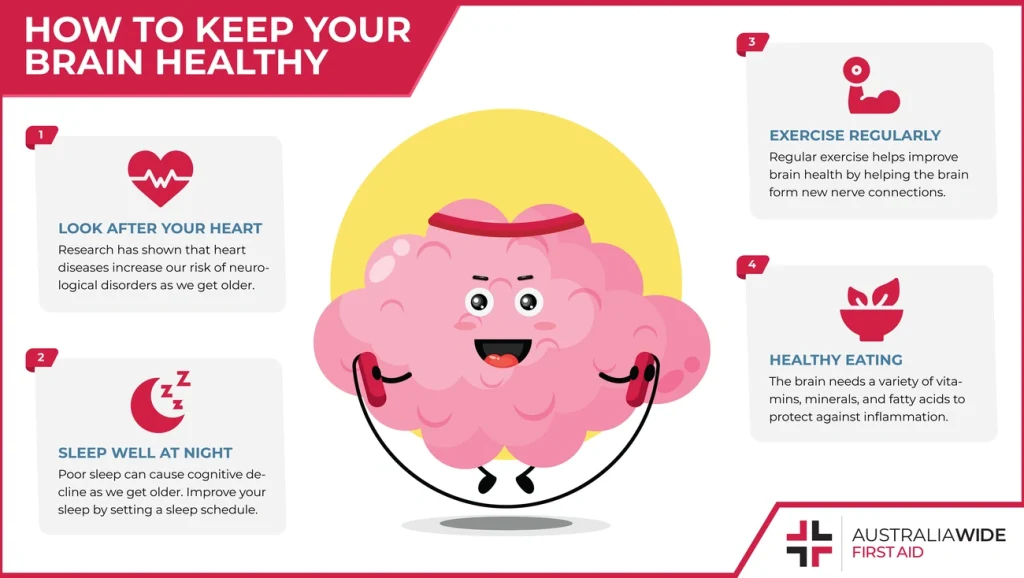
Image Source: Australia Wide First Aid
You’ve learned about the warning signs. You understand the risks. Now here’s the good news – you have more control over your brain health than you might think.
Research shows the right lifestyle choices can delay or even prevent cognitive decline. Instead of waiting and hoping for the best, you can take action today.
Feed Your Brain What It Needs
The MIND diet (Mediterranean-DASH Intervention for Neurodegenerative Delay) isn’t just another fad – it’s specifically designed to protect your brain [1]. Think of it as fuel for your most important organ.
Your brain thrives on leafy greens, berries, nuts, olive oil, whole grains, fish, and lean poultry [1]. At the same time, limit the foods that work against you – red meat, fried foods, pastries, butter, and cheese [1].
But diet alone isn’t enough. Your brain needs movement too. Aim for 150 minutes of moderate exercise weekly [17]. When researchers combined diet and exercise, they saw the most dramatic improvements in thinking skills [18]. Even something as simple as walking, swimming, or cycling several times a week increases blood flow to your brain [19].
Clean Up Your Environment
Environmental toxins damage your brain through oxidative stress and inflammation [20]. You can’t control everything, but you can control what’s in your home.
Choose non-toxic household and personal care products [21]. Consider an air purifier to reduce indoor pollutants [21]. This matters even more if you’re caring for children or elderly family members, who are especially vulnerable to toxins [20].
Master Your Stress and Sleep
Chronic stress is your brain’s enemy. It floods your system with cortisol, which literally damages brain cells and blocks your brain’s ability to adapt and heal [22]. Find what works for you – meditation, deep breathing, or activities that bring you joy [2].
Quality sleep isn’t a luxury – it’s when your brain does its most important work. While you sleep, your brain consolidates memories and clears out harmful proteins linked to Alzheimer’s [3]. Get 7-8 hours nightly and stick to consistent bedtimes [3]. Cut back on caffeine, alcohol, and screens before bed [23].
Don’t Wait for Symptoms
Here’s what most people get wrong – they wait until something feels “off” before getting checked. Research shows that catching problems early makes all the difference [24]. Early detection opens doors to treatments that can slow or stop progression [24].
Regular brain health assessments aren’t just for people with problems. They’re for people who want to stay sharp.
Keep Your Brain Active
Your brain works like a muscle – use it or lose it. Learning new skills creates fresh neural pathways that make your brain more resilient [25]. Whether it’s learning a language, picking up an instrument, or tackling challenging puzzles, you’re building cognitive reserves [25].
Physical exercise boosts this even more by increasing the growth factors that help brain cells thrive [26].
The bottom line? You don’t have to be a passive observer of your brain health. Every choice you make – what you eat, how you move, how you sleep, how you challenge yourself – is either protecting your brain or putting it at risk.
Which will you choose?
There Is Hope For Your Brain
The numbers don’t lie. Neurodegenerative diseases now affect millions worldwide, with rates doubling among older adults in Western nations during recent decades. But here’s what we want you to remember – knowledge is power.
You now know what to watch for. Memory problems that interfere with daily life. Mood changes that persist. Balance issues that weren’t there before. Language difficulties that go beyond “senior moments.” These aren’t just signs of getting older – they’re your brain asking for help.
We’ve shown you why these conditions are rising. Our aging population. Environmental toxins. Chronic stress. Poor lifestyle choices. Even the devices we use daily might be contributing. But understanding these risks means you can do something about them.
Yes, early diagnosis remains challenging. Many symptoms get dismissed as “just aging.” Traditional tests often miss early changes. But functional neurology and new biomarker research are changing that landscape. The key is not waiting until symptoms become obvious.
Your brain health is in your hands. The MIND diet works. Regular exercise protects your neurons. Quality sleep clears harmful proteins. Stress management preserves cognitive function. Mental stimulation builds resilience. These aren’t just recommendations – they’re proven strategies that can make the difference.
We find that prognosis is rarely final when you take action early. Scientific advances happen daily. Early awareness paired with proactive choices can significantly reduce your risk. Don’t let anyone tell you “there’s nothing that can be done” when it comes to protecting your brain.
Your memories, your personality, your ability to connect with loved ones – these define who you are. They’re worth protecting. They’re worth fighting for.
If you’re concerned about changes you’ve noticed, don’t wait. Don’t dismiss them. Your brain deserves the same attention you’d give your heart or any other vital organ. Because when it comes to neurodegenerative disease, early action isn’t just helpful – it can be life-changing.
Don’t wait for symptoms to get worse. If you’ve noticed changes in memory, mood, balance, or thinking, schedule a comprehensive brain health assessment today. Early action can preserve your cognitive function—and your future.
Key Takeaways
Neurodegenerative diseases have nearly doubled among older adults in recent decades, making early recognition of warning signs crucial for timely intervention and better outcomes.
• Recognize early warning signs: Memory lapses disrupting daily life, persistent mood changes, coordination problems, and language difficulties signal potential brain trouble beyond normal aging.
• Address rising risk factors: Environmental toxins, chronic stress, poor lifestyle habits, and increased EMF exposure contribute to the growing epidemic of brain diseases.
• Take proactive brain protection: Adopt the MIND diet, exercise regularly, manage stress, prioritize quality sleep, and engage in mental stimulation to build cognitive reserves.
• Seek early assessment: Don’t dismiss symptoms as “just aging” – regular cognitive evaluations enable early detection when interventions are most effective.
• Understand diagnostic challenges: Current tools often detect damage only after significant progression, making awareness of subtle symptoms and biomarker research increasingly important.
The key to fighting this silent epidemic lies in proactive prevention and early intervention. By recognizing warning signs, addressing modifiable risk factors, and maintaining brain-healthy lifestyles, we can significantly reduce our risk and preserve the cognitive function that defines who we are.
FAQs
Q1. What are the most common neurodegenerative disorders? The most prevalent neurodegenerative disorders include Alzheimer’s disease, Parkinson’s disease, Huntington’s disease, Amyotrophic Lateral Sclerosis (ALS), and Multiple Sclerosis (MS). These conditions involve the progressive degeneration of nerve cells, leading to various cognitive and physical impairments.
Q2. Why are neurodegenerative diseases often called a “silent epidemic”? Neurodegenerative diseases are referred to as a “silent epidemic” because their early symptoms are often subtle and develop gradually over time. Many people dismiss these early signs as normal aging or temporary stress, allowing the conditions to progress undetected for years before a formal diagnosis is made.
Q3. What are some early warning signs of neurodegenerative diseases? Early warning signs include persistent memory lapses that disrupt daily life, unexplained mood changes or emotional instability, difficulties with coordination or balance, and trouble finding words or following conversations. These symptoms often appear years before a formal diagnosis and should not be dismissed as normal aging.
Q4. How can one reduce the risk of developing neurodegenerative diseases? To reduce risk, adopt a brain-healthy lifestyle that includes following the MIND diet, engaging in regular physical exercise, managing stress effectively, ensuring quality sleep, and stimulating your brain with new learning experiences. Additionally, reducing exposure to environmental toxins and getting regular cognitive assessments can help protect brain health.
Q5. What challenges exist in diagnosing neurodegenerative diseases early? Early diagnosis of neurodegenerative diseases is challenging due to the subtle nature of initial symptoms, limitations of current diagnostic tools, and the tendency for people to dismiss early signs as normal aging. However, emerging biomarkers and functional neurology approaches offer promising avenues for earlier detection and intervention.
References
[1] – https://hopebraincenter.com/the-global-rise-of-neurodegenerative-diseases-causes-challenges-and-hope-for-the-future/
[2] – https://www.who.int/news/item/14-03-2024-over-1-in-3-people-affected-by-neurological-conditions–the-leading-cause-of-illness-and-disability-worldwide
[3] – https://www.sciencedirect.com/science/article/pii/S1568163724001752
[4] – https://www.aginganddisease.org/EN/10.14336/AD.2024.1071
[5] – https://www.mayoclinic.org/diseases-conditions/alzheimers-disease/symptoms-causes/syc-20350447
[6] – https://www.mayoclinichealthsystem.org/hometown-health/speaking-of-health/memory-lapses-normal-aging-or-something-more
[7] – https://alzheimer.ca/en/about-dementia/do-i-have-dementia/differences-between-normal-aging-dementia
[8] – https://pmc.ncbi.nlm.nih.gov/articles/PMC4539408/
[9] – https://pmc.ncbi.nlm.nih.gov/articles/PMC3980958/
[10] – https://www.nidcd.nih.gov/health/balance-disorders
[11] – https://www.brain.northwestern.edu/dementia/primary-progressive-aphasia/symptoms-causes.html
[12] – https://my.clevelandclinic.org/health/diseases/24976-neurodegenerative-diseases
[13] – https://pmc.ncbi.nlm.nih.gov/articles/PMC4392704/
[14] – https://pubmed.ncbi.nlm.nih.gov/35647576/
[15] – https://pmc.ncbi.nlm.nih.gov/articles/PMC12625418/
[16] – https://www.henryford.com/Blog/2022/09/stress-can-cause-premature-brain-shrinkage
[17] – https://pmc.ncbi.nlm.nih.gov/articles/PMC9159819/
[18] – https://www.brightfocus.org/resource/navigating-neurodegenerative-diseases-what-causes-neurodegeneration-and-can-it-be-stopped/
[19] – https://pmc.ncbi.nlm.nih.gov/articles/PMC6513191/
[20] – https://www.e-cep.org/journal/view.php?doi=10.3345/cep.2019.01494
[21] – https://www.butler.org/memoryandaging/8-weeks-to-better-brain-health-your-guide-to-cognitive-wellness
[22] – https://www.npr.org/2025/07/28/nx-s1-5477556/aging-brain-health-lifestyle-diet-exercise-social-alzheimers
[23] – https://www.nhlbi.nih.gov/news/2018/exercise-combination-dash-diet-might-help-reverse-brain-aging-study-suggests
[24] – https://www.mayoclinichealthsystem.org/hometown-health/speaking-of-health/5-tips-to-keep-your-brain-healthy
[25] – https://pmc.ncbi.nlm.nih.gov/articles/PMC9540824/
[26] – https://lonestarneurology.net/others/the-impact-of-environmental-toxins-on-neurological-health/
[27] – https://www.health.harvard.edu/mind-and-mood/protect-your-brain-from-stress
[28] – https://www.americanbrainfoundation.org/how-stress-affects-the-brain/
[29] – https://www.americanbrainfoundation.org/why-sleep-matters-for-brain-health/
[30] – https://www.heart.org/en/healthy-living/healthy-lifestyle/sleep/sleep-your-way-to-a-smarter-brain
[31] – https://www.echelon.health/cognitive-assessments-are-becoming-essential/
[32] – https://www.health.harvard.edu/mind-and-mood/tips-to-leverage-neuroplasticity-to-maintain-cognitive-fitness-as-you-age
[33] – https://pmc.ncbi.nlm.nih.gov/articles/PMC7752270/